


-
Why this comparison matters
Great prompts are leverage: they compress expertise into repeatable instructions that boost output quality and reduce iteration time. If you’ve ever stared at a blinking cursor wondering how to phrase a brief, you know the value of a proven prompt. But where do you find consistently good ones?
In this guide, we compare two popular prompt sources—AIPRM and FlowGPT—so you can decide which better fits your workflow, team, and budget.
If you’re new to prompt design, pairing either library with fundamentals from OpenAI’s prompt engineering guide and Anthropic’s best practices will accelerate your results quickly.
-
Overview of AIPRM and FlowGPT
-
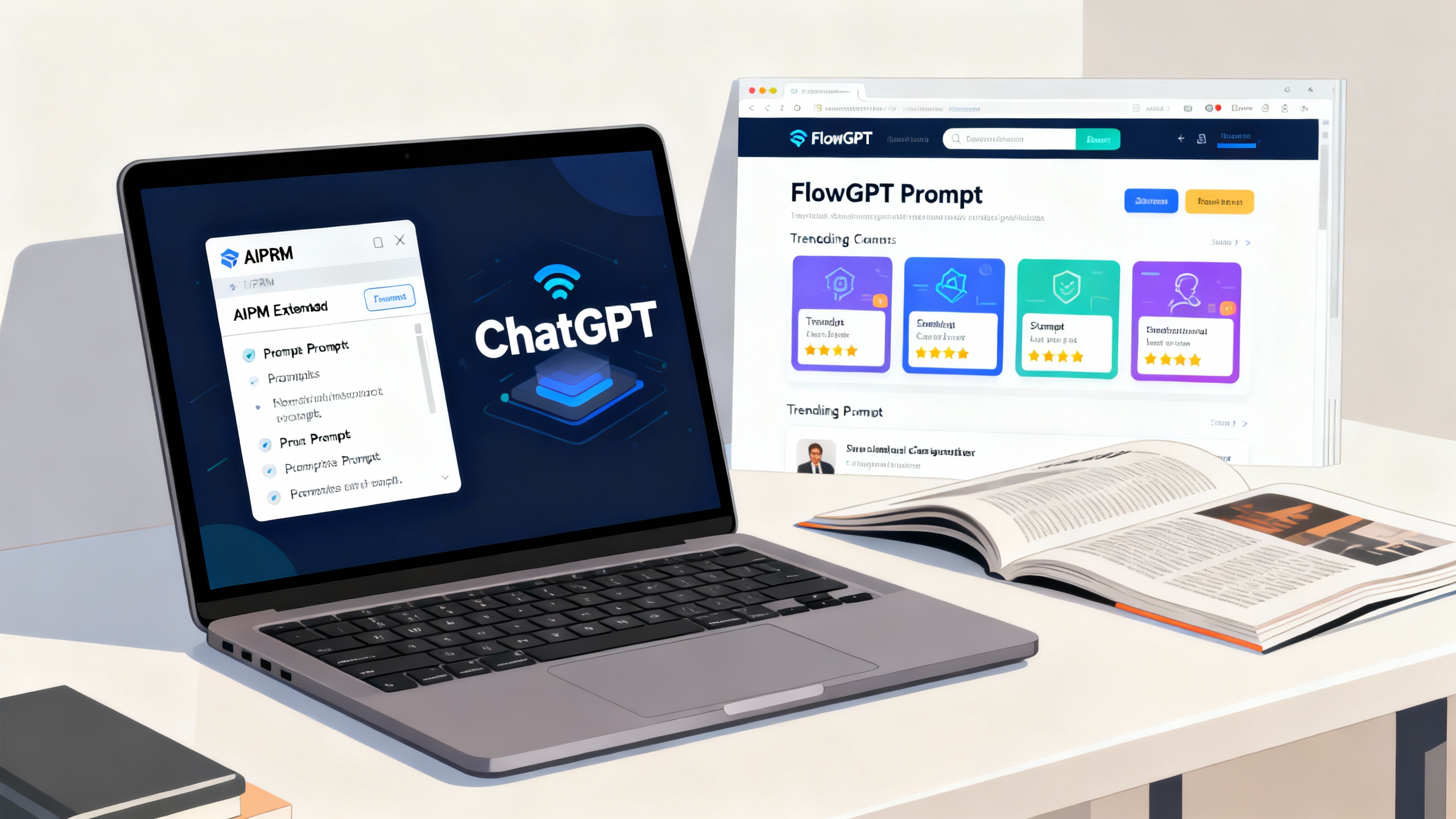
AIPRM: A browser extension that injects a curated prompt library directly into the ChatGPT interface. You can browse categories (e.g., SEO, marketing, programming), apply prompts with one click, and often customize variables (like brand, audience, tone). It’s ideal if ChatGPT is your daily driver and you want speed plus consistency.
-
FlowGPT: A community-driven directory of prompts for multiple models—ChatGPT, Claude, Midjourney, and others. You’ll find trending prompts, collections, and creator pages showcasing specific use cases, from sales outreach to creative writing. It’s great for exploration across tools and for discovering niche, high-performing prompts.
Both offer free access with optional paid features (e.g., advanced filtering, private/shared lists, or other conveniences). The core difference is where you work: AIPRM lives inside ChatGPT; FlowGPT is a separate site focused on discovery across models.
-
-
Key differences that matter day to day
-
Workflow integration: AIPRM sits inside ChatGPT, which means fewer tab switches and faster application in ongoing chats. FlowGPT is best for broader scouting—find a prompt, then paste it into your model of choice.
-
Breadth vs. focus: FlowGPT’s cross-model community delivers breadth (including image-generation prompts). AIPRM is optimized for ChatGPT-centric, text-first tasks.
-
Curation and quality filtering: AIPRM surfaces prompts with votes and categories, often designed with variables for repeatable use. FlowGPT thrives on community rating and virality; quality can vary more widely, but the top prompts often shine thanks to fast feedback loops.
-
Team repeatability: AIPRM’s in-chat template style lends itself to team adoption and standard operating procedures (SOPs) when everyone uses ChatGPT. FlowGPT supports personal collections and shared links; team standardization is possible, but you’ll typically codify SOPs outside the tool.
-
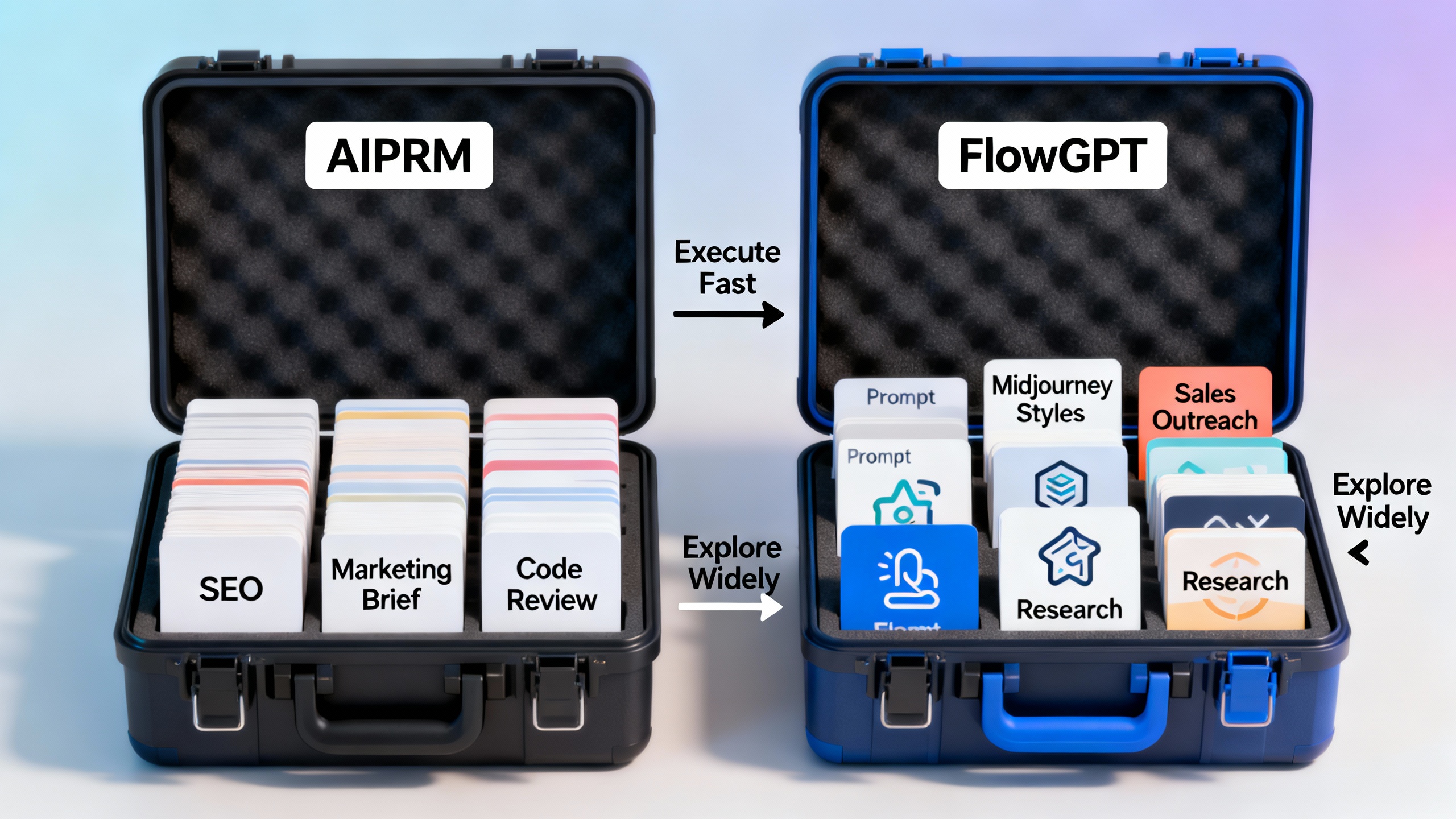
Discovery and experimentation: FlowGPT wins for discovery—trending prompts, creator series, and cross-model inspiration. AIPRM wins for execution speed—apply, tweak variables, and ship.
Quick comparison
Feature AIPRM FlowGPT Primary context In-ChatGPT extension Web directory (cross-model) Best for Fast reuse, team consistency Exploration, breadth, creative prompts Prompt structure Many with variables/tones Mixed; from short tricks to full templates Discovery Categories, votes inside ChatGPT Trending, tags, collections, creators Model coverage ChatGPT-centric ChatGPT, Claude, Midjourney, more Learning value Strong for SOP-style prompts Strong for new ideas and niches -
-
Pros and cons
AIPRM
- Pros
- Seamless inside ChatGPT; one-click apply saves time.
- Many prompts include input variables for consistent, repeatable output.
- Good for teams standardizing workflows (e.g., briefs, outreach, QA checks).
- Cons
- ChatGPT-centric; limited if you rely heavily on other models or image tools.
- Discovery feels narrower compared to a big community marketplace.
FlowGPT
- Pros
- Huge variety across models; great for inspiration and niche tasks.
- Community ratings help surface high-signal prompts quickly.
- Helpful for visual/creative prompts (e.g., Midjourney styles) and novel use cases.
- Cons
- Copy‑paste into your model adds a small workflow tax.
- Quality can be uneven; you’ll test and prune more.
- Pros
-
Use-case recommendations
- If you live in ChatGPT all day: Choose AIPRM. It reduces friction and lets you ship repeatable work (content briefs, FAQs, PRDs) with consistent variables like audience, tone, and length.
- If you want breadth and inspiration: Choose FlowGPT. Explore top prompts across sales, research, and creative tasks, and discover image-model prompts you can’t get in ChatGPT alone.
- For marketing teams: Start with AIPRM for standardized briefs, campaign plans, and on-brand rewrites. Dip into FlowGPT to find inventive angles and A/B test new prompt patterns.
- For developers and ops: Use AIPRM for repeatable code reviews, test generation, and doc scaffolds inside ChatGPT. Use FlowGPT to explore emerging dev prompts and alternative model tricks.
- For creators and designers: FlowGPT shines for Midjourney/visual prompts and stylistic experimentation; keep AIPRM handy for writing hooks, scripts, and outlines fast.
TipA 3-minute prompt quality check
- Skim the top comments/ratings for real outcomes and pitfalls.
- Look for explicit structure: role, input variables, steps, constraints, evaluation criteria.
- Run a quick A/B test: same input, two prompts, compare clarity and factuality.
- Add your context (audience, objective, constraints) before judging the prompt.
- Save only the top 10%—build a small, powerful library you can actually maintain.
For deeper craft, revisit OpenAI’s prompt patterns and Anthropic’s guidance on instruction clarity, decomposition, and iteration.
-
Verdict
Both AIPRM and FlowGPT surface excellent AI prompts, but they excel in different moments:
- Pick AIPRM if you value speed, standardization, and living inside ChatGPT. It’s the smoother operational choice for teams and repeatable workflows.
- Pick FlowGPT if you value exploration, cross-model creativity, and discovering fresh prompt ideas (including visual prompts) before they’re everywhere.
Many power users run both: FlowGPT to discover and test, AIPRM to operationalize the winners. That combo gives you a steady stream of new ideas—and a reliable way to turn them into daily output.
Features and pricing evolve; check the latest details on AIPRM and FlowGPT before you decide.