

The short version
Humanoid robots finally crossed out of research labs and into factory workflows in late 2025. Boston Dynamics’ electric Atlas is now performing a bread‑and‑butter automotive task called “part sequencing,” while Tesla is installing pilot production lines and pushing Optimus toward real work inside its own plants. The next few quarters will determine how fast these demos turn into dependable, scalable labor.
Atlas goes from parkour to production tasks
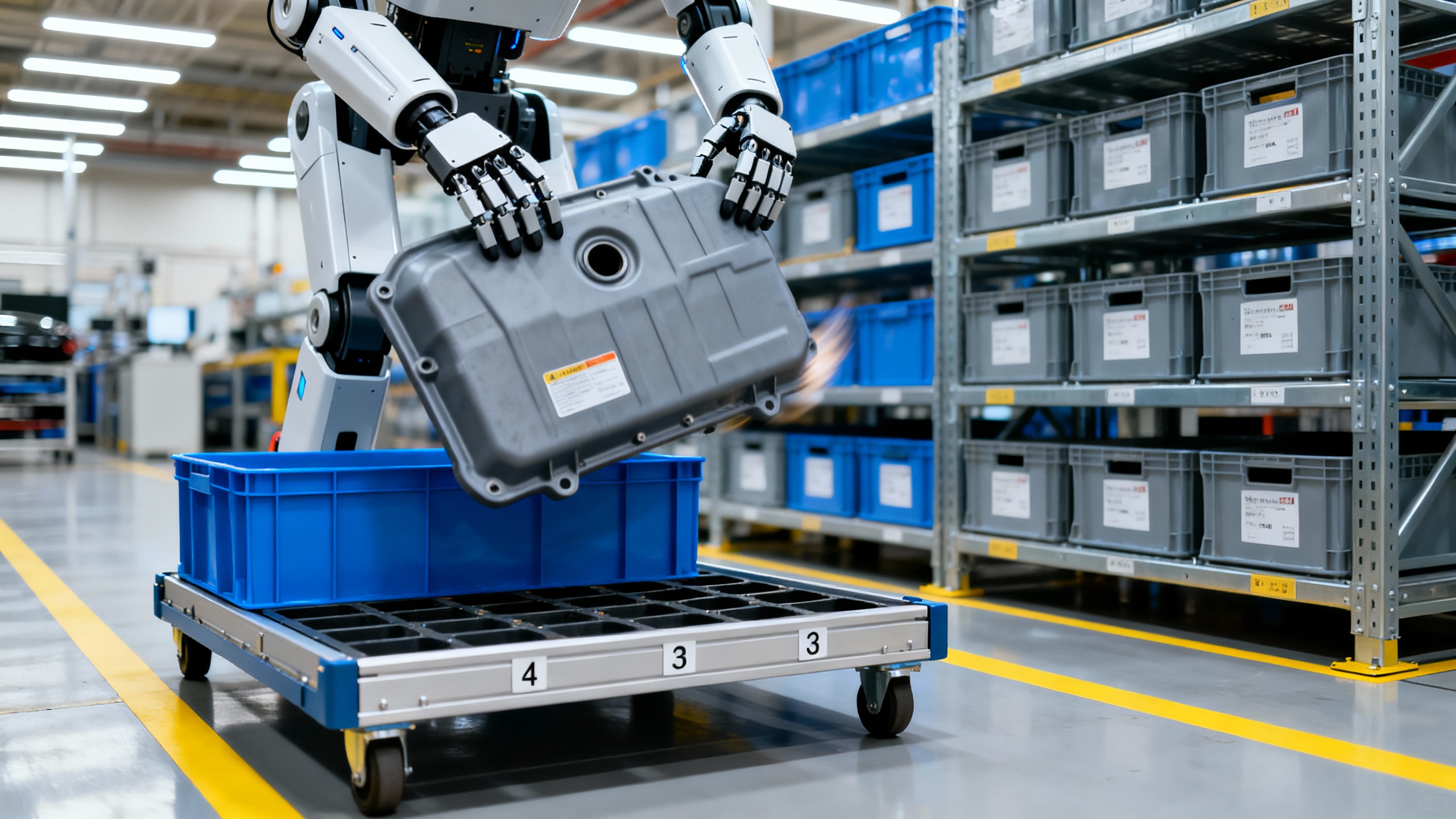
Boston Dynamics retired its hydraulic Atlas in April 2024 and unveiled an all‑electric successor designed for factory work. In late 2024 and through 2025, the company published “Atlas Goes Hands On,” showing the robot autonomously moving engine covers between supplier containers and a mobile sequencing dolly—no teleoperation, with motions generated online using vision, force and proprioceptive sensing. That’s notable because sequencing is a decidedly unglamorous but valuable logistics task on auto lines. Boston Dynamics video | Background explainer | The Verge coverage, Oct 30, 2024.
Hyundai Motor Group, which owns Boston Dynamics, has telegraphed the commercialization push: on December 22, 2025 it said the new Atlas will be publicly debuted at CES 2026 as part of a broader AI robotics strategy aimed at human‑robot collaboration and software‑defined factories. In parallel, the companies have discussed future Atlas deployments across Hyundai and Kia plants as they scale a U.S. robotics ecosystem. Hyundai press release, Dec 22, 2025 | Boston Dynamics–Hyundai collaboration note.
Why sequencing matters
On high‑mix automotive lines, parts aren’t just delivered—they’re delivered in the right order so the next station never starves. Atlas’ demo targets exactly that: detect bins and fixtures with an ML vision model, grasp irregular parts, carry and place with whole‑body balance, and recover gracefully when a fixture moves or a placement fails. In industrial reality, that reliability (not speed records) is the bar that will decide whether humanoids get a badge to work the line.
Tesla’s Optimus: from sizzle reels to shop‑floor trials
Tesla has equally big ambitions for Optimus. Elon Musk has said as much as “~80%” of Tesla’s value could eventually come from the robot, and the company has repeatedly framed 2025–2026 as the transition window from prototypes to internally useful workers. In 2025, Tesla told investors it was on track for “builds of Optimus on our Fremont pilot production line in 2025, with wider deployment of bots doing useful work across our factories,” and Reuters previously reported Optimus would enter low‑volume internal use in 2025 with broader availability targeted for 2026. CNBC, Sept 2, 2025 | Reuters, July 22, 2024.
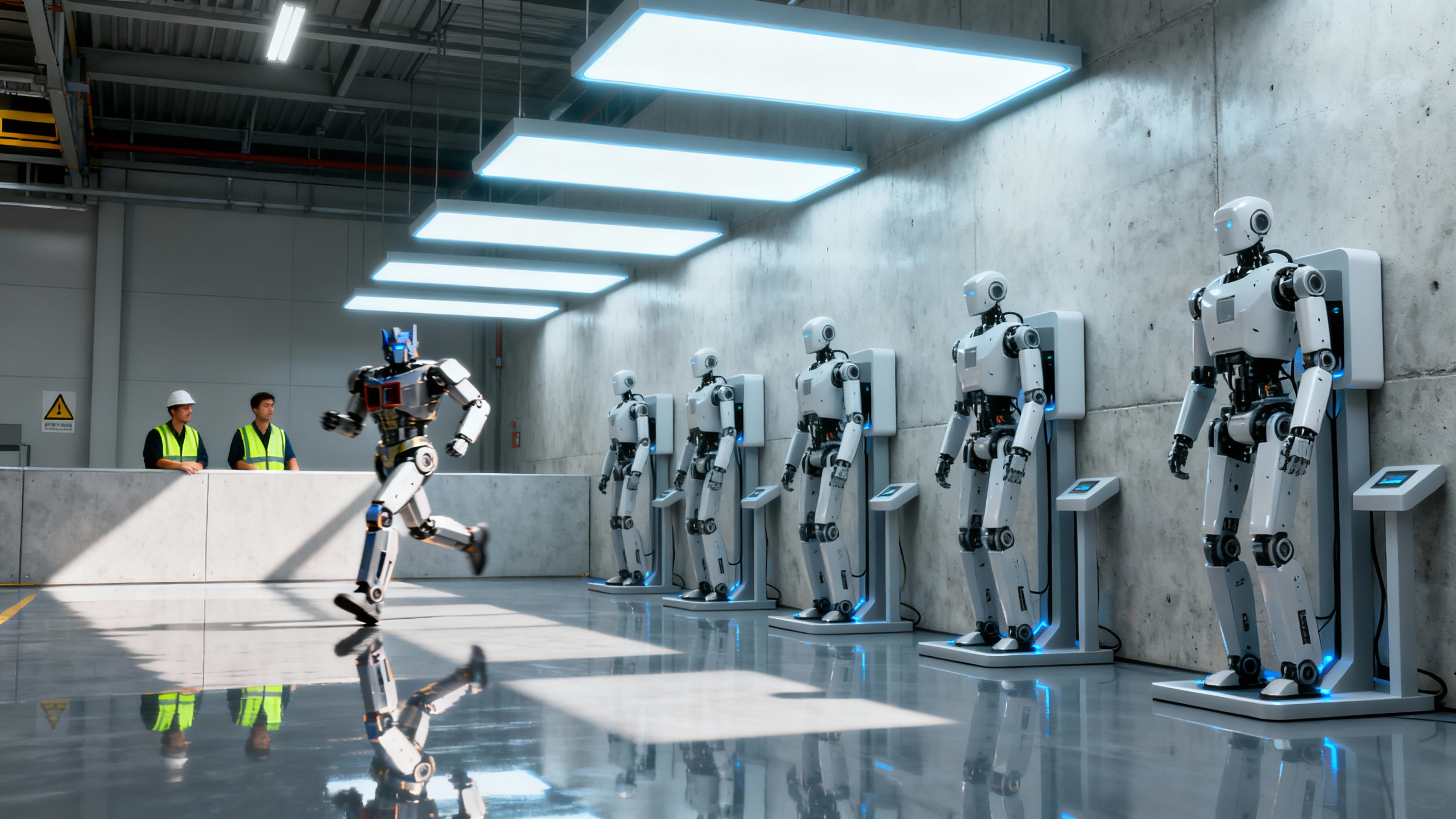
Tesla’s public progress clips have accelerated: 2024 showed teleoperated fine‑motor demos like folding a T‑shirt (Tesla clarified it wasn’t autonomous), and December 2, 2025 brought an official clip of Optimus jogging smoothly in the lab with a line of units on charge—evidence of maturing locomotion and a growing fleet of prototypes. TechCrunch on the laundry demo | Optimus running clip recap.
Where does production actually stand? On the October 22, 2025 earnings call, Musk said a production‑intent “V3” prototype would be ready to show in early 2026, and outside reporting indicates Tesla is installing first‑generation Optimus lines—ambitious targets tempered by mid‑2025 coverage that the company was behind pace on a goal to build 5,000 units that year. In other words: real momentum, but timelines remain a risk. Earnings call transcript summary | TechCrunch, July 25, 2025.
Reality check: who is doing useful work today?
To benchmark “lab‑to‑line,” look at who’s been paid to do a job:
- Figure reports that its Figure 02 robots ran a 10‑hour weekday shift at BMW’s Spartanburg plant and “contributed to the production of 30,000+ X3 vehicles,” primarily by loading sheet‑metal parts. The claim is significant but still narrow in scope, and earlier reporting cautioned that the deployment started modestly before ramping. Figure case note, Nov 19, 2025 | Fortune context.
- Agility Robotics opened RoboFab in Salem, Oregon, targeting 10,000 Digit humanoids per year for logistics and manufacturing use, and Amazon has publicly tested Digit and other mobile manipulators in its network. Agility RoboFab | About Amazon on Digit testing.
Atlas and Optimus are now moving into this same “useful work” lane: Atlas with an automotive sequencing cell built to factory constraints; Optimus with internal deployments and production tooling efforts. The difference is mostly one of where the work is happening (customer site vs. OEM’s own plants) and how fast each team can cross the reliability threshold.
What tasks will humanoids credibly take first?
Near‑term success favors constrained variability and high repetition:
- Part sequencing and kitting for line‑side cells (Atlas’ current focus)
- Line‑side material movement (bins/totes) in mixed‑human spaces
- Simple machine tending and fixture loading inside guarded cells
- Visual checks and secondary inspections where camera height/angle matter
Dexterous assembly—fitting flexible gaskets, threading fasteners, routing cables—remains the hard frontier. Even Boston Dynamics’ own notes emphasize specialized grasp policies and robust error recovery; Tesla’s public clips show gait and balance improving faster than hands. Expect grippers and end‑effectors to evolve quickly alongside “behavior” models.
Two playbooks, one destination
- Boston Dynamics is productizing a research‑grade humanoid with decades of locomotion R&D, existing commercial infrastructure (Spot and Stretch), and a parent company that builds cars at global scale. That positions Atlas to slot into Hyundai Group’s software‑defined factories as a co‑worker on targeted tasks. Hyundai CES 2026 preview.
- Tesla is leveraging its vertical integration and FSD‑style perception/planning stack to chase general‑purpose factory work, with the advantage of deploying inside its own plants first. That lets Tesla iterate on tasks without needing customer‑grade reliability on day one—but investors should weigh the company’s history of optimistic timelines against recent disclosures and third‑party reporting. CNBC | TechCrunch.
What operations leaders should do now
- Pilot where humanoids are most likely to win: guarded cells for part loading/unloading, high‑mix kitting, ergonomic risk hot spots.
- Prepare your plant: map tasks, put sensors on fixtures, add “robot‑readable” labels, declutter walking paths, and create safe fail‑states.
- Demand practical metrics: mean time to task completion, recovery from failure, and planned‑ vs. unplanned‑downtime—more useful than viral videos.
- Align on safety and change management: treat humanoids like any new cobot—risk assess the cell, implement speed‑and‑separation monitoring, train teams, and design for graceful stops.
TipWatch these near‑term milestones (Q1–Q2 2026)
- Atlas’ live stage debut and Hyundai’s AI robotics plan at CES on January 5, 2026.
- Tesla’s “V3” Optimus reveal and clarity on pilot line output and in‑factory use cases.
- Independent confirmations of factory deployments (e.g., BMW/Figure updates; Digit shipments from RoboFab).
Table: Humanoid robots moving from lab to line (late 2025–early 2026)
| Company | Robot | Where it’s working | What it’s doing | Status note |
|---|---|---|---|---|
| Boston Dynamics | Atlas (electric) | Automotive sequencing cell, factory‑style setup | Moves engine covers between bins and a mobile dolly; autonomous perception and recovery | Public factory‑task demo; CES 2026 debut announced |
| Tesla | Optimus | Tesla factories (internal pilots) | Early line support tasks; locomotion and manipulation improving; pilot lines installing | V3 reveal targeted early 2026; timelines closely watched |
| Figure | Figure 02 | BMW Spartanburg (U.S.) | Sheet‑metal loading into fixtures | Ran weekdays; Figure says 30,000+ cars impacted |
| Agility Robotics | Digit | RoboFab (manufacturing) + customer pilots (e.g., Amazon) | Tote movement, material handling | Factory capacity 10k/yr; ongoing pilots |
The takeaway
The humanoid story in 2026 isn’t sci‑fi—it’s sequencing, kitting, fixture loading, and ergonomics. Boston Dynamics’ Atlas and Tesla’s Optimus are now pointed at those real jobs. Their success will be measured not by backflips or viral clips, but by boring reliability across thousands of cycles. That’s exactly what factories pay for.
Sources
- Boston Dynamics: Atlas Goes Hands On; Pick, Carry, Place, Repeat; BD–Hyundai collaboration note
- Hyundai Motor Group: CES 2026 AI Robotics Strategy; Atlas debut (Dec 22, 2025)
- The Verge: Electric Atlas shows fully autonomous factory‑task demo (Oct 30, 2024)
- Tesla investor communications and coverage: CNBC on Optimus value and 2025 pilot line builds; Reuters on internal use in 2025; Q3 2025 call summary; TechCrunch on 2025 build‑rate shortfall; Optimus running clip recap; Laundry demo context
- Figure AI and coverage: Figure 02 at BMW (Nov 19, 2025); Fortune context on scope
- Agility/ Amazon: Agility RoboFab capacity; About Amazon: Digit testing