

Key Stories (past 48 hours)
EU steps up 2026 tech enforcement as AI rules bite
European regulators signaled they will intensify enforcement of the Digital Markets Act and Digital Services Act in 2026, with probes touching Big Tech’s AI practices. The Financial Times reports the U.S. administration is threatening retaliation, raising stakes for transatlantic firms operating AI products and marketplaces. Expect heightened scrutiny on model integration in consumer services, data use, and content moderation pipelines across the EU.
- Further reading: EU steps up 2026 tech enforcement as AI rules bite
Humanoids move from lab to line: Atlas factory test and Tesla’s Optimus push
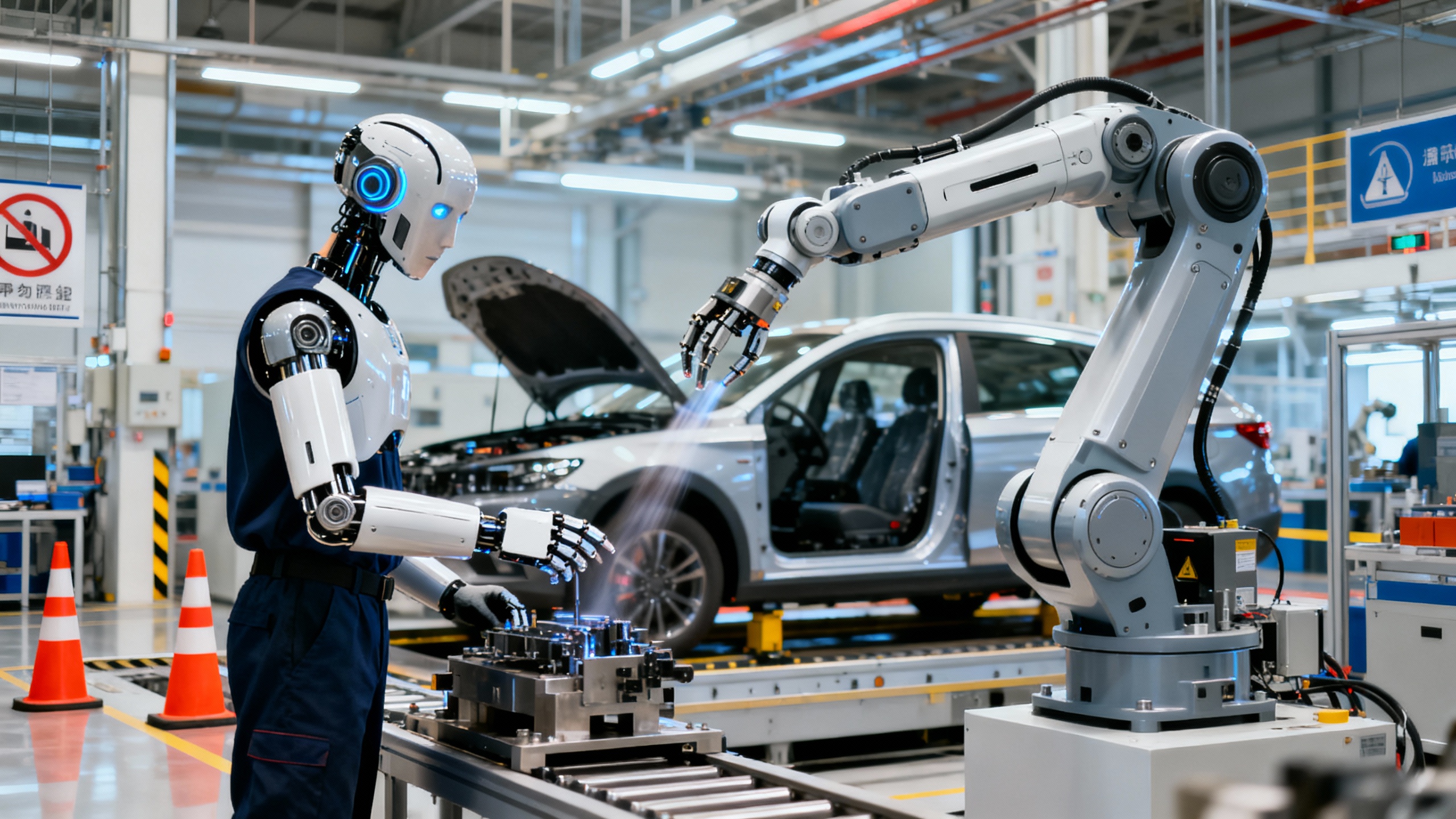
Humanoid robotics moved further into the mainstream this weekend. 60 Minutes previewed the first real-world factory test of Boston Dynamics’ electric Atlas, highlighting on-floor tasks ahead of a CES 2026 debut under Hyundai Motor Group’s AI robotics strategy. Separately, the Wall Street Journal detailed Tesla’s longer-term plan for its Optimus project—along with doubts from experts about timelines and practical utility. For manufacturers, the signal is clear: pilots are expanding from lab demos to controlled production environments, but the reliability and safety bar remains high.
New US state AI laws now in effect: compliance playbook for 2026
A raft of state-level tech and AI rules kicked in with the new year, led by California’s transparency and safety requirements and additional statutes touching chatbots, law enforcement disclosures, and minors. The Verge’s roundup underscores a fragmented U.S. landscape (e.g., California SB‑53) alongside lighter-touch approaches like Texas’s TRAIGA, setting immediate compliance work for AI deployers and vendors with U.S. exposure.
- Further reading: New US state AI laws now in effect: compliance playbook for 2026
AI energy crunch warnings intensify
New analysis and journalism this weekend sharpened attention on AI’s power appetite. Deloitte projects AI data center power demand could grow 30x by 2035, while the Guardian spotlighted the environmental and permitting headwinds around new AI facilities. Practitioners should expect tighter grid constraints, higher energy costs, and greater scrutiny of model efficiency claims—especially for training-scale workloads.
India’s AI Impact Summit adds global heft ahead of February
India’s government-backed AI Impact Summit (Feb 19–20, New Delhi) is drawing heightened media attention, with local press reporting 100+ global CEOs expected, including leaders from U.S. AI champions. The event’s official pages and embassies confirm the dates and scope, and position the summit as a Global South‑led forum focused on “impact” over abstract safety debates.
Emerging Trends
Humanoids, cautiously on-ramping to production
Early signals: national TV coverage of Atlas’s “first real-world factory test,” Hyundai’s CES agenda, and component suppliers (e.g., actuators, sensing, motion systems) rolling out industrial-grade parts. Expect 2026 pilots in logistics and discrete manufacturing to expand with clear guardrails (safety envelopes, teleoperation fallbacks, ISO/IEC functional safety). Implication: plan for phased deployments, tight human–robot collaboration design, and rigorous MTTF/MTTR tracking.
Compliance fragmentation: EU turns the screws as U.S. states diverge
The EU is set to police platform behavior and AI embedding more aggressively; the U.S. is shifting compliance burdens to statehouses. This creates dual pressures on product, legal, and go‑to‑market teams: one set of rules for EU‑facing features and a patchwork for U.S. rollouts. Implication: centralize model governance, data provenance, and transparency artifacts now to localize quickly.
Energy becomes the gating factor for AI scale
Forecasts and investigative reporting signal tighter grid capacity, rising power prices, and increasing environmental scrutiny of data centers. For CTOs, that means a premium on inference efficiency (quantization, distillation), workload scheduling, and siting choices near firm power. Expect “energy budget” to become a first-class KPI alongside latency and accuracy.
Agents go pragmatic
Analysts and operators are calling 2026 a “show me value” year. The trend: fewer flashy agent demos, more embedded, tool‑connected workflows that pair agents with deterministic backends and policy guardrails. Watch for standardized interfaces and vendor‑neutral connectors to accelerate this shift across enterprise stacks.
Conversations & Insights
“Are humanoids ready for real work?”
- Where it’s happening: 60 Minutes preview; WSJ feature; CES briefings.
- Key voices: Boston Dynamics/Hyundai emphasize controlled factory pilots; analysts caution on dexterity, cost, and ROI; Elon Musk maintains a bullish long‑term vision for Optimus.
- Takeaway: Industrial pilots are broadening, but buyers should demand production‑grade SLAs, safety certification roadmaps, and staged payback models before scaling.
“Will EU enforcement curb or catalyze AI competition?”
- Where it’s happening: FT coverage and policy circles.
- Key voices: EU regulators argue tough enforcement is needed for fair markets and democratic integrity; U.S. officials and some companies warn of overreach and trade friction.
- Takeaway: Expect conservative product configurations in the EU (e.g., tighter data flows, clearer disclosures) and a premium on compliance engineering and auditability.
“AI’s energy footprint: necessary cost or critical brake?”
- Where it’s happening: Guardian reporting, industry outlooks.
- Perspectives: Environmental advocates warn about fossil buildouts; industry counters with efficiency gains and clean‑power PPAs.
- Takeaway: Energy will shape roadmap realism—teams that optimize inference, consolidate models, and pursue strategic colocation will move faster with lower total cost of ownership.
Quick Takeaways
- Build for regulatory divergence: centralize model cards, safety test results, and content provenance so you can localize for EU vs. U.S. states quickly.
- Pilot humanoids where ergonomics and repetitive handling dominate; set staged milestones (safety, uptime, cycle time) before expanding cells or shifts.
- Treat power as a product constraint: include energy KPIs in acceptance criteria for training and inference, and evaluate sites with firm‑power options.
- Prioritize agentic workflows that connect to deterministic systems (APIs/ERPs) with explicit guardrails; avoid “free‑roaming” agents in production.
- Budget for compliance ops: assign owners for AI incident reporting, dataset lineage, and watermark/disclosure features to reduce change‑management churn.
Sources
- Financial Times – EU readies tougher tech enforcement in 2026.
- CBS News – “Here Come the Humanoids” (60 Minutes preview).
- Hyundai Motor Group – CES 2026 AI Robotics Strategy and Atlas debut.
- Wall Street Journal – Inside Elon Musk’s Optimus Robot Project.
- The Verge – New tech and AI laws taking effect in 2026.
- Deloitte (PR) – AI data center power demand outlook.
- The Guardian – AI’s environmental and energy impacts.
- Government of India (Embassy notice) – AI Impact Summit dates.