


Where to Find Operator Field Notes
Getting your hands on credible, field-tested notes is half the battle in operations. The good news: there are rich, often-overlooked sources where operators, engineers, and safety teams leave breadcrumbs—procedures, runbooks, postmortems, and checklists.

Your Best Bets
-
OEM Portals and Manuals Manufacturer support sites are goldmines for service bulletins, troubleshooting trees, and maintenance checklists. Start with the specific model and revision of your equipment; many OEMs publish field advisories that never make it into glossy manuals. Don’t miss the community Q&A or knowledge base—technicians often share fixes there.
-
Your CMMS/EDMS and Digital Work Packs If your team uses tools like UpKeep, Fiix, or Limble, search completed work orders and job plans by symptom or component. The most useful “notes” are in the comments and attachments—photos, torque charts, and one-off hacks that became best practice. Standardize anything that repeats into a template job plan.
-
Industry Standards and Practice Guides (ISA, IEC, API) Standards bodies encode decades of field learning into procedures and references. For controls and instrumentation, check ISA guidance; for electrical and safety, scan IEC and IEEE resources; for energy and process industries, review API practice overviews and recommended practices. Even if full documents are paywalled, abstracts and summaries can point you to the right practice.
-
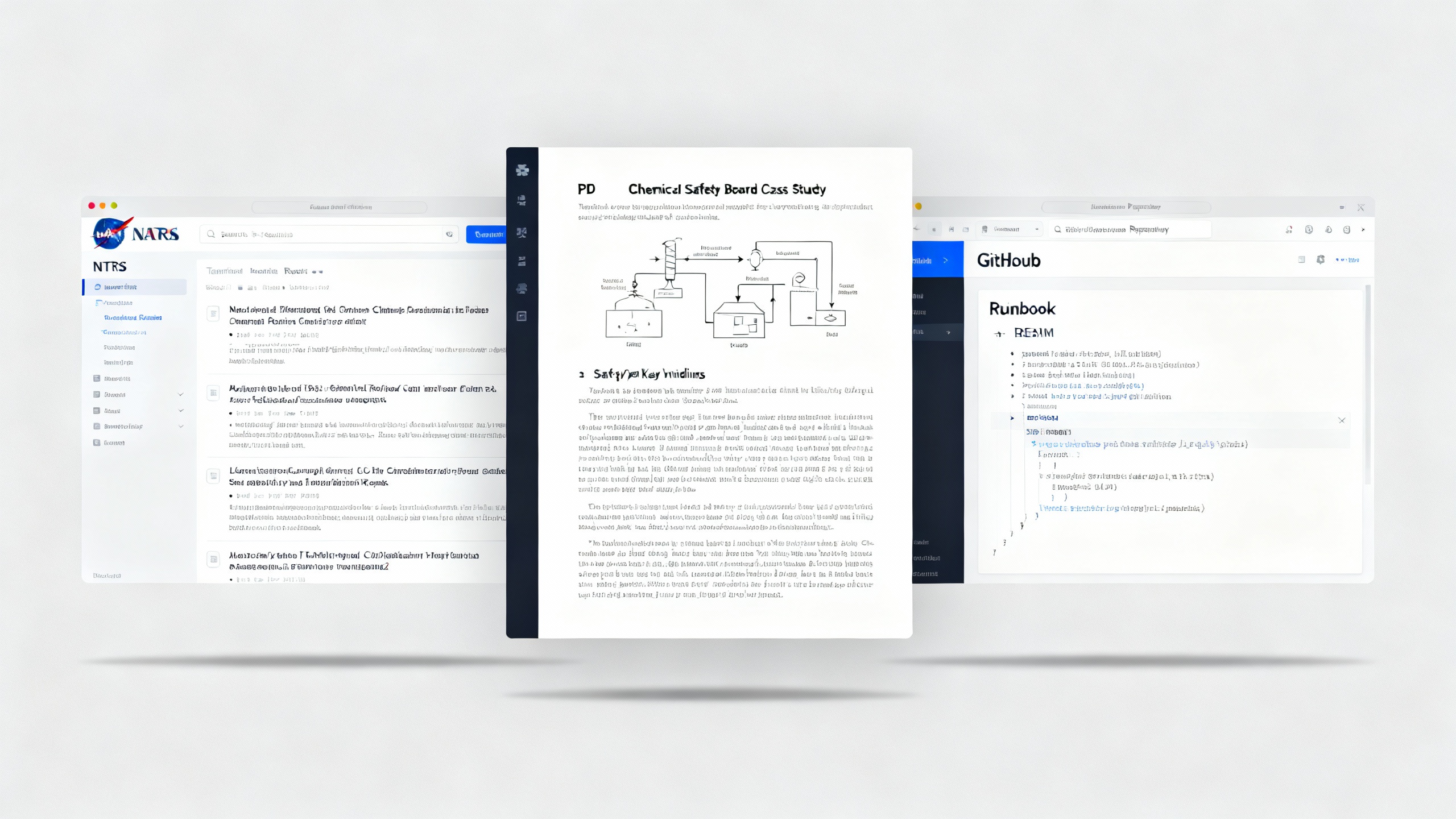
Safety Boards and Regulators’ Incident Reports Investigations convert hard-won lessons into concrete steps. Browse the U.S. Chemical Safety Board for detailed case studies, the NTSB CAROL database for transportation incidents, or the UK’s HSE guidance. Extract the corrective actions and turn them into pre-job checks and yes/no decision points.
-
Government Technical Repositories (NASA, DOE, NIST) Agencies publish shockingly practical field procedures and test notes. Search NASA NTRS for troubleshooting narratives, DOE OSTI for operations manuals and lessons learned, and NIST Special Publications for checklists and guidelines. Use equipment keywords plus "field" or "procedures" to filter the firehose.
-
SRE/DevOps Runbooks and Postmortems If your “operators” run software or OT systems, study public runbooks to sharpen your own. The Google SRE book shows how to codify responses, while GitHub’s runbook topic surfaces community examples. Translate the structure—triggers, quick checks, rollback steps—into your environment.
-
Trade Journals and Case Studies Publications often host “how we fixed it” articles that read like clean field notes. Try Control Global, Reliabilityweb, and industry association magazines. Save recurring patterns (symptom → diagnostic → fix) into your knowledge base as decision trees.
-
Professional Communities and Forums When you need the weird, niche answer, ask the hive mind. Engineers actively share notes and photos on Eng-Tips, Engineering Stack Exchange, and r/AskEngineers. Always sanitize and verify before turning a forum tip into a procedure.
-
Field Data-Capture Apps and Templates Mobile form tools like Fulcrum and ProntoForms provide inspection templates and community libraries. These templates are basically pre-baked field notes—tighten them to your plant, then feed every on-the-ground edit back into the master. Over time, you’ll converge on a “golden” checklist.
-
Public FOIA Portals and Open Archives Some of the best insights live in open records—test logs, commissioning reports, and after-action reviews. In the U.S., start at FOIA.gov; for aviation, explore NASA’s ASRS reports for human-factors lessons. Use precise equipment names and incident dates to narrow results.
<<callout type="action" title="Power Search Cheatsheet">
- Use exact phrases: "operator field notes" OR "commissioning checklist"
- Filetype filter: site:pdf OR filetype:xls troubleshooting checklist
- Vendor-specific: site:vendor.com "service bulletin" OR "field advisory"
- Incident mining: "lessons learned" + your equipment or process name
Wrap-Up
Field notes hide in plain sight—inside your CMMS, tucked into standards, and embedded in incident write-ups. Pull them into a shared, versioned repository, tag by asset and failure mode, and prune relentlessly. The result is a living playbook your operators will actually trust—and use.