

What happened
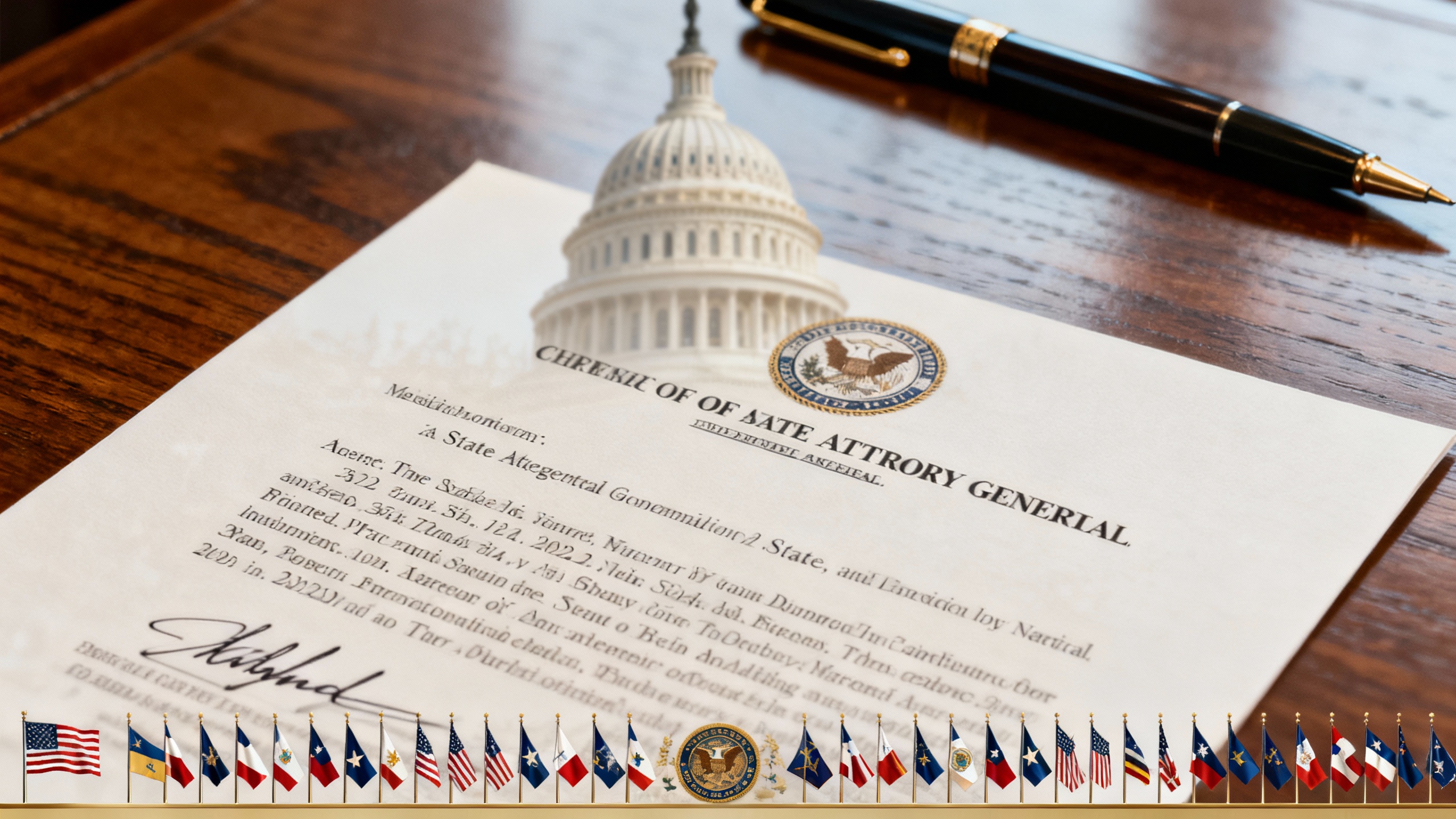
A bipartisan coalition of 35 state attorneys general — joined by the District of Columbia and several U.S. territories — urged congressional leaders on November 25, 2025, not to pass any federal measure that would block states from enacting or enforcing their own AI rules. The letter, led by New York Attorney General Letitia James with counterparts in North Carolina, Utah, and New Hampshire, warns that sweeping preemption would leave consumers exposed to AI‑driven harms from scams to unsafe chatbots. Reuters first reported the coalition; James’ office posted the letter and signatories. Read the letter (PDF).
The timing is not accidental. After the Senate stripped a 10‑year state AI moratorium from a budget bill in July by a 99–1 vote, some in Washington floated new preemption language for the National Defense Authorization Act (NDAA). Meanwhile, the White House recently paused a draft executive order that would have sought to preempt state AI laws via litigation and funding conditions. NCSL and the Senate Commerce Committee hailed the July vote, and Reuters reported the executive‑order pause.
Why this matters
The core fight is over federalism. Tech firms and some federal policymakers argue that a patchwork of state AI laws will raise costs, chill innovation, and create constitutional conflicts across interstate commerce. Business coalitions have asked Congress to preempt state AI rules, and prominent investors have warned that expansive state regimes (for example, California and Colorado proposals) risk becoming de facto national standards. See the U.S. Chamber coalition letter backing a moratorium on state AI enforcement and Business Roundtable’s call for broad preemption. (U.S. Chamber, Business Roundtable, and context from a16z.)
State officials counter that they are closer to real‑world harms and can move faster than Congress. The attorneys general point to AI‑enabled fraud, discriminatory algorithms, and unsafe conversational agents — concerns underscored by investigative reporting and litigation tied to chatbot misuse and tragic outcomes. See Reuters’ investigation into a fatal incident involving a Meta AI persona and a separate lawsuit alleging a chatbot’s role in a teen’s suicide. (Reuters investigation; Reuters legal coverage.)
The July 2025 Senate vote offers a recent benchmark: after bipartisan blowback, senators removed a state AI moratorium tied to broadband funds from a budget package. NCSL press and a statement from Senate Commerce leaders document the 99–1 result. (Senate Commerce release).
What states are already doing
Even as Congress debates national standards, states have been legislating across distinct risk areas. A few examples that the AGs cite — and that companies should track — are below.
- Colorado’s AI Act targets “high‑risk” AI in consequential decisions (housing, employment, lending, education, health care). It requires risk management, impact assessments, notices, and documentation; implementation was recently delayed to June 30, 2026. (Colorado AG overview; statute summary; delay analysis).
- California passed multiple measures effective beginning in 2026, including the Transparency in Frontier AI Act (SB 53) and content provenance/disclosure requirements (SB 942), plus training‑data transparency (AB 2013). (AP News; JD Supra; Pillsbury; Mondaq).
- New York now requires “AI companion” apps to detect and respond to suicidal ideation and to remind users at least every three hours that they are not interacting with a human. Effective November 5, 2025; enforced by the AG. (Governor’s notice; law firm summary).
- States continue to curb deceptive political deepfakes, especially around elections, often via disclosure and pre‑election bans, while a new federal law (the TAKE IT DOWN Act) requires platforms to remove non‑consensual intimate deepfakes within 48 hours of a victim’s request by May 19, 2026. (NCSL election AI tracker; CRS explainer on TAKE IT DOWN).
Near‑term AI obligations to watch
| Jurisdiction | What’s required | When it hits | Who it affects |
|---|---|---|---|
| New York | AI companions: crisis protocols; periodic “not a human” disclosures | In force Nov 5, 2025 | Providers of AI companion/chat apps |
| California (SB 53) | Frontier‑model transparency and incident reporting | Jan 1, 2026 (core obligations) | Developers of advanced models meeting thresholds |
| California (AB 2013) | Training‑data documentation for gen‑AI | Jan 1, 2026 | Developers releasing gen‑AI in CA |
| California (SB 942) | Detection tool and content provenance/watermarking | Jan 1, 2026 | Large consumer gen‑AI providers |
| Colorado (SB 24‑205) | High‑risk AI risk management, impact assessments, notices | June 30, 2026 (delayed) | Developers and deployers in consequential decisions |
| Federal (TAKE IT DOWN) | 48‑hour takedown process for NCII deepfakes | May 19, 2026 (platform process deadline) | Covered platforms |
The preemption push — and the backlash
- The administration considered an executive order to attack state AI laws in court and condition certain federal funds on state compliance; that draft was put on hold after bipartisan criticism. (Reuters).
- Industry groups and investors continue to urge Congress to create a single national framework that explicitly preempts state AI rules. (Reuters; Business Roundtable; U.S. Chamber letter).
- State lawmakers and civil society organizations — including NCSL, EFF, CDT and others — have filed their own letters urging Congress not to handcuff the states. (NCSL letter; EFF letter; CDT coalition letter).
What this means for product, policy, and legal teams
Even if Congress debates preemption, most state rules now on the books are not going away overnight. Expect overlapping obligations (transparency, testing, provenance, youth safety, and anti‑discrimination) to become the default due‑diligence checklist for AI operations in 2026.
The bottom line
The coalition letter doesn’t end the federal preemption debate — but it raises the political cost of sidelining states just as major state laws are about to take effect. For AI builders and buyers, that means planning for state‑led guardrails in 2026 while staying nimble if Congress lands on a national framework. Either way, the era of “AI with no paperwork” is closing fast.
Sources
- Reuters on the AGs’ letter (Nov. 25, 2025): https://www.reuters.com/legal/litigation/dozens-state-attorneys-general-urge-us-congress-not-block-ai-laws-2025-11-25/
- NY Attorney General press release + letter PDF (Nov. 25, 2025): https://ag.ny.gov/press-release/2025/attorney-general-james-leads-bipartisan-coalition-urging-congress-reject and https://ag.ny.gov/sites/default/files/letters/letter-to-congress-ai-moratorium-letters-2025.pdf
- Reuters on White House pausing draft executive order (Nov. 21, 2025): https://www.reuters.com/world/white-house-pauses-executive-order-that-would-seek-preempt-state-laws-ai-sources-2025-11-21/
- NCSL on 99–1 Senate vote removing state‑AI moratorium (July 1, 2025): https://www.ncsl.org/resources/details/ncsl-applauds-senates-99-1-vote-to-remove-ai-moratorium
- Senate Commerce release on the 99–1 vote: https://www.commerce.senate.gov/2025/7/senate-strikes-ai-moratorium-from-budget-reconciliation-bill-in-overwhelming-99-1-vote/8415a728-fd1d-4269-98ac-101d1d0c71e0
- Colorado AI Act overview (AG): https://coag.gov/ai/ and statute summary: https://leg.colorado.gov/bills/sb24-205; delay analysis: https://www.bakerbotts.com/thought-leadership/publications/2025/september/colorado-ai-act-implementation-delayed
- California AI measures: AP on SB 53 (Sept. 29, 2025): https://apnews.com/article/9f888a7cbaa57a7dec9e210785b83280; JD Supra on SB 53: https://www.jdsupra.com/legalnews/california-enacts-the-transparency-in-5611715/; Pillsbury on SB 942/AB 2013: https://www.pillsburylaw.com/en/news-and-insights/california-ai-laws.html
- New York AI companion law: Governor’s notice (Nov. 2025): https://www.governor.ny.gov/news/governor-hochul-pens-letter-ai-companion-companies-notifying-them-safeguard-requirements-are; Wilson Sonsini explainer: https://www.wsgr.com/en/insights/new-york-passes-novel-law-requiring-safeguards-for-ai-companions.html
- NCSL: AI in elections and deepfake rules: https://www.ncsl.org/elections-and-campaigns/ai-in-elections-a-look-at-the-federal-and-state-legislative-landscape
- CRS on TAKE IT DOWN Act (May 20, 2025): https://www.congress.gov/crs-product/LSB11314
- Reuters investigation on Meta AI companion case (Aug. 14, 2025): https://www.reuters.com/investigates/special-report/meta-ai-chatbot-death/
- Reuters on lawsuit alleging chatbot role in teen suicide (Aug. 26, 2025): https://www.reuters.com/sustainability/boards-policy-regulation/openai-altman-sued-over-chatgpts-role-california-teens-suicide-2025-08-26/
- U.S. Chamber coalition letter supporting state‑AI moratorium (June 9, 2025): https://www.uschamber.com/technology/coalition-letter-to-the-senate-supporting-the-moratorium-on-ai-regulation-enforcement
- Business Roundtable on preemption (Oct. 2025): https://www.businessroundtable.org/business-roundtable-response-to-request-for-information-on-regulatory-reform-on-artificial-intelligence
- a16z on dormant Commerce Clause and state AI laws: https://a16z.com/the-commerce-clause-in-the-age-of-ai-guardrails-and-opportunities-for-state-legislatures/
- EFF letter opposing AI preemption (Nov. 20, 2025): https://www.eff.org/document/eff-letter-opposing-federal-preemption-state-ai-laws