

The short version
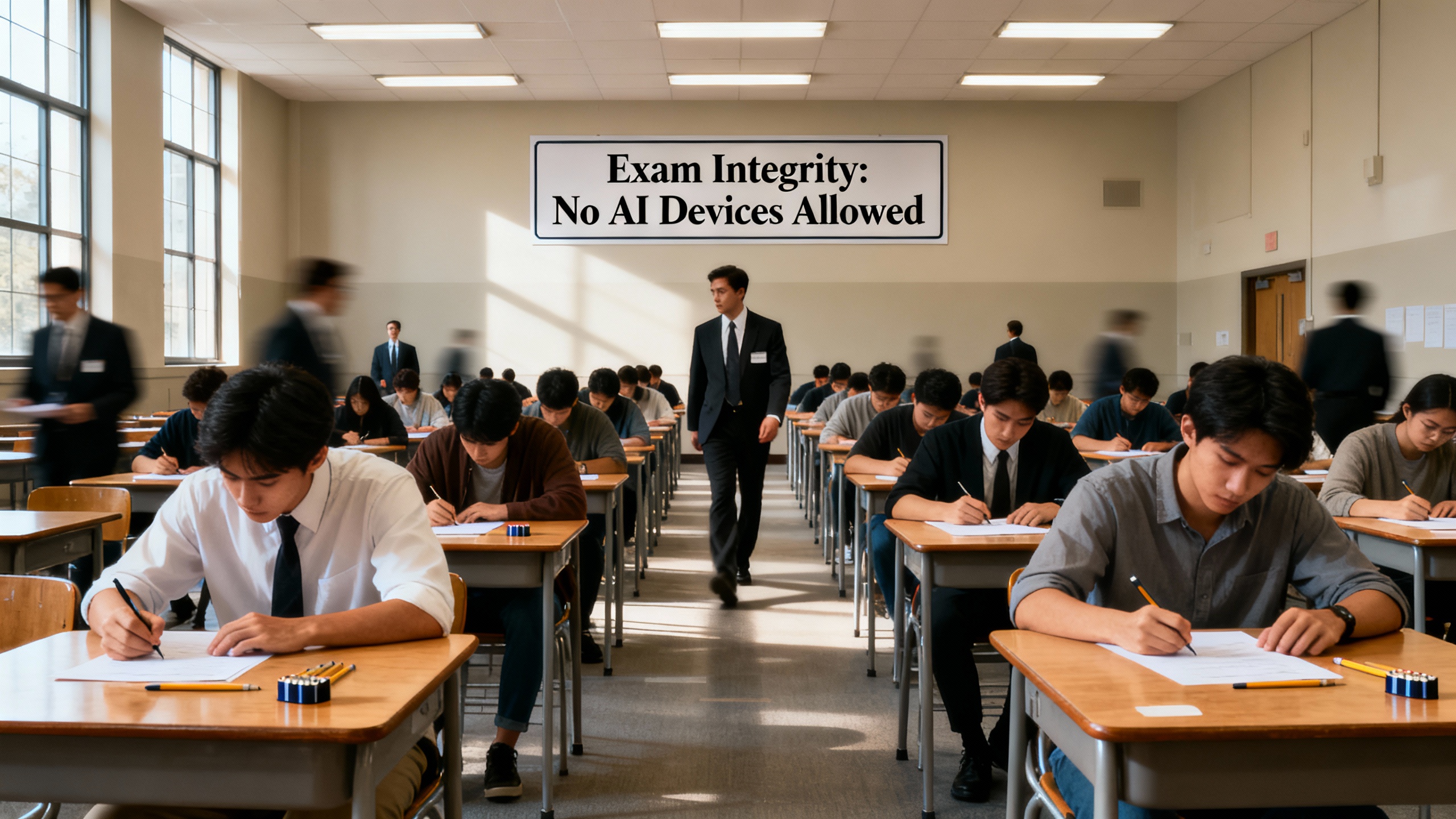
The Association of Chartered Certified Accountants (ACCA) will withdraw most remotely invigilated exams, citing the rising sophistication of AI‑enabled cheating. Remote session exams end with the March 2026 sitting; new purchases of remote “on‑demand” tokens were curtailed from November 4, 2025, with remote availability now limited to locations that lack any exam‑centre provision.

What changed—and why now
ACCA introduced remote invigilation during the pandemic as a continuity measure. In 2025, it concluded the balance had shifted: combating misconduct at scale has become harder as AI tools (and organized workarounds) outpace deterrence. From March 2026, all session-based exams move back to centres except where there is no exam-centre provision; the Professional Diploma in Sustainability remains available remotely worldwide.
Behind the decision is a simple risk calculus. ACCA’s chief executive, Helen Brand, told the Financial Times that cheating systems’ sophistication is outpacing safeguards—a sentiment echoed in separate academic and regulatory findings that current detection approaches struggle against modern AI use in assessments.
How the policy works
- Session exams: In-centre only from the March 2026 session, except in countries with no centre provision.
- On‑demand exams: ACCA has stopped selling new remote tokens from November 4, 2025, and is limiting remote availability to places without centre provision; already-purchased tokens remain valid until expiry.
- One notable exception: the Professional Diploma in Sustainability continues to be offered remotely in all countries.
- Integrity controls continue: data forensics, VPN bans, remote‑access/software prohibitions, and the power to withhold or nullify results remain in force.
The bigger picture: AI is forcing a rethink of assessment
The UK’s audit and accounting ecosystem has battled exam misconduct for years, and regulators have called it a “live” issue. Internationally, large firms have paid record penalties over exam cheating—EY’s $100m SEC settlement in 2022 being the headline case—illustrating the reputational damage when controls fail.
Universities and exam boards are confronting similar pressures. Studies show that LLMs can produce convincing answers that evade routine checks, while watchdogs (such as Australia’s TEQSA) advise shifting away from unsupervised assessments toward “secure” tasks—vivas, in‑person problem‑solving, and supervised practicals—to verify authorship.
What this means for candidates
- Convenience vs confidence: Remote sittings helped parents, carers, candidates with health needs, and those far from centres. But trust in results is paramount for employers and the public, especially in a profession built on assurance.
- Plan the transition: If you relied on remote options, check whether your country has centre provision and book early for March 2026 onward. If you’re in a location without centre access, remote routes continue, but confirm availability.
- Know the rules: VPNs, remote‑desktop tools and certain software can nullify results; serial irregularities can trigger bans. Review ACCA’s regulations well before exam day.
Remote‑proctoring tech vs AI: where the limits show
Vendors have improved identity verification, gaze/pose tracking and multi‑camera monitoring. Research prototypes report higher detection accuracy by fusing multiple signals and human review. Yet two realities remain: organized cheating adapts quickly, and “AI style” is not a reliable smoking gun across all question types.
On the flip side, analytics can flag suspicious response patterns—particularly in objective tests—without peeking at content. Recent work using Rasch analysis identified ChatGPT‑like answering profiles in multiple‑choice chemistry exams with near‑zero false positives, hinting at scalable approaches that complement supervision.
Assessment is changing with AI—so is ACCA’s syllabus
ACCA’s decision doesn’t signal a retreat from technology in learning. In parallel, it is redesigning its qualification for first exams in 2027, weaving sustainability, ethics and AI across levels, and adding an optional Data Science Professional exam at Strategic Professional. The direction: assess judgement, communication and real‑time problem‑solving alongside technical mastery—skills that remain differentiators in an AI‑rich workplace.
Timeline at a glance
Key milestones for ACCA’s exam delivery changes
| Date | What changes |
|---|---|
| November 4, 2025 | Sales of remote on‑demand exam tokens curtailed; remote now restricted to locations without exam‑centre provision; previously purchased tokens remain valid to expiry. |
| March 2026 sitting | All session‑based ACCA exams held in centres, except where there is no centre provision. |
| Ongoing | Professional Diploma in Sustainability remains remotely invigilated worldwide. |
How other bodies are responding
Remote options are not disappearing everywhere. The ICAEW, for example, continues to offer remote invigilation alongside centre exams, illustrating the diversity of responses as professional bodies weigh integrity, candidate access and operational risk.
Bottom line
ACCA’s move trades some convenience for higher confidence in outcomes. For candidates, it means planning ahead—and for educators, it’s another nudge to build assessments that embrace real‑world AI while keeping authorship and ethics verifiable.
Sources
- Financial Times: Accounting body scraps remote exams to combat cheating (Dec 29, 2025)
- ACCA: FAQs on the limited availability of remote exams and UK variant
- ACCA exam regulations and terms: integrity and remote‑access/VPN rules and exam entry terms
- SEC press release: EY to pay $100m for exam cheating (June 28, 2022)
- FRC: seeks assurances on exams cheating (July 15, 2022) and related coverage (Guardian, Dec 2022)
- University of Reading study coverage: AI‑generated exam answers fooled markers (June 26, 2024)
- TEQSA (coverage): AI cheating “near‑impossible to detect,” push for secure assessments (Oct–Nov 2025)
- FSU/Journal of Chemical Education: detecting ChatGPT use via Rasch analysis (Aug 2024)
- ACCA: The future ACCA Qualification explained; FAQs (2025 updates) and AB Magazine: ACCA redesigns qualification
- ICAEW: Remote invigilation guidance (Professional and Advanced Level)
- PQ Magazine: ACCA annual report headline metrics (year to Mar 31, 2025)