

Anthropic is taking its coding agent where many engineering conversations already happen: Slack. On December 8, 2025, the company introduced a beta “research preview” that lets teams summon Claude Code from any Slack thread, have it pick the right repository, and push a pull request—all without leaving chat. It builds on Anthropic’s existing Slack app but adds routing to full Claude Code sessions on the web.
What’s new: from chat replies to real coding sessions
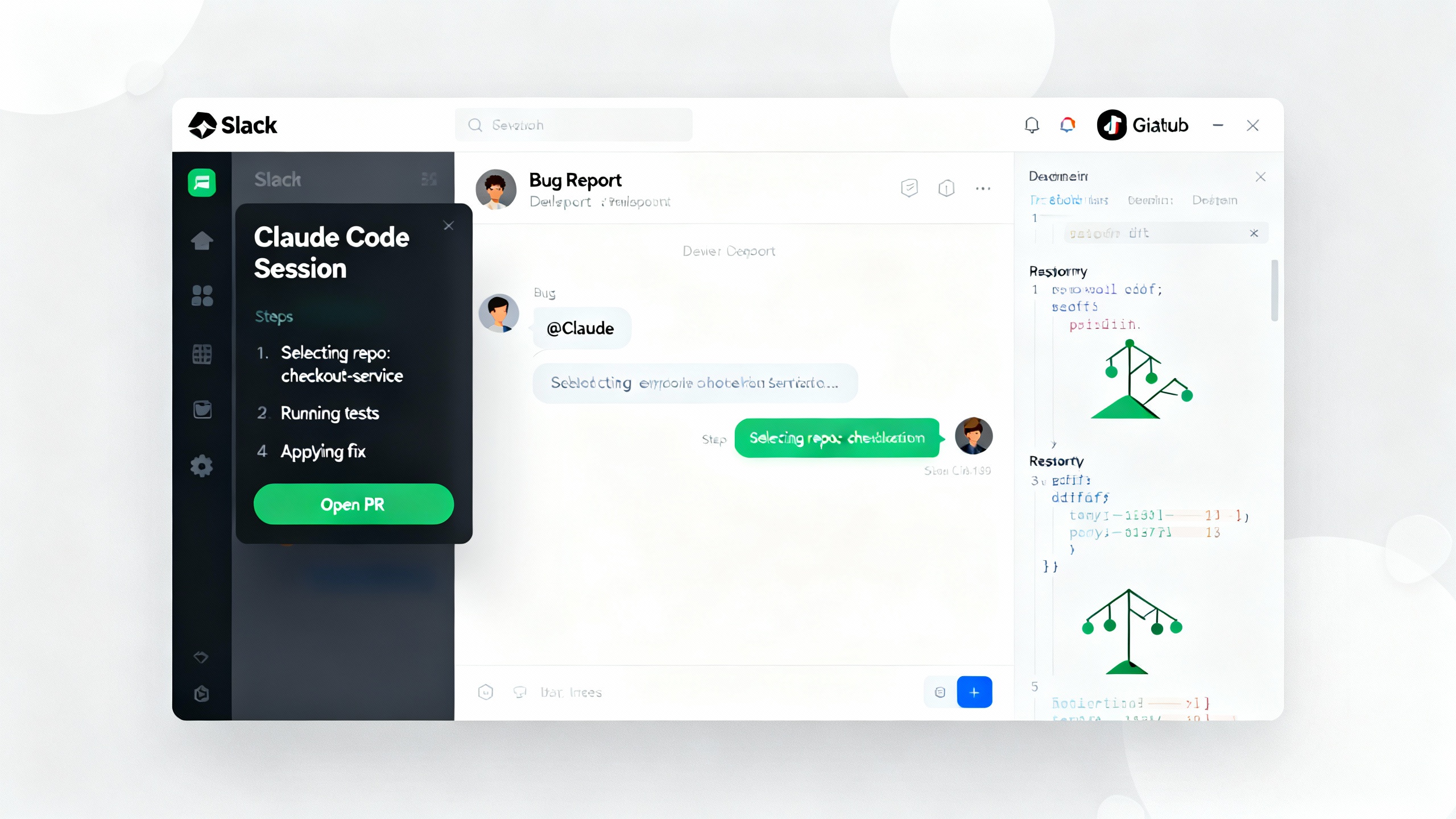
Until now, Claude in Slack mostly answered questions, summarized threads, or drafted content. With the new integration, mentioning @Claude on a coding task triggers an intent check; if it looks like development work, Claude automatically spins up a Claude Code session on the web, harvests context from the Slack thread, selects an authenticated repository, and reports progress back in-channel. When it’s finished, you’ll see links to the full session and to open a PR.
What Claude Code in Slack can do today
| Capability | What happens in Slack | Where the heavy lifting runs |
|---|---|---|
| Detect coding intent | @Claude analyzes your message/thread | Claude Code on the web |
| Gather context | Reads the thread (and recent channel context) where it was mentioned | Claude Code on the web |
| Choose repo | Auto-selects from your GitHub repos connected to Claude Code | Claude Code on the web |
| Show progress | Posts updates, lets you change repo or “Retry as Code” | Slack thread |
| Ship a PR | Offers “Create PR” and “View Session” actions | GitHub via Claude Code |
Why it matters: coding agents are moving into team workflows
Slack is explicitly positioning itself as an “agentic” hub where AI assistants act like teammates inside channels. For engineering orgs, that means the bug report, the triage discussion, and the fix can now live in one place—reducing context-switching from chat to IDE to browser and back. Claude Code’s Slack handoff is a concrete example of agents meeting developers where coordination already happens.
How it works in practice
- Mention @Claude in a relevant thread with a clear request (e.g., “Investigate the 500 in checkout and add a regression test”). Claude checks whether it’s a coding task.
- If it is, a Claude Code session starts on the web. The agent gathers thread context, selects an authenticated GitHub repo, and begins work.
- Status updates post back to Slack (e.g., tests added, files changed). You can switch repos or “Retry as Code” if it misrouted.
- When done, use “View Session” for a full transcript or “Create PR” to propose changes.
Important notes:
- Works in channels/threads, not DMs.
- Current limitations: GitHub-only, one PR per session, and standard usage limits apply.
Who can use it (and what you’ll need)
- Claude’s Slack app: Anthropic’s official listing is available in the Slack App Marketplace. Admin approval is required; the app’s security profile notes conversations aren’t used to train models by default.
- Access to Claude Code on the web: The Slack handoff relies on web sessions and authenticated repos. Claude Code on the web is in research preview, with setup guided by Anthropic’s docs.
- Plans and pricing: Claude Code is included with Claude Pro and Max for individuals and with Team/Enterprise premium seats; pricing and model access are documented on Anthropic’s product page.
- Slack plan eligibility: Anthropic’s product and help pages now say the Claude app is available on paid Slack plans; earlier help content referenced Enterprise Grid only. Availability can vary by workspace and region, so check with your admin.
Security, governance, and guardrails
- Scoped visibility: Claude only sees messages in the threads where it’s explicitly mentioned (or in a DM)—a design Anthropic has emphasized since its initial Slack launch.
- Data use: The Slack Marketplace listing states that, by default, Slack conversations aren’t used to train Anthropic’s models. Anthropic also documents admin controls and a 30‑day backend deletion window upon disconnect. Always validate against your company’s data policies.
- Rate limits and reliability: Anthropic tightened Claude Code usage for heavy users in mid‑2025 and later introduced weekly caps—worth noting if you expect continuous background runs from Slack.
The bigger picture
Together with Slack’s Agentforce push and a growing connector ecosystem (e.g., the Slack connector that lets Claude search channels from within Claude itself), this launch signals a shift: the next competitive battleground for coding assistants is workflow depth and distribution, not just raw model scores. Embedding agents into the places where teams decide what to build—and then letting those agents do the building—compresses the distance from discussion to deployment.
Bottom line
Claude Code’s Slack handoff won’t replace interactive terminal sessions for deep work, but it’s a smart bridge between coordination and execution. If your team lives in Slack, this is an easy, low‑friction way to pilot agentic coding in the flow of work—especially for well‑scoped fixes, small features, and doc updates. Keep an eye on availability, rate limits, and governance settings as Anthropic broadens the rollout.
Sources
- Anthropic—“Claude Code and Slack” product post (Dec 8, 2025): claude.com/blog/claude-code-and-slack.
- Claude Code in Slack documentation: code.claude.com/docs/en/slack.
- TechCrunch coverage: “Claude Code is coming to Slack” (Dec 8, 2025). techcrunch.com.
- Claude Code on the web (research preview) docs: docs.claude.com.
- Claude Code product and pricing: anthropic.com/claude-code.
- Slack Marketplace—Claude app listing (permissions, data policy): slack.com/marketplace.
- Anthropic Help Center (Slack availability—historical Enterprise Grid note): support.anthropic.com.
- Claude Help Center (Slack availability on paid plans; Slack connector): support.claude.com.
- Original Claude-in-Slack announcement (scoped visibility): anthropic.com/news/claude-now-in-slack.
- Slack—Agentforce and agents in Slack: slack.com/ai-agents.
- TechCrunch (rate limits context, July 2025): July 17, July 28.