

The short version
Anthropic has rolled out Claude Opus 4.5, a major upgrade focused on sustained “agentic” work, persistent memory, and practical computer use—with a price cut large enough to change automation math for many teams. The release also widens real‑world integrations, making Claude show up in Chrome, Excel, and across the big three clouds.
What’s new in Opus 4.5
Opus 4.5 is Anthropic’s latest flagship model, positioned as its most capable Claude to date. Beyond better raw scores (including a new high-water mark on SWE‑bench Verified for real‑world coding), the release centers on two ideas: memory that persists across sessions and tooling that lets Claude act as a reliable lead agent coordinating sub‑agents and software.
Opus 4.5 at a glance
| Area | What changed | Who gets it |
|---|---|---|
| Coding & reasoning | New SOTA results on real-world coding benchmarks; stronger long‑horizon planning | All Opus 4.5 users via apps and API (Anthropic announcement, product page) |
| Memory & context | Project-scoped memory in the app; new Memory Tool and Context Editing for developers; “endless chat” auto‑summarization | Team/Enterprise, now expanded to Pro/Max; Memory/Context tools in the API (Anthropic memory, Memory Tool docs, Context Editing docs) |
| Agentic control | New effort parameter to trade capability for speed/cost; Tool Search for on‑demand tool discovery; upgraded Computer Use | Effort (Opus 4.5); Tool Search/Computer Use in beta via API (Effort docs, Tool Search, Computer Use) |
| Integrations | Claude for Chrome goes broad on Max; Claude for Excel beta opens up; Claude Code lands in the desktop app | App users on eligible plans (TechCrunch, Claude for Excel) |
| Where it runs | Available on Anthropic’s apps/API and now across Amazon Bedrock, Google Vertex AI, and Microsoft Foundry | Builders on any major cloud (Anthropic product page, Foundry/Copilot update) |
Pricing drops to $5 per million input tokens and $25 per million output tokens—down from $15/$75 for the prior Opus—while keeping a 200K‑token context window and adding new controls for efficiency (Opus 4.5; historical pricing: docs).
Why the memory upgrade matters
Anthropic has been shipping work‑oriented memory this fall, first to Team/Enterprise and then expanding to Pro/Max. In practice, that means:
- In the apps: Claude can remember project context with user controls for viewing, editing, and incognito mode. Long conversations get “endless chat” behavior—Claude compacts earlier turns so work continues without hitting a hard wall (Anthropic announcement; TechCrunch coverage).
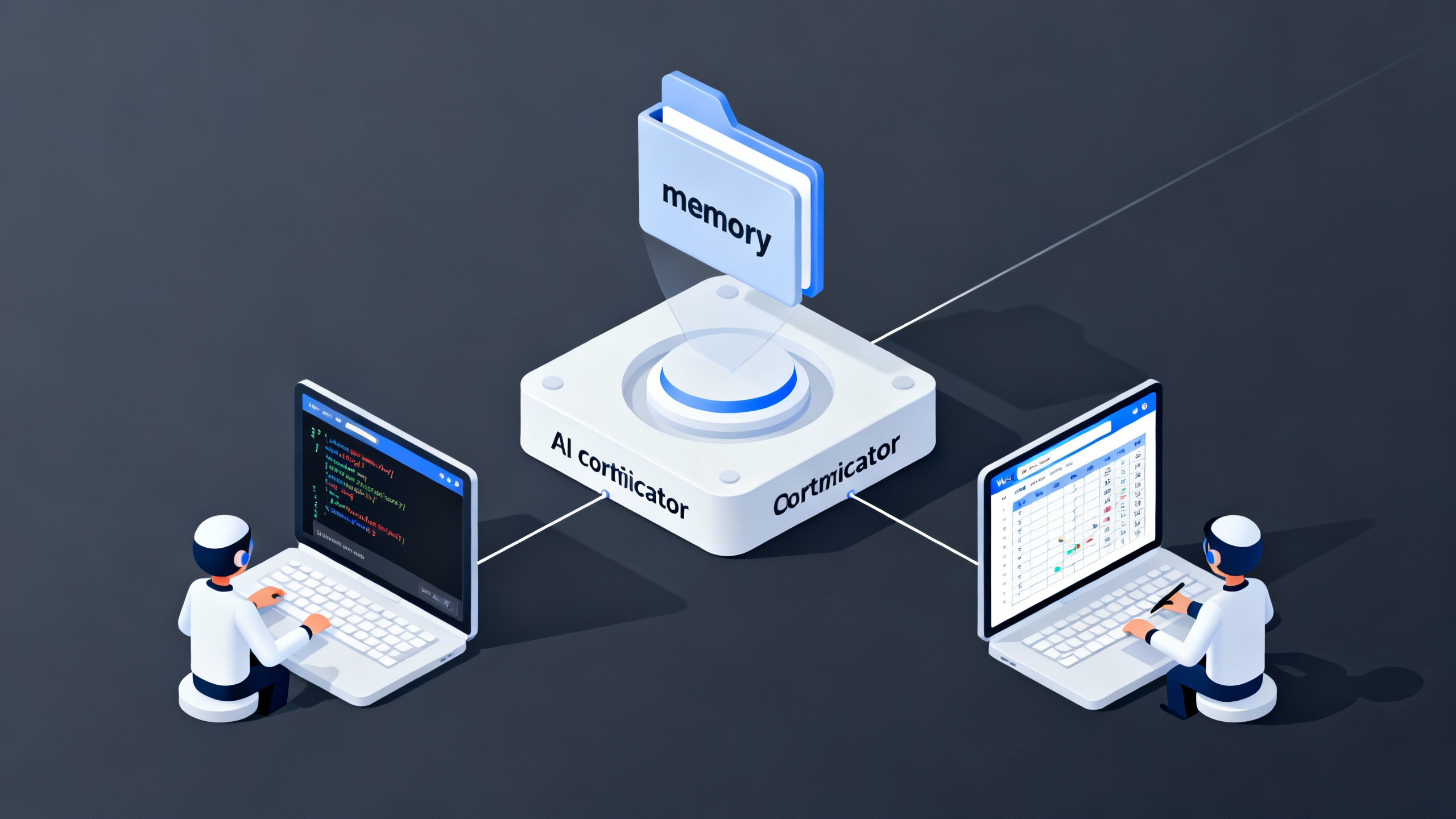
- In the API: a dedicated Memory Tool lets agents write to and read from a storage directory you control, so knowledge persists across sessions without bloating the context window (Memory Tool docs).
- “Context editing” (server‑side strategies) and “compaction” (SDK summaries) automatically prune or summarize old state; combined with memory, you can preserve the essentials yet keep token use predictable (Context Editing docs).
For automation teams, this shifts agent design from “hope it remembers” to “decide what to remember.” It also makes longer workflows viable—think: a customer‑support agent that learns over time, or a research bot that carries forward findings week to week.
Agentic upgrades built for real work
Opus 4.5 pairs those memory features with new controls and tools that make agents more predictable and economical:
- Effort parameter: dial Claude’s “thinking spend” from high to medium/low to trade off capability vs. latency and cost—without switching models. At medium effort, Opus 4.5 matches Sonnet 4.5’s peak SWE‑bench score while using far fewer output tokens; at high effort, it surpasses it with notable efficiency gains (Effort docs; Anthropic announcement).
- Tool Search: instead of stuffing dozens of tool schemas into context, Claude discovers and loads tools on demand, reducing context waste and improving tool selection in large catalogs (Tool Search docs).
- Computer Use: an upgraded tool version enables more precise on‑screen actions inside a sandbox, with added mitigations against prompt‑injection risks during autonomous browsing (Computer Use docs).
- Sub‑agents: Anthropic’s Agent SDK supports orchestrating specialized sub‑agents (e.g., data cleaner, modeler, reviewer) under a lead Opus agent—useful for complex, parallelizable work (Subagents guide).
Integrations that lower activation energy
- Claude for Chrome (now broadly available to Max): a sidecar agent that can read, click, and act across tabs when you grant permissions (TechCrunch).
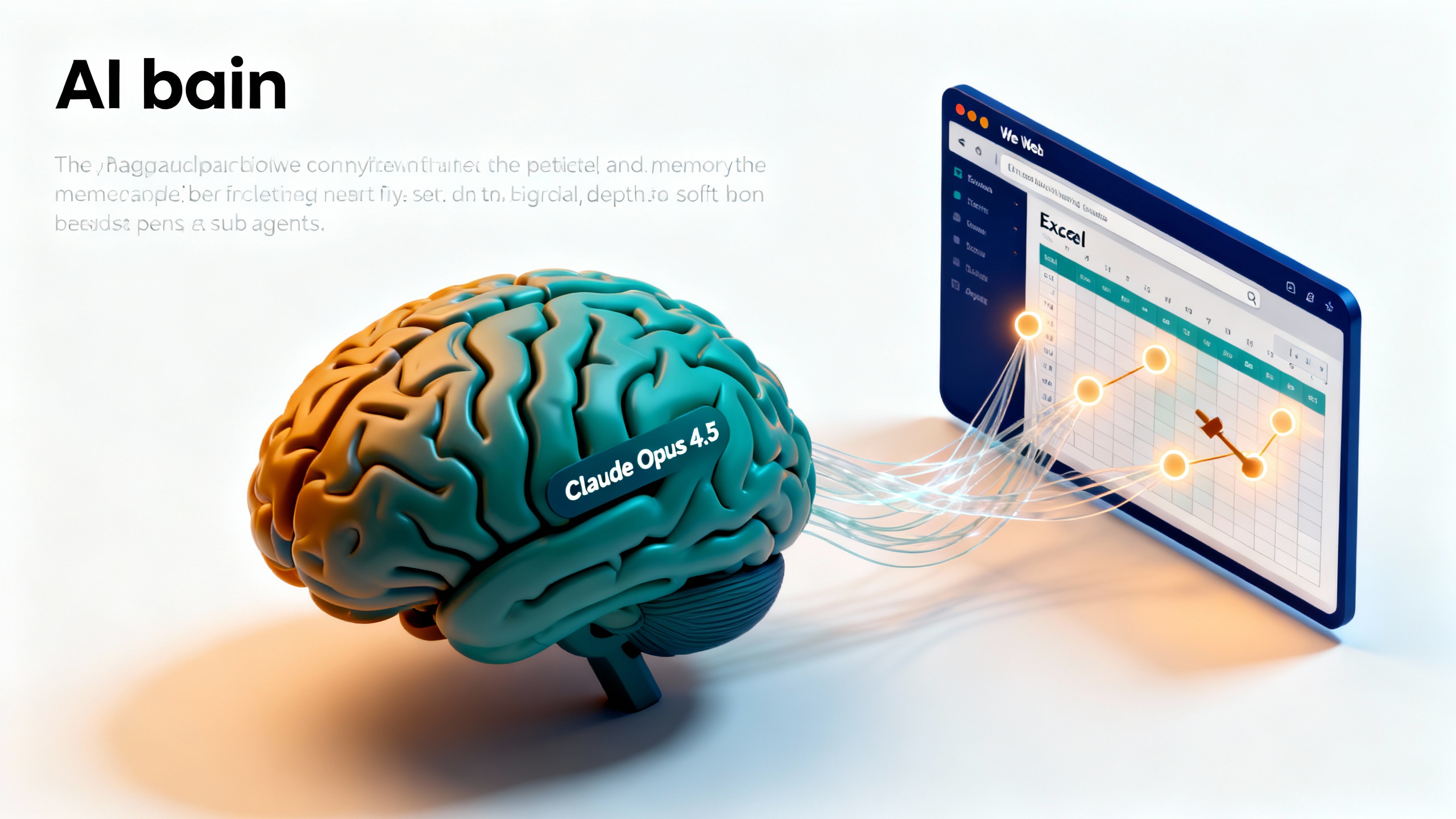
- Claude for Excel (beta for Max, Team, Enterprise): explanations with cell‑level citations, scenario testing without breaking formulas, and faster debugging—aimed squarely at analysts and FP&A pros (Claude for Excel).
- Claude Code in the desktop app: plan-first execution and multi‑session support for sustained engineering work (Anthropic announcement).
Performance and safety: how it stacks up
- Coding: Opus 4.5 posts an 80.9% score on SWE‑bench Verified—crossing the 80% threshold that competitors recently chased—alongside gains on agentic search and long‑horizon tasks (product page, TechCrunch).
- Enterprise workflows: Anthropic reports notable improvements in spreadsheet and slide work; early users cite fewer dead‑ends during 30‑minute autonomous coding runs (announcement).
- Safety: External testing from security firm Gray Swan shows Opus 4.5 resists strong prompt‑injection attempts better than peers, though non‑trivial failure rates remain—so guardrails still matter, especially for autonomous computer use (The Decoder summary of Gray Swan results; Anthropic also highlights improved robustness in its announcement).
Availability and ecosystem
Opus 4.5 is live in Anthropic’s apps and API and available on Amazon Bedrock, Google Cloud Vertex AI, and Microsoft Foundry—part of a broader set of partnerships that also bring Claude into Microsoft 365 Copilot scenarios. Anthropic, Microsoft, and NVIDIA also announced a strategic deal that includes Anthropic’s commitment to $30B of Azure compute and investments from Microsoft and NVIDIA, making Claude the only frontier model natively present across the three major clouds (Anthropic partnerships post; Foundry/Copilot update).
What this means for automation leaders
For many teams, agentic workflows started as proofs of concept that hit walls: context limits, tool sprawl, and runaway costs. Opus 4.5 directly targets those friction points with persistent memory, context management, and on‑demand tool loading—plus a dramatic price drop.
TipTry this in a week
- In the app: enable Memory, start a new Project, and test the “endless chat” feel on a long research or analysis thread (Memory overview).
- In Excel: install the beta add‑in and ask Claude to trace a broken model; verify changes via cell‑level citations (Claude for Excel).
- In code: use Claude Code’s Plan Mode, approve the plan.md, then let it run while you supervise high‑impact changes (announcement).
- In the API: chain Context Editing + Memory Tool to keep a multi‑hour agent on track without ballooning token spend (Context Editing docs, Memory Tool docs).
- Tune cost/perf: experiment with the effort parameter for sub‑agents (low) vs. the orchestrator (high) (Effort docs).
Bottom line
Opus 4.5 isn’t just “a bigger model.” It’s a coordinated push toward AI that remembers, plans, and executes across real software—and does so at a cost that finally makes always‑on agents feasible for more than a pilot. If your automation roadmap stalled on context limits or unit economics, this release is a strong signal to pick it back up.
Sources
- Anthropic: Introducing Claude Opus 4.5
- Anthropic: Claude Opus 4.5 product page
- TechCrunch: Anthropic releases Opus 4.5 with new Chrome and Excel integrations
- MacRumors: Anthropic Launches Claude Opus 4.5
- Reuters: Anthropic bolsters Claude’s coding, agentic abilities with Opus 4.5
- Anthropic: Bringing memory to Claude
- Docs: Memory Tool, Context Editing, Effort
- Product: Claude for Excel
- Anthropic: Claude now available in Microsoft Foundry and Microsoft 365 Copilot
- Anthropic: Microsoft, NVIDIA, and Anthropic announce strategic partnerships
- The Decoder: Opus 4.5 prompt‑injection results (Gray Swan)
- Anthropic docs (historical): Pricing page with Opus 4/4.1 rates