

The headline, at a glance
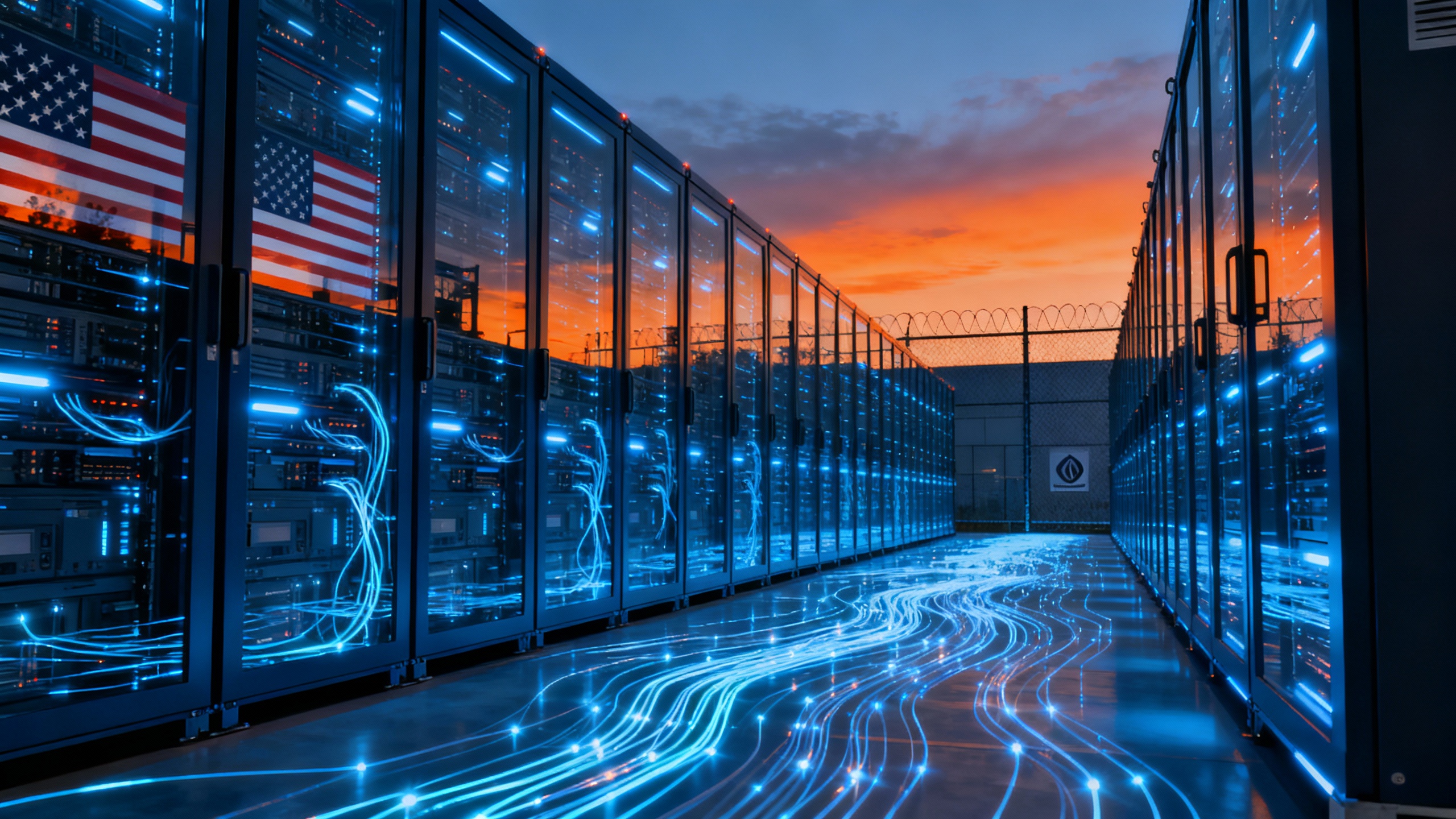
Amazon’s cloud arm, AWS, says it will invest up to $50 billion to build secure, high‑performance AI infrastructure exclusively for U.S. government customers. The multiyear buildout—set to break ground in 2026—will add nearly 1.3 gigawatts of new compute capacity across AWS Top Secret, AWS Secret, and AWS GovCloud (US) regions and pair Nvidia hardware with AWS’s own Trainium chips and AI services including SageMaker, Bedrock, and Nova. Amazon, Reuters, WSJ.
Why this matters: AI meets classified HPC
For more than a decade, AWS has operated dedicated U.S. government regions—from GovCloud (launched 2011) to the Secret Region (2017) and Top Secret regions (East launched mid‑2010s; West added in 2021)—purpose‑built for workloads up to the Top Secret level. CNBC, AWS Public Sector Blog, TechCrunch.
What’s new is scale and specificity: the buildout is framed as the “first-ever” AI/HPC infrastructure purpose‑built for U.S. government use across classification levels, blending traditional modeling and simulation with generative AI and agents for faster mission outcomes—from cybersecurity analytics to drug discovery to autonomous systems R&D. Amazon, TechCrunch.
Policy and procurement context
- The announcement dovetails with the Administration’s America’s AI Action Plan (July 23, 2025), which prioritizes “building American AI infrastructure.” White House.
- Agencies will continue to buy cloud via multi‑vendor vehicles such as the CIA’s C2E (tens of billions over 15 years) and DoD’s JWCC (shared $9B ceiling through 2028). Washington Post, Defense Dept. release, CNBC.
What exactly is AWS building?
- Nearly 1.3 GW of additional compute capacity across the three U.S. government regions (GovCloud, Secret, Top Secret), starting construction in 2026. Amazon, Reuters.
- A full AI/HPC stack: AWS Trainium chips, Nvidia AI infrastructure, and services like Bedrock (foundation models and agents), SageMaker (training/tuning), and Nova. Amazon, Yahoo Finance.
- Expansion inside existing, air‑gapped or access‑restricted regions with U.S.‑only operations and personnel, and accreditations aligned to FedRAMP High and DoD SRG (up to IL6 for Secret‑level classified workloads). AWS DoD SRG, AWS GovCloud compliance.
U.S. Government AWS regions at a glance
| Region | Classification scope | Typical accreditations | Example missions |
|---|---|---|---|
| AWS GovCloud (US) | Unclassified to Controlled Unclassified (CUI) | FedRAMP High; DoD SRG IL2/IL4/IL5; ITAR | Civilian agency systems, DoD IL5 workloads, CJIS/health/ITAR workloads |
| AWS Secret Region | Secret (DoD IL6) | DoD SRG IL6; ICD guidance | Intelligence/defense Secret workloads, tactical edge processing |
| AWS Top Secret Regions (East/West) | Top Secret | IC authorizations; air‑gapped | Highly sensitive national security missions |
Sources: AWS, AWS GovCloud, TechCrunch.
Why agencies—and the industrial base—care
While exascale supercomputers at DOE labs remain indispensable for many workloads, this initiative brings cloud‑scale AI and HPC closer to classified users and their partners. Expect impacts in:
- National security: faster multi‑INT fusion (imagery, signals, cyber) and automated response planning. Amazon.
- Science and health: accelerated modeling (materials, energy, climate) and drug discovery via combined simulation+AI loops. WSJ.
- Industrial base productivity: primes and SaaS vendors operating in GovCloud/IL5 can tap larger, low‑latency compute pools for secure AI features. Examples of growing IL5/FedRAMP ecosystems include Databricks and others. Databricks IL5, Databricks FedRAMP High.
The fine print: power, timelines, and risk
- Timelines: AWS says construction begins in 2026; capacity will stage‑in over multiple years. Agencies should plan migrations and new workloads accordingly. Amazon.
- Power constraints: AI data centers are straining U.S. grids; Deloitte estimates AI‑driven data center power demand in the U.S. could reach 123 GW by 2035 (≈30× 2024). Deloitte Insights, American Public Power Association, Gartner.
- Community and siting: AI campuses face increasing local pushback over power and water use; site selection and utility agreements matter. Financial Times, Reuters on separate Indiana build.
- Vendor concentration: The plan underscores hyperscaler scale advantages. Federal buyers can counterbalance via multi‑cloud task orders (JWCC/C2E), portability standards, and exit clauses. Defense Department, Washington Post.
Bottom line
This is the most ambitious U.S. government‑focused AI/HPC cloud build to date. If AWS delivers on schedule, federal teams could consolidate fragmented modeling, simulation, and AI workflows into secure, higher‑throughput pipelines—especially at Secret and Top Secret. The upside is faster missions and fewer tech bottlenecks; the constraints are power, timelines, and the discipline to keep architectures portable across clouds.
Sources
- Amazon: Up to $50B secure AI/HPC build for U.S. government (Nov 24, 2025)
- Reuters: Amazon pledges $50B for government AI/supercomputing (Nov 24, 2025)
- Wall Street Journal: AWS to invest $50B in data centers for U.S. government (Nov 24, 2025)
- TechCrunch: AWS is spending $50B to build AI infrastructure for the U.S. government (Nov 24, 2025)
- DoD: JWCC award announcement (Dec 7, 2022)
- Washington Post: CIA’s C2E multi‑cloud (2019 preview) and follow‑on reporting
- AWS: DoD SRG/FedRAMP compliance overview
- Deloitte/Gartner/APPA: AI data center power demand outlook (2025), Gartner
- White House: America’s AI Action Plan (July 23, 2025)