

What happened, and why it matters
Chinese regulators have barred TikTok parent ByteDance from deploying Nvidia GPUs in new data centers, according to employees cited by The Information, a development later confirmed in a Reuters write‑up on November 26, 2025. The move lands as Beijing intensifies a multi‑year campaign to reduce reliance on U.S. chips and grow a domestic AI stack—just as U.S. policy debates whether to loosen some export restrictions. Reuters
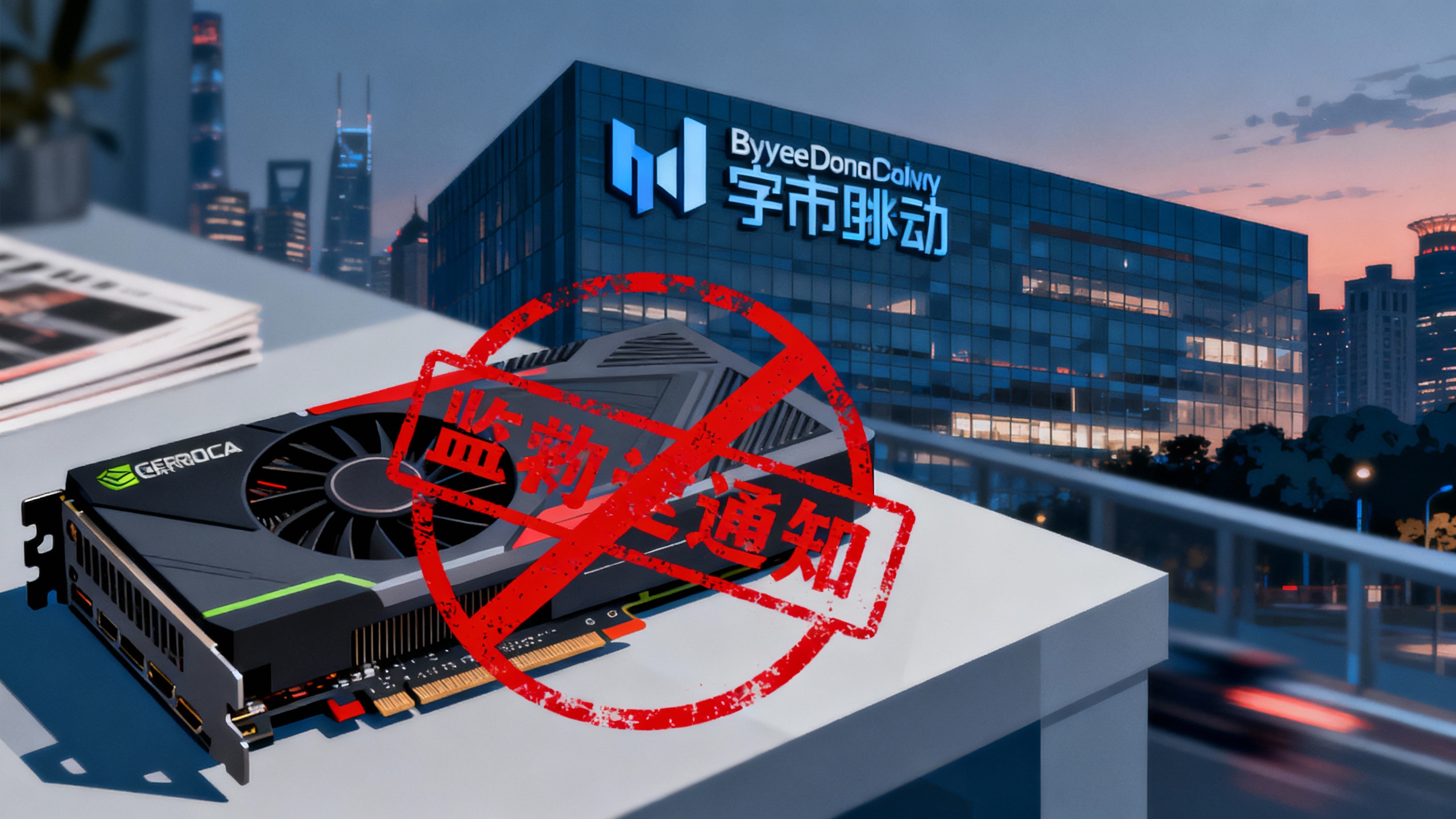
ByteDance has been one of China’s biggest GPU buyers this year, stockpiling Nvidia accelerators to train models behind its Doubao chatbot and a suite of AI video tools. But if new domestic facilities can’t use those GPUs, the company faces a stark choice: shift more training offshore, or pivot harder to Chinese accelerators.
The policy backdrop: From “avoid Nvidia” to “use domestic chips”
This ByteDance decision doesn’t come out of nowhere. In September, China’s internet watchdog told large platforms—including ByteDance and Alibaba—to stop testing and cancel planned orders of Nvidia’s RTX 6000D, a workstation‑class GPU Nvidia positioned for the Chinese market. Earlier in August, authorities had urged firms to avoid Nvidia’s H20 chip. Bloomberg via FT summary, CNBC, Reuters
Then, on November 5, Reuters reported new guidance requiring state‑funded data centers to use only domestically made AI chips, with early‑stage projects told to remove foreign silicon. Taken together, Beijing has signaled that foreign accelerators are not welcome in strategically important compute. Reuters via Investing.com, Bloomberg summary
Nvidia’s own statement underscores the shift: “The regulatory landscape does not allow us to offer a competitive data center GPU in China,” a spokesperson told Reuters this month. Reuters
<<stat label="China data centers planned to use Nvidia GPUs (Q4’24 approvals)" value=">115,000 chips" source="bloomberg-2025-china-dc-nvidia" >>
That statistic, drawn from government approvals collated by Bloomberg, shows how ambitious some local plans were—intentions that now collide with stricter policy on foreign silicon. Bloomberg analysis
What this means for ByteDance’s AI roadmap
- AI demand isn’t slowing. Doubao has surged from tens of millions of monthly users last year to mass‑market scale in 2025, while daily token usage has exploded on ByteDance’s Volcano Engine cloud. SCMP, Yahoo/SCMP
- Training needs are heavy. ByteDance had reportedly stockpiled Nvidia chips and, at times, explored running advanced training outside mainland China to stay within U.S. rules—moves previously detailed by The Information and summarized by TechCrunch. The Information (background), TechCrunch
- The new constraint is local. The reported restriction targets new data centers inside China, not necessarily existing deployments or overseas compute. Practically, that tilts ByteDance toward domestic accelerators (e.g., Huawei Ascend) for expansions on the mainland.
The capacity question
Domestic silicon is ramping, but it’s not frictionless. A U.S. commerce official told Congress in June that Huawei’s 2025 ability to produce Ascend AI chips would be “at or below 200,000” units—below estimated local demand. Memory and packaging remain bottlenecks. Bloomberg, Tom’s Hardware
Meanwhile in Washington: A moving target
Adding to the strategic calculus, the U.S. is weighing whether to permit Nvidia’s H200 sales to China, a reversal from current restrictions. No final decision had been made as of November 24–26. Even if rules soften, Beijing’s own curbs mean demand from leading platforms could remain muted for new domestic facilities. Reuters, Reuters
Winners, losers, and the likely workarounds
- ByteDance: Expect a more heterogeneous fleet—mixing domestic NPUs for China‑based growth with offshore training on Nvidia where practical and permitted. That implies engineering investment to port and optimize models across different toolchains.
- Nvidia: China’s data‑center market gets tougher. The company already noted it cannot “offer a competitive data center GPU in China” under current rules. Reuters
- Chinese chipmakers: Demand tailwinds, capacity headwinds. Huawei and others likely pick up near‑term wins, but yields, HBM supply, and software maturity will determine how quickly they can backfill Nvidia at scale. Bloomberg, Tom’s Hardware
What to watch next
Key dates and decisions
| Date | Development |
|---|---|
| Aug 12, 2025 | Reports that Chinese regulators urged firms to avoid Nvidia’s H20 chip. Reuters |
| Sep 17, 2025 | FT: CAC told ByteDance, Alibaba and others to stop testing/buying Nvidia RTX 6000D. Bloomberg summary |
| Nov 5, 2025 | Guidance: state‑funded data centers must use domestic AI chips; early projects to remove foreign chips. Reuters via Investing.com |
| Nov 21–24, 2025 | U.S. debates allowing Nvidia H200 sales to China; no final decision. Reuters |
| Nov 26, 2025 | The Information: China blocks ByteDance from using Nvidia chips in new data centers; Reuters reports the move. Reuters |
Practical takeaways for AI and infra leaders
- Plan for heterogeneity. Assume Chinese deployments will increasingly rely on Ascend or other domestic NPUs. Budget time for framework and kernel work (e.g., PyTorch backends, compilers, and operator parity).
- Separate training from serving. If policy drives training offshore, design pipelines so models can be distilled/quantized and redeployed efficiently on domestic accelerators.
- Watch the memory supply chain. Even with more domestic chips, high‑bandwidth memory (HBM) and advanced packaging are gating factors that can slow real‑world throughput. Tom’s Hardware
Bottom line
China’s decision to block ByteDance from using Nvidia chips in new domestic data centers is another brick in the wall separating the U.S. and Chinese AI stacks. Even if Washington softens its stance on exports, Beijing’s policy trajectory points to a future where China’s largest platforms build primarily on homegrown accelerators—and global players re‑architect their AI to match that reality.
Sources
- Reuters: China blocks ByteDance from using Nvidia chips in new data centers (Nov 26, 2025) — and Nvidia comment on China competitiveness. Link
- Reuters (via Investing.com): China bans foreign AI chips from state‑funded data centers (Nov 5, 2025). Link
- Bloomberg: CAC told firms to stop buying Nvidia RTX 6000D (Sep 17, 2025). Link
- CNBC: Context on China freezing Nvidia access (Sep 18, 2025). Link
- Reuters: U.S. weighs allowing Nvidia H200 sales to China (Nov 21 & 24, 2025). Link
- Bloomberg analysis: China projects planned >115,000 Nvidia GPUs in 2024 approvals. Link
- SCMP/Yahoo: Doubao usage growth and Douyin integration (2025). Link, Link
- TechCrunch (background): ByteDance and offshore Nvidia chips (Dec 30, 2024). Link
- Tom’s Hardware: China’s accelerator ramp and HBM bottlenecks (Oct 2025). Link