


Humanoids got their close‑up in 2025: factory pilots expanded, headline-grabbing demos wowed audiences, and forecasts ballooned. But alongside the optimism, a growing chorus from within robotics is urging restraint. Leaders at established labs and startups alike say the field is “ahead of itself” on timelines and use cases, even as meaningful progress arrives in narrow, carefully controlled tasks.
What changed in 2025
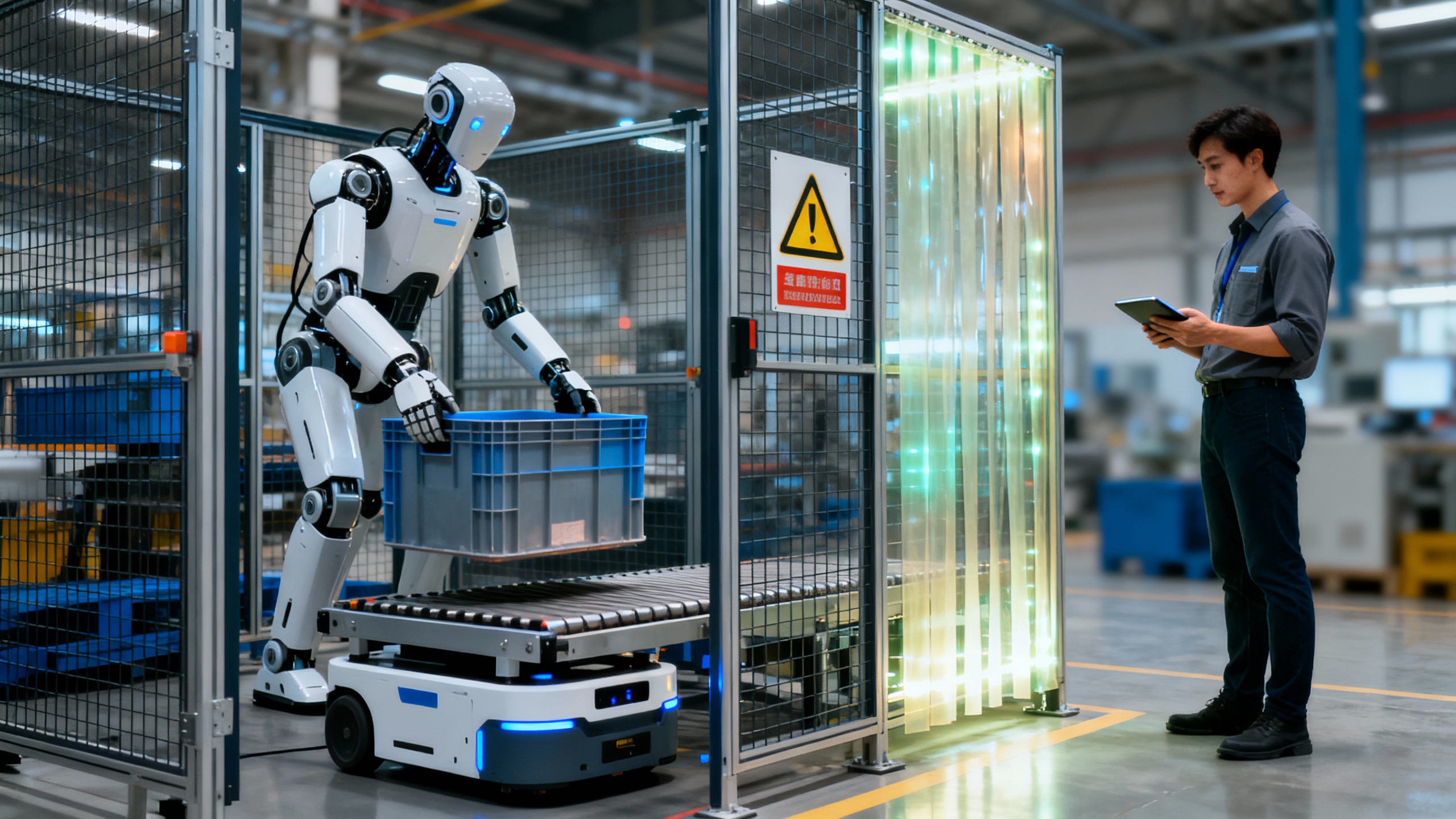
- Factory pilots became more concrete. Agility Robotics and GXO signed a multi‑year Robots‑as‑a‑Service deal; Digit humanoids are now moving totes on a live line at a Spanx facility under GXO management, marking one of the first revenue‑generating humanoid deployments in logistics (GXO press release). BMW’s Spartanburg plant ran an 11‑month trial of Figure’s robot loading sheet‑metal parts; Figure says the unit completed 1,250+ runtime hours and 90,000+ placements—though BMW emphasized there’s no set timetable to bring robots into regular production and that current work remains exploratory (BMW PressClub, Figure update, third‑party coverage).
- Big names piled in—and recalibrated. Apptronik extended funding and pilots, including with Mercedes‑Benz and Jabil, while highlighting Apollo’s four‑hour swappable battery and “human‑safe” force control (Reuters, DC Velocity). Boston Dynamics retired hydraulic Atlas and introduced an all‑electric Atlas heading toward industrial tasks, with a new showcase slated for CES in January 2026 (TechCrunch, Reuters). Figure ended its OpenAI collaboration to pursue in‑house models, a sign that “end‑to‑end” vertical integration is becoming the default strategy for embodied AI (TechCrunch).
- Forecasts got louder. Nvidia’s Jensen Huang told reporters that humanoids operating in factories are a “few‑years‑away” reality, not a five‑year one (Reuters). Bank of America/Merrill Lynch analysts estimated 18,000 humanoids could ship in 2025 (CNBC).
Why the brakes are tapping now
- Practitioners caution against a bubble. IEEE Spectrum’s annual wrap bluntly concluded that “reality is ruining the humanoid robot hype,” noting that most deployments remain pilots with tightly bounded tasks and limited scale (IEEE Spectrum analysis). Gartner likewise labeled humanoids “overhyped and overvalued” for near‑term product leaders (Gartner note). In China, even the state’s economic planners warned of a humanoid “bubble” forming as look‑alike models proliferate (The Verge on NDRC warning).
- The form factor isn’t a free lunch. Engineers point out that legs and human‑like hands bring substantial energy, durability, and maintenance penalties compared with wheeled bases and specialized grippers. Several executives interviewed in a widely circulated report argued that non‑humanoid robots remain more efficient for many factory jobs (LiveMint summary of WSJ reporting).
- Home robots reveal the gaps. OpenAI‑backed 1X opened U.S. preorders for the NEO home humanoid at $20,000, with deliveries targeted for 2026. But mainstream testing showed much of its behavior still relies on teleoperation, raising privacy, reliability, and ROI questions for consumer use (1X product page, WSJ review).
What’s actually working today
- “Monotony in a box.” The strongest real‑world traction is in constrained cells—picking totes from AMRs to conveyors, loading simple parts into fixtures, or shuttling kitted components. Agility’s Digit at GXO and Figure’s sheet‑metal loader at BMW fit this pattern: defined objects, fixed locations, and clear success metrics (GXO, BMW).
- Fleet thinking beats one‑off demos. Vendors now emphasize cloud orchestration, health monitoring, and swap‑in components over splashy stage routines. Agility’s Arc platform for deploying/managing Digit fleets and Apollo’s swappable packs are examples of design for uptime, not just mobility (GXO, DC Velocity).
- AI is becoming more robotics‑specific. The move away from general LLMs toward robot‑native models—and toolkits like Nvidia’s GR00T—reflects a maturing view that embodiment demands different data, latency, and reliability constraints than chatbots do (The Verge, TechCrunch on Figure).
Reality vs. hype — a late‑2025 snapshot
| Area | What’s real | What’s holding humanoids back | Better alternative today |
|---|---|---|---|
| Logistics tote handling | Live RaaS deployments moving totes in fenced cells (GXO) | Throughput vs. AMRs/arms; uptime under bipedal wear | AMRs + fixed arms in many sites |
| Automotive loading | Pilot cells placing sheet metal into fixtures (BMW/Figure) | Tight tolerances, safety certification, recovery from faults | Task‑specific gantries/arms |
| Dexterous handling | Early progress; new Atlas highlights range of motion (TechCrunch) | Robust grasp under variation, finger durability | Custom grippers, fixtures |
| Home chores | Preorders and early trials exist (1X) | Teleoperation dependence, privacy, liability | Appliances + mobile bases, human labor |
Standards and safety are finally center stage
Regulation hasn’t caught up to “general‑purpose” bipedal robots, but 2025 brought important movement:
- The core industrial robot safety standards were updated. ISO 10218‑1/2:2025 and the U.S. adoption ANSI/A3 R15.06‑2025 expand guidance on risk assessment, integration, and safeguarding for robot cells—critical for humanoids working near people in industry (ISO 10218‑1, ISO 10218‑2, ANSI/A3 R15.06‑2025).
- For service/consumer robots, UL 3300 (updated 2024/2025) provides a pathway for certification of non‑industrial robotic functions; UL 4600 offers a safety‑case framework for autonomous products—useful where machine‑learning behavior is central (UL 3300, CPSC/UL 4600).
How to evaluate a humanoid pilot in 2026
TipSix questions to ask vendors and integrators
- What task, exactly, and what is the cell layout? Ask for a process FMEA and the fallback mode when the robot fails mid‑task.
- What’s the proven hourly throughput and uptime over a full shift? Get logs—not just highlight reels.
- How are failures handled? Who clears faults and how fast? What’s the MTBF of actuators and hands?
- What’s the safety case? Confirm alignment with ISO 10218‑1/2 (or ANSI/A3 R15.06‑2025) and, for non‑industrial sites, UL 3300/UL 4600.
- What is the autonomy/teleop mix? If remote operators are involved, scrutinize privacy, data retention, and liability (see 1X/WSJ’s findings).
- How will it integrate with your existing AMRs, WMS/MES, and quality systems? Fleet orchestration usually matters more than a single robot’s demo.
The outlook: strong progress, slower timelines
If 2023–2024 were the teaser trailers, 2025 was the first act—pilots with clear success criteria, honest trade‑offs and, finally, safety frameworks catching up. Expect 2026–2028 to be about depth, not breadth: more hours on a few dependable use cases; more emphasis on uptime, spares, and total cost; and less on viral videos. Even bullish voices like Nvidia’s see factories as the earliest viable beachhead (Reuters). Meanwhile, the industry’s own skepticism—IEEE Spectrum’s critique, Gartner’s “overhyped” label, and China’s bubble warning—suggests the healthiest posture is rigorous curiosity: pilot where it pencils out, reject the sizzle when the steak isn’t there (IEEE Spectrum, Gartner, The Verge).
Sources
- Agility + GXO multi‑year deployment (RaaS): GXO press release
- BMW + Figure pilot (results and caution): BMW PressClub, Figure summary
- Apptronik funding/pilots: Reuters, DC Velocity
- Boston Dynamics Atlas evolution: TechCrunch, Reuters CES preview
- Forecasts and industry sentiment: CNBC, IEEE Spectrum, Gartner, The Verge on China’s bubble warning, LiveMint on WSJ’s “overhyped” reporting
- Standards: ISO 10218‑1:2025, ISO 10218‑2:2025, ANSI/A3 R15.06‑2025, UL 3300, UL 4600 (CPSC meeting log)
- Vendor strategy shifts: Figure exits OpenAI deal
- Nvidia’s near‑term outlook: Reuters