

The short version
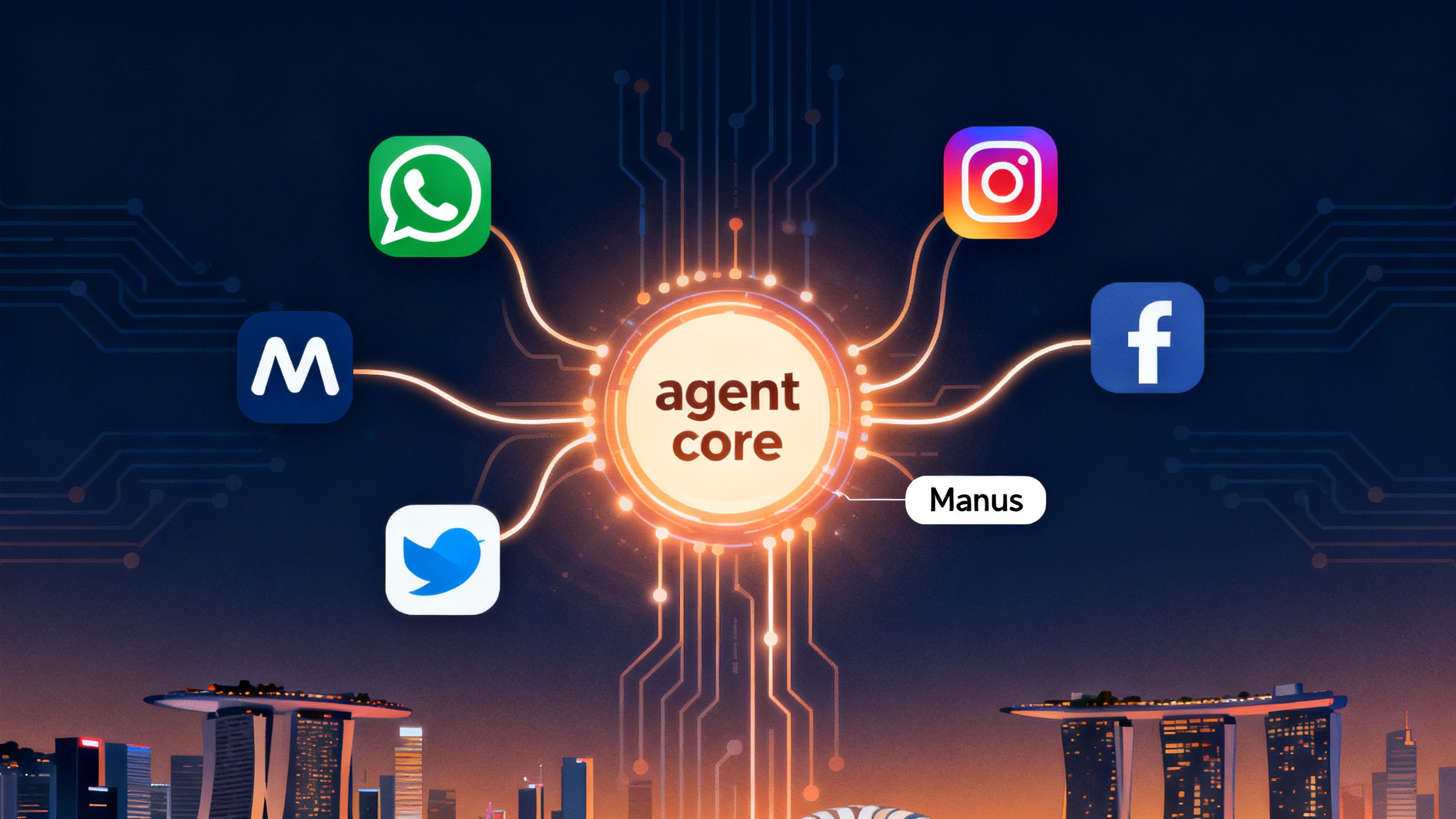
Meta said on December 30, 2025 that it is acquiring Manus, the Singapore‑based startup behind a buzzy “general‑purpose” AI agent, and will fold the technology into products like Meta AI across Facebook, Instagram and WhatsApp. Terms weren’t disclosed, but multiple outlets reported a price tag north of $2 billion, and Meta emphasized the deal severs any remaining Chinese ownership as Manus exits China operations. Reuters, The Wall Street Journal via Washington Post/AP, Nikkei Asia (archived).
Why this matters for consumer AI agents
Meta has distribution few others can match: billions of users across WhatsApp, Instagram, Messenger and Facebook, plus a rapidly expanding Meta AI assistant. Buying Manus gives Meta a ready‑made execution layer for “agents that act,” not just chat—potentially accelerating everyday, consumer‑facing automations that span planning, browsing, filling forms, drafting, booking and follow‑through.
- Meta says Manus will “deliver general‑purpose agents across our consumer and business products, including in Meta AI,” while continuing to operate its own subscription service. AP via Washington Post.
- Analysts see a near‑term fit with WhatsApp’s small‑business footprint: agents that can triage inquiries, research answers, draft proposals, and complete steps autonomously. Reuters.
- The move follows Meta’s 2025 “superintelligence” push, including a roughly $14.3B investment for a 49% stake in Scale AI and recruiting CEO Alexandr Wang to help lead Meta’s AI efforts. AP News, CNBC, TechCrunch.
<<stat label="Reported deal value" value=">$2B" source="wsj-2025-12-29" >>
What Manus actually does
Manus popularized the idea of a “general AI agent” that takes a goal (“summarize competing job posts, draft a JD, and publish the listing”) and then plans, researches, clicks, extracts, drafts and packages deliverables—largely without step‑by‑step user prompting. Coverage this year highlighted Manus’s autonomous web actions, long‑form research and code‑execution workflows, all sold via subscriptions that include monthly “credits.” TechCrunch, TechCrunch, Manus Help Center.
To be clear, the “first general agent” claim comes from the company and its boosters; independent tests have found both impressive moments and uneven performance—typical for early agentic systems. AP, Business Insider.
What Meta gets from Manus
| Asset | Why it matters |
|---|---|
| Agent execution layer | Speeds up Meta’s shift from chat to “doers” embedded in apps. |
| Proven consumer monetization | Subscriptions and usage credits offer non‑ad revenue signals. |
| Talent and velocity | A team shipping fast in a new category that’s still in flux. |
The competitive backdrop: agents are becoming the product, not the feature
Google spent 2025 making “Agent Mode” the centerpiece of Gemini (and Project Mariner), bringing autonomous, multi‑step tasking to Android, Chrome and Workspace. The Verge, Google blog, Android Dev Blog. In this context, Meta’s buy looks like a faster route to a consumer‑grade agent that can live inside WhatsApp threads, Instagram DMs, Ray‑Ban Meta glasses, and the standalone Meta AI app. Meta Newsroom – “Personal Superintelligence for Everyone”, Meta AI update.
That said, the agent category is volatile. Gartner expects a meaningful share of agentic AI projects to stall or be canceled by 2027 as costs, complexity and risk controls bite—while still predicting agentic AI becomes embedded broadly over time. Gartner (June 25, 2025), Gartner (Oct 7, 2025).
What changes now (and what doesn’t)
- Manus will keep operating its own apps and memberships for now, while Meta integrates agent capabilities into Meta AI. AP via Washington Post.
- Meta reiterated that “there will be no continuing Chinese ownership interests in Manus AI,” and that Manus will discontinue services and operations in China. Nikkei Asia (archived), Los Angeles Times, TechCrunch.
- Expect near‑term pilots in consumer surfaces where Meta already deploys Meta AI (e.g., WhatsApp and Instagram messaging) before deeper OS‑level integrations on devices or glasses.
Real examples of what consumer agents could do inside Meta’s apps
- In WhatsApp: act as a “co‑pilot” in a group chat to price‑check options, draft itineraries, fill out booking forms, and post summaries back to the thread—with human approval for any purchase.
- In Instagram DMs: help creators compile brand‑safe pitches by researching past campaigns, drafting rate cards, and scheduling calls.
- In Facebook Marketplace: auto‑generate listings (photos/copy), answer buyer questions, and book pickup windows.
These flows are plausible extensions of Manus’s autonomous web actions and Meta AI’s assistant features; the open question is reliability at scale and the safeguards required for transactions.
The regulatory and geopolitical angle
This is a rare case of a U.S. tech giant acquiring a Chinese‑founded AI startup that relocated to Singapore. Meta has stressed the removal of Chinese ownership and a China exit for Manus, addressing likely scrutiny from U.S. lawmakers and regulators. Reuters, Fortune/AP.
- Competition review still looms: while the target is relatively small compared with Meta, U.S. and EU regulators have become more active on acquisitions that could tip emerging AI markets. How enforcers define the “agentic AI” market will matter.
- Data protection and safety: Meta will need to show clear consent, auditability and “human‑in‑the‑loop” checkpoints for any agent that acts on users’ behalf—especially for payments and account access. Gartner expects “guardian agents” (agents that oversee other agents) to grow specifically to mitigate these risks. Gartner (June 11, 2025).
Our take
If you believe consumer AI will be defined by agents that can plan and act—not just chat—then Manus is a strategic shortcut for Meta. The company already has the models (Llama family), distribution (its apps) and an ambition to make “personal superintelligence” mainstream. Manus brings the “hands.” The big questions are execution quality, safety, and whether Meta can prove consumer‑grade reliability before rivals make agents feel native inside Android, Chrome and Gmail.
In other words: this deal won’t be judged by the demo videos—it will be judged by what shows up, safely and reliably, in your everyday apps.
Sources
- Reuters: Meta to buy Chinese‑founded startup Manus to boost AI; analyst commentary on WhatsApp fit. Dec 30, 2025
- Washington Post (AP): Meta buying Manus; >$2B reported by WSJ; continues Manus subscriptions; $100M+ ARR. Dec 30, 2025
- TechCrunch: Meta just bought Manus; Meta’s comment on ending Chinese ownership/operations. Dec 29, 2025
- Nikkei Asia (archived): “No continuing Chinese ownership interests”; China exit. Dec 30, 2025
- Los Angeles Times: Manus backers; operations to continue under Meta; China links severed. Dec 30, 2025
- Business Standard/Bloomberg: Deal context and Manus revenue run‑rate. Dec 30, 2025
- AP News: Meta’s $14.3B investment in Scale AI and Alexandr Wang’s role. June 2025
- Meta Newsroom: “Personal Superintelligence for Everyone.” July 30, 2025
- Google and agent competition: The Verge, Google blog, Android Dev Blog
- Gartner on agentic AI maturity and risks: June 25, 2025, Oct 7, 2025