

What happened
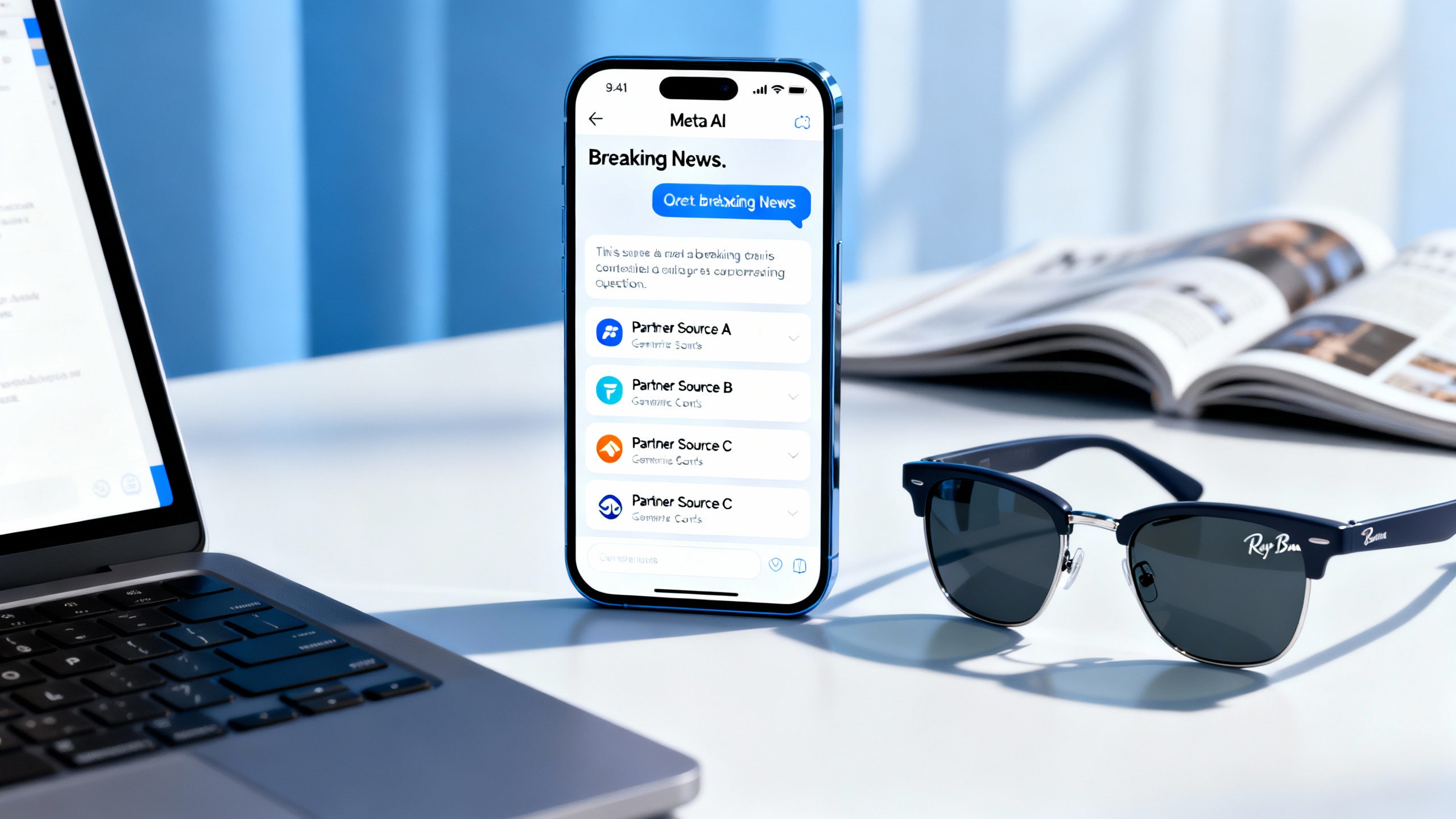
Meta has kicked off December by signing a wave of AI licensing agreements with major publishers to bring more “real‑time” news into Meta AI across Facebook, Instagram, WhatsApp, Messenger and Meta devices. The first cohort includes CNN, Fox News, Fox Sports, USA TODAY Co. (formerly Gannett), People Inc. (the publisher formerly known as Dotdash Meredith), Le Monde Group, The Daily Caller and The Washington Examiner. In Meta’s own words, when you ask news‑related questions, Meta AI will now surface answers with links that “draw from more diverse content sources.” Meta Newsroom, Dec 5, 2025.
Publishers are also confirming the shift. USA TODAY Co. announced a multi‑year deal covering new and archival content from USA TODAY and more than 200 local titles in the USA TODAY Network, while People Inc. said its portfolio (e.g., People, Better Homes & Gardens, Food & Wine, Allrecipes, InStyle, Verywell Health) will feed lifestyle and entertainment answers in Meta AI. USA TODAY Co. press release; People Inc. press release.
Reporting from Axios, Reuters, The Verge and TechCrunch all points to a consistent headline: Meta is paying multiple news organizations so Meta AI can reference their coverage in real time and link back to it. Financial terms were not disclosed. Axios; Reuters; The Verge; TechCrunch.
Why it matters for AI, automation, and publishers
- More grounded AI answers: Real‑time licensing gives Meta AI a steady supply of fresh, attributable reporting to cite, which should reduce hallucinations and improve trust when people ask about unfolding events.
- Measurable traffic back to journalism: Meta says answers will link out to partner articles, a notable departure from generic summaries that don’t send audiences anywhere. If implemented well, this creates a virtuous cycle: better AI answers for users and incremental audience and revenue for publishers. Meta Newsroom.
- A strategic pivot by Meta: After de‑emphasizing news distribution—e.g., shutting down Facebook’s News Tab in the U.S. and Australia in April 2024 as usage fell over 80%—Meta is again paying for professional reporting, but this time to power its AI assistant rather than social feeds. CNBC; DW. <<stat label="Facebook News usage decline (US/Australia, 2024)" value=">80%" source="meta-blog-2024-03" >>
- Competitive pressure: The move mirrors broader industry dynamics. OpenAI has struck publisher deals (e.g., News Corp/WSJ, FT, Vox Media), and Google’s Gemini licenses real‑time AP content. The quality bar for AI assistants now includes licensed, cited journalism. Axios; TechCrunch; Bloomberg; AP.
A pivot back to paying for news
Meta’s earlier retreat from news distribution led to fewer referral clicks for publishers. With Meta AI, the company is reframing news as a feature within an assistant, effectively licensing access to verified reporting so answers can be timely and attributable. That balances user experience with publisher economics more cleanly than social feeds did.
Retrieval first, not (necessarily) model training
Meta’s announcement emphasizes real‑time answers and linking to articles. Partner statements from USA TODAY Co. and People Inc. also focus on access to “new and archival content” and audience reach. None of the initial materials specify training rights for Llama models. Practically, this looks like retrieval‑augmented generation (RAG)—grounding answers in licensed sources—rather than a pure training dataset deal. We’ll learn more if Meta or partners later detail training components. Meta; USA TODAY Co.; People Inc..
Who’s in the first wave
Initial publishers Meta named on December 5, 2025
| Publisher | Example brands or focus | Notes | Source |
|---|---|---|---|
| CNN | U.S. and global news | Real‑time news answers via Meta AI | Meta |
| Fox News | U.S. and global news | Adds ideological diversity | Meta |
| Fox Sports | Sports | Scores, updates, and analysis | Meta |
| USA TODAY Co. | USA TODAY + 200+ local outlets | Multi‑year; includes archival + real‑time content | USA TODAY Co. |
| People Inc. | People, BHG, Food & Wine, Allrecipes, InStyle, Verywell, etc. | Multi‑year lifestyle/entertainment focus | People Inc. |
| Le Monde Group | Le Monde (France) | Adds international breadth | Meta |
| The Daily Caller | U.S. conservative outlet | Part of viewpoint diversity push | Meta |
| The Washington Examiner | U.S. conservative outlet | Part of viewpoint diversity push | Meta |
Third‑party reporting (Axios/Reuters/The Verge/TechCrunch) corroborates these names, with phrasing like “commercial AI data agreements” and “AI licensing deals.” Axios; Reuters; The Verge; TechCrunch.
How it will show up in Meta AI
- Answers to news questions will include attribution and direct links to partner articles.
- Coverage spans breaking news, global events, entertainment, lifestyle and sports.
- The experience works across Meta’s apps and devices, including Ray‑Ban Meta glasses. Meta Newsroom.
For users, that should mean faster, better‑sourced answers with one‑tap paths to read the full story. For publishers, the promise is new audience reach from a growing assistant surface rather than a social feed.
The open questions
- Training rights: Neither Meta nor most publishers have said whether these agreements also allow LLM training on licensed archives. That distinction matters for model quality and for the value publishers can capture.
- Metrics and money: What is the click‑through rate from Meta AI answers to partner sites? Are there traffic floors or revenue‑share mechanics over time? Today, only “multi‑year” and “commercial” have been disclosed by some partners.
- Source balance and bias: Meta name‑checked outlets across the spectrum, including conservative titles. How source selection and ranking work in answers—and whether publishers can audit results—will shape trust.
- Legal backdrop: The news lands amid escalating copyright fights (e.g., The New York Times suing Perplexity on Dec 5, 2025), pushing platforms toward licensing. Reuters; TechCrunch.
What this means for your AI and automation roadmap
- Treat licensed news as the new baseline for trustworthy assistants. If your product answers current‑events queries, plan for licensed sources or a clear policy on which outlets you cite and why.
- Build for links, not just summaries. Design your AI UX to make the “read the full article” path obvious—and measurable.
- Prepare your content for RAG. Ensure fast crawling where licensed, clean metadata, and consistent schema so assistants can reliably ground answers in your reporting.
What to watch next
- More partners: Meta says this is a “first step” with additional sources to come. Meta.
- Product UX: How prominently will citations and links appear? Will publishers get brand surfaces comparable to search result cards?
- Cross‑platform norms: With OpenAI, Google, Microsoft and now Meta all licensing news, we may see emerging standards for attribution, link prominence, and reporting.
Sources
- Meta Newsroom: Bringing More Real‑Time News and Content to Meta AI (Dec 5, 2025)
- USA TODAY Co.: Multi‑Year AI Licensing Partnership with Meta (Dec 5, 2025)
- People Inc.: AI Content Partnership with Meta (Dec 5, 2025)
- Axios: Exclusive — Meta strikes multiple AI deals with news publishers (Dec 5, 2025)
- Reuters: Meta strikes multiple AI deals with news publishers (Dec 5, 2025)
- The Verge: Meta strikes AI licensing deals with CNN, Fox News, and USA Today (Dec 5, 2025)
- TechCrunch: Meta signs commercial AI data agreements with publishers (Dec 5, 2025)
- CNBC: Facebook is getting rid of the News tab in the U.S. and Australia (Mar 1, 2024)
- AP: Google signs deal with AP to deliver up‑to‑date news through Gemini (Jan 15, 2025)
- Reuters: The New York Times sues Perplexity AI (Dec 5, 2025)