

What changed this week
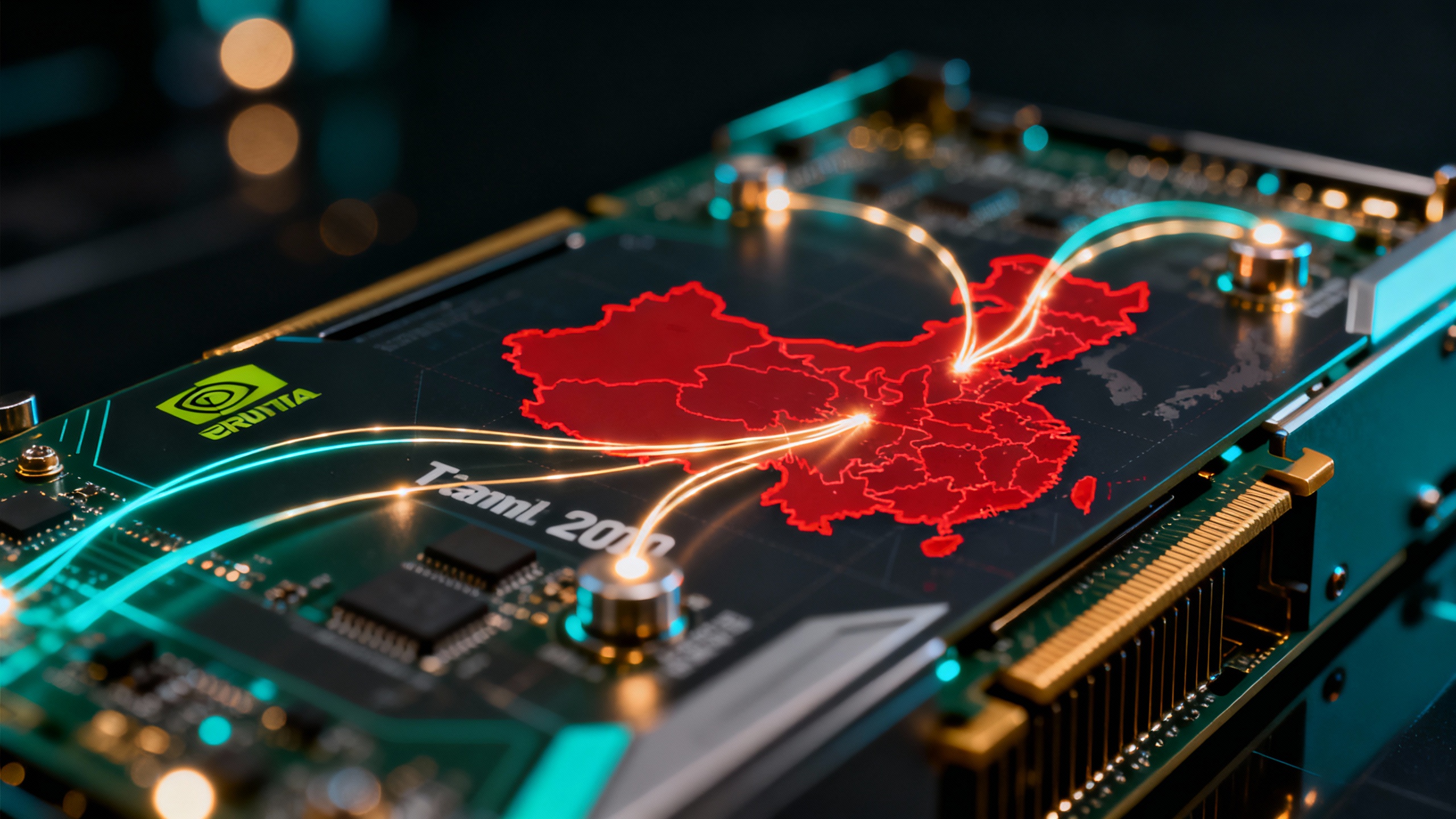
On December 9, 2025, the White House said Nvidia can sell H200 data-center GPUs to “approved customers” in China, with the U.S. taking a 25% cut of sales; the Commerce Department will finalize the mechanics and licenses remain required. Nvidia stressed the H200 approvals do not include its newest Blackwell chips. Washington Post
Within 48 hours, Alibaba and ByteDance privately signaled interest in placing large H200 orders—provided Beijing also approves imports—while Nvidia began telling Chinese clients it may add H200 production capacity to meet demand. Reuters, Dec. 10; Reuters, Dec. 12
Beijing hasn’t signed off yet. Chinese officials convened emergency meetings to weigh whether—and how—to permit H200 purchases, with one proposal requiring buyers to bundle domestic accelerators alongside Nvidia gear. Reuters, Dec. 12
Why H200 matters (and why China wants it)
The H200 is Nvidia’s top Hopper-class GPU, pairing 141 GB of HBM3e with 4.8 TB/s of memory bandwidth—ideal for training and serving large language models. Nvidia product page.
Chinese buyers view it as a leap over the China-only H20 part: independent analyses place H200’s compute at roughly six times H20’s, and above today’s leading domestic options like Huawei’s Ascend 910C. Reuters explainer.
How key accelerators compare (indicative)
| Accelerator | Total Processing Performance (TPP) | Memory bandwidth |
|---|---|---|
| Nvidia H200 | 15,840 | 4.8 TB/s |
| Huawei Ascend 910C | 12,032 | 3.2 TB/s |
| Nvidia H20 (China-specific) | 2,368 | n/a |
Sources: Reuters, Dec. 9; Nvidia H200
For model builders, the delta is practical, not just theoretical. More memory and bandwidth reduce sharding and communication overhead in training, and raise batch sizes in inference—translating into faster iteration cycles and lower unit cost per token. In a market where CUDA tooling and pretrained ecosystem depth already favor Nvidia, access to H200 would materially compress time-to-deploy for Chinese LLM teams compared with H20-era constraints.
Will Nvidia actually ramp output?
Nvidia has told clients it’s considering adding H200 capacity after inquiries exceeded current output. But production today is “very limited” because the company is prioritizing Blackwell systems (GB200/GB300) and prepping Rubin, all competing for scarce advanced capacity at TSMC. Reuters, Dec. 10; Reuters, Dec. 12. TSMC builds H200 on its 4nm process, and those lines are also in demand from U.S. hyperscalers. Reuters, Dec. 12.
The silver lining for Nvidia: many U.S. and allied customers are now pivoting to Blackwell racks, potentially freeing some Hopper-class capacity that can be redirected if policy and licensing windows stay open. HPE, for instance, has already begun shipping GB200 NVL72 systems this year. HPE press release; Nvidia GB200 page.
Policy and politics: the guardrails around any ramp
- The White House framed the move as a tightly controlled, revenue-sharing channel rather than a blanket opening; President Trump said “25% will be paid to the United States of America.” Washington Post.
- Nvidia emphasized that Chinese H200 shipments still require U.S. export licenses to specific end users; unlawful grey-market flows remain subject to enforcement. Reuters, Dec. 11.
- Congressional scrutiny is rising. Senator Elizabeth Warren called for testimony from Nvidia’s CEO and Commerce officials about national-security risk and enforcement. Reuters, Dec. 11.
- China’s own approval is the other half of the gate. Regulators are weighing domestic industry support and could limit access or require domestic “bundling” with each H200 purchase. Reuters, Dec. 12.
Context: Nvidia’s China business was battered earlier this year after the U.S. required licenses even for the lower-power H20, triggering a multibillion-dollar charge and order cancellations. CNBC, Apr. 15; Nvidia 10-Q. The H200 channel, if it stabilizes, partly restores a market the company had called “effectively closed.” CNBC, May 28
What this means for AI builders and automation leaders
If both Washington and Beijing greenlight real volumes, expect a near-term rebalancing of AI compute in China:
- Faster training and inference: H200’s memory bandwidth and capacity reduce parallelism overheads, speeding fine-tuning and enabling larger context windows or low-latency serving. Nvidia
- Software gravity: CUDA’s maturity and model portability will likely keep many Chinese model teams on Nvidia stacks, even where domestic accelerators match or beat H20 on raw TPP. Reuters explainer
- Budget math: A 25% U.S. fee will be priced in, nudging total cost of ownership closer to domestic alternatives for some inference-heavy deployments. Washington Post
- Global supply: Any Nvidia ramp will contend with TSMC allocation and Nvidia’s own generational shift to Blackwell/Rubin. If H200 for China scales, buyers elsewhere may see Hopper lead times stretch—though Blackwell adoption in the West could offset pressure. Reuters, Dec. 12
The bottom line
- The H200 opening offers China’s AI firms a powerful—but regulated—onramp back to Nvidia hardware. If Beijing approves, near-term productivity gains for model builders could be significant.
- Nvidia is weighing a capacity bump, but Hopper supply will still be a juggling act against Blackwell and Rubin ramps at TSMC. Expect rationing and premiums until capacity catches up.
- Politics aren’t done here. A bipartisan debate in Washington and industrial-policy calculus in Beijing will shape how much this actually “reshapes” supply—and for how long.
Sources
- Exclusive: Nvidia considers increasing H200 chip output due to robust China demand, sources say (Dec. 12, 2025)
- Exclusive: ByteDance, Alibaba keen to order Nvidia H200 after Trump green light (Dec. 10, 2025)
- How China’s AI chips stack up against Nvidia’s H200 (Dec. 9, 2025)
- Trump says Nvidia can sell more-advanced AI chips to China; 25% to the U.S. (Dec. 9, 2025)
- Senator calls for Nvidia CEO to testify on Trump approval for China chip sales (Dec. 11, 2025)
- Nvidia H200 product page and specs
- HPE ships first GB200 NVL72 system (Feb. 13, 2025)
- Nvidia 10‑Q (filed July 27, 2025) on H20 licensing
- CNBC coverage of H20 charge (Apr. 15, 2025)