

The short version
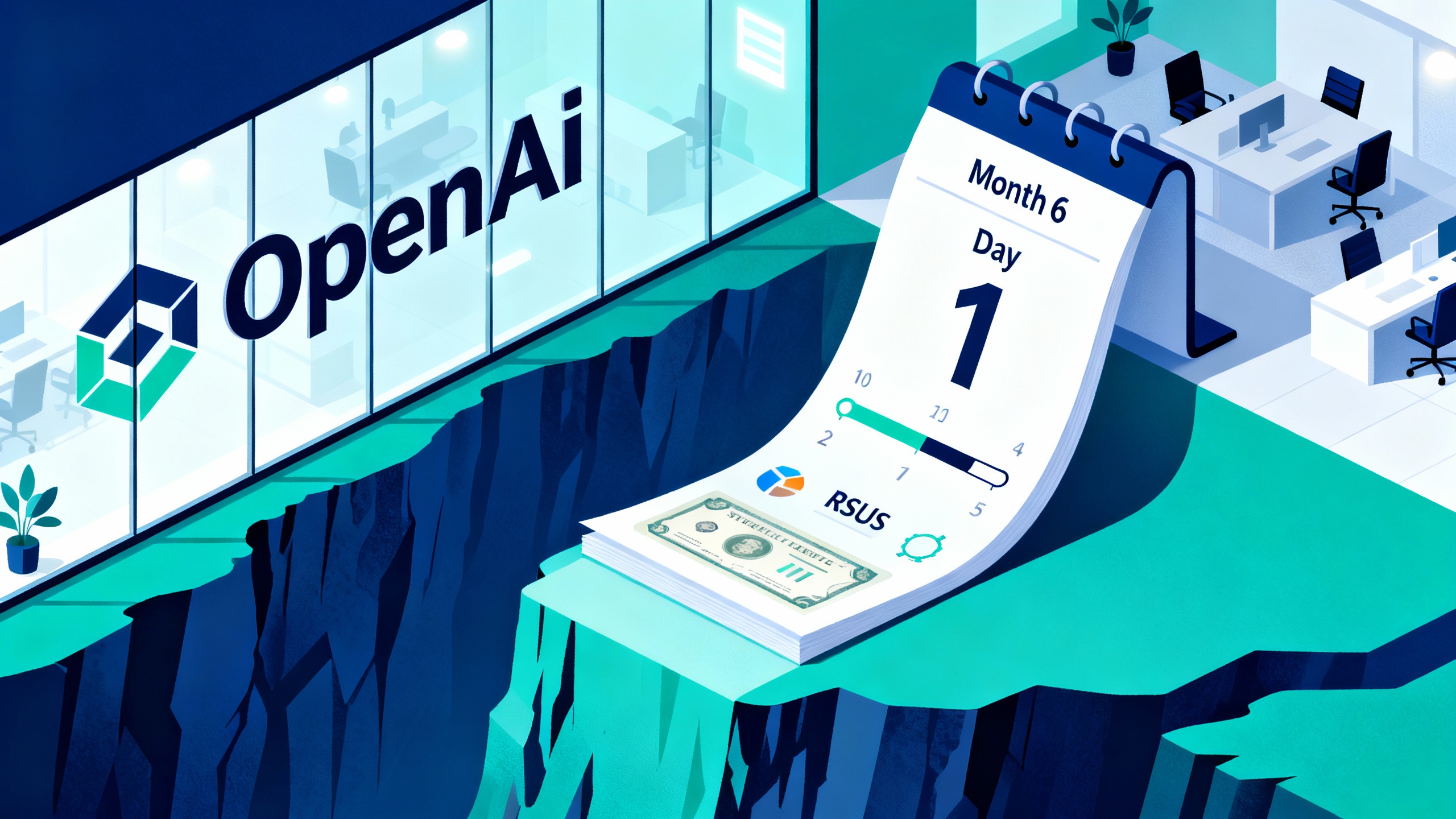
OpenAI has removed its equity “vesting cliff” for new hires, letting employees start vesting from day one instead of waiting six months. The shift—communicated internally by OpenAI’s CEO of Applications, Fidji Simo—comes as labs and Big Tech escalate pay and perks to recruit scarce AI talent. Wall Street Journal report, Dec 13, 2025; corroborated by Bloomberg/Yahoo Finance and Business Standard.
Why this is happening now
The move is about speed and confidence. In April 2025, OpenAI had already halved its cliff from the industry‑standard 12 months to six; now it’s scrapped it altogether so recruits don’t worry about being let go before their first vest. That message tracks with how Simo framed the change internally, according to WSJ reporting, and with her broader remit to make OpenAI’s Applications org move faster. WSJ; TechCrunch on Simo’s role.
This all sits inside a bigger reality: the AI talent market is red‑hot. Meta has dangled multi‑million packages for senior researchers (with executives disputing the “$100M signing bonus” phrasing but acknowledging eye‑watering totals), while Microsoft’s AI chief has publicly said he won’t match extreme offers. TechCrunch; Business Insider. In that context, removing a cliff is a relatively low‑friction lever: it costs little up front, signals trust, and reduces “first‑vest anxiety” for new hires.
What a vesting cliff is—and why it existed
A vesting cliff is an initial no‑vesting period designed to discourage quick churn and reduce admin on short‑tenure hires. In tech, the classic pattern is four‑year vesting with a one‑year cliff and then monthly or quarterly vesting thereafter. That remains the default across startup equity playbooks. Pulley guide; Carta explainer; Stripe Atlas documentation.
The talent‑war backdrop
- OpenAI’s change follows a summer in which rivals recalibrated equity mechanics: Elon Musk’s xAI similarly shortened or removed its cliff, per WSJ’s sourcing. WSJ.
- Meta has aggressively recruited senior AI scientists with multi‑year packages sometimes approaching nine figures (depending on seniority and structure), while disputing “$100M sign‑on” as a literal up‑front bonus. TechCrunch.
- Microsoft’s Mustafa Suleyman has said publicly he won’t enter a bidding war to match those top‑end packages—an implicit acknowledgement that compensation structures are being used strategically as much as financially. Business Insider.
For OpenAI specifically, WSJ has reported a 2025 stock‑based‑compensation budget on the order of billions, underscoring how equity is the primary currency in today’s AI labor market. WSJ.
Why it matters for productivity—not just pay
Ending the cliff is less about optics and more about momentum:
- Faster onboarding psychology: Day‑one vesting reduces perceived downside risk for new hires switching from academia/big tech labs.
- More fluid team building: Managers can spin up exploratory teams without worrying that contributors won’t see any equity if a project pivots or a reorg happens inside six months.
- Clearer alignment: For senior ICs and managers, immediate vesting is a crisp signal of mutual commitment at the moment impact begins.
There are trade‑offs. Cliffs have long been a retention tool and a practical filter for short‑tenure mis‑hires. Removing them can slightly increase churn risk in the first six months and may require stronger performance management to avoid “quick‑vest, quick‑exit” patterns. But in a market where the scarcest input is time with the right people, OpenAI is betting the speed and trust dividend outweighs the risk.
How this compares across the industry
Common equity approaches at AI labs and big tech (high level)
| Employer type | Typical instrument | Typical cliff | Notes |
|---|---|---|---|
| Public tech (e.g., Meta) | RSUs | None; quarterly vesting | Day‑one vesting is common at public firms. TechView Wealth. |
| Late‑stage private | Options or double‑trigger RSUs | 6–12 months | Double‑trigger RSUs defer tax until IPO/acquisition; cliffs remain common. Stripe. |
| Early‑stage startup | Options | 12‑month cliff | Four‑year schedules with one‑year cliffs are still the default. Pulley, Carta. |
| OpenAI (Dec 2025) | Equity (company‑specific) | No cliff for new hires | Vesting starts immediately; April 2025 reduction to six months now fully removed. WSJ. |
Governance context: OpenAI’s evolving structure
The compensation shift arrives the same year OpenAI completed a recapitalization: the nonprofit OpenAI Foundation retains control of the business (now a public benefit corporation) and holds a large equity stake intended to fund mission‑aligned work over time. While not directly tied to vesting mechanics, that structure helps explain why OpenAI leans heavily on equity to compete for talent even as it emphasizes safety and public‑benefit goals. OpenAI blog, May 5, 2025; OpenAI blog, Oct 28, 2025; Delaware AG statement.
What leaders should do next
The bottom line
OpenAI’s day‑one vesting is a small but telling change: in the AI talent war, reducing friction for candidates is now as strategic as raising cash or shipping models. Expect more labs to revisit their cliffs—at least for critical hires—and for candidates to start asking, “Do I vest on day one?”
Sources
- Wall Street Journal: “OpenAI Ends ‘Vesting Cliff’ for New Employees in Compensation‑Policy Change” (Dec 13, 2025). Link
- Bloomberg via Yahoo Finance: “OpenAI to end equity vesting period for employees — report” (Dec 14, 2025). Link
- Business Standard (Bloomberg): “OpenAI scraps six‑month equity vesting requirement for employees” (Dec 15, 2025). Link
- TechCrunch: “Meta is offering multimillion‑dollar pay for AI researchers, but not $100M ‘signing bonuses’” (Jun 27, 2025). Link
- Business Insider: “Microsoft AI CEO Mustafa Suleyman says he won’t match Meta’s high‑flying pay packages” (Dec 2025). Link
- TechCrunch: “Instacart CEO Fidji Simo is joining OpenAI” (May 7, 2025). Link
- Pulley: “What Are Common Vesting Schedules?” Link
- Carta: “Stock Vesting: Options, Vesting Periods, Schedules & Cliffs.” Link
- TechView Wealth Advisors: “Meta Employees — RSU vesting” (explains no one‑year cliff at Meta). Link
- OpenAI: “Evolving OpenAI’s structure” (May 5, 2025). Link
- OpenAI: “Built to benefit everyone” (Oct 28, 2025). Link