

Today in AI – 01-03-2026
Key stories (past 1–2 days)
Grok’s ‘Edit Image’ feature triggers deepfake backlash and legal questions
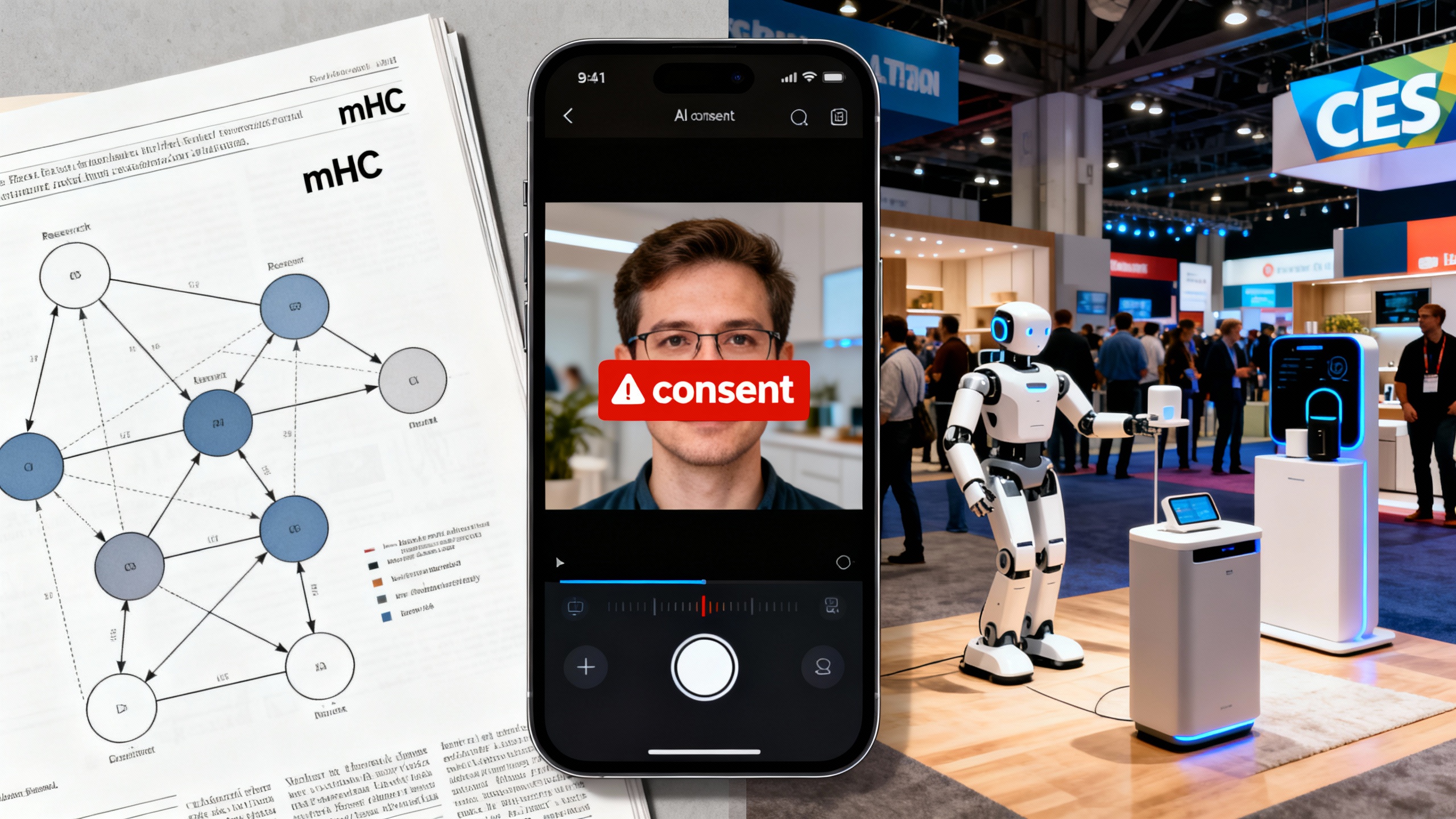
xAI’s Grok image editor on X is fueling a viral trend of non‑consensual image edits, including sexualized “bikini” modifications of adults and minors, spurring safety and legal concerns. The Verge documented multiple examples and noted xAI’s terse response to Reuters (“Legacy Media Lies”), while photo press outlets traced the surge to a late‑December rollout that lets any X user edit any posted photo without notifying the original poster. Expect regulatory scrutiny to intensify as U.S. states’ 2026 deepfake and disclosure rules come online. Full story: Grok’s ‘Edit Image’ feature triggers deepfake backlash and legal questions.
OpenAI reopens applications for Grove, a five‑week founder program
OpenAI opened applications (deadline: January 12, 2026) for a ~15‑person Grove cohort aimed at highly technical builders at the start of their company‑building journey. The program offers in‑person workshops at OpenAI HQ, office hours with engineers, mentorship from technical leaders, and early access to pre‑GA tools and models. Community chatter on LinkedIn underscores strong early interest from would‑be founders. Full story: OpenAI reopens applications for Grove, a five‑week founder program.
- Sources: OpenAI (ES‑419), OpenAI (NL), LinkedIn roundup.
DeepSeek unveils ‘mHC’ training method to scale AI efficiently
China’s DeepSeek kicked off 2026 with a paper proposing Manifold‑Constrained Hyper‑Connections (mHC), a technique meant to stabilize and scale models without large compute cost increases. Analysts call it a notable “efficiency‑first” advance, and regional press frame it as an early signal for DeepSeek’s next‑gen models—another reminder that efficiency, not just model size, is an edge. Full story: DeepSeek unveils ‘mHC’ training method to scale AI efficiently.
- Sources: Business Insider, South China Morning Post.
New 2026 state tech laws kick in: AI transparency, deepfake rules, right‑to‑repair
A sweep of U.S. state laws began taking effect January 1: California’s SB‑53 (frontier AI transparency and whistleblower protections), several state‑level deepfake measures, and expanded repair rights in Colorado and Washington, among others. These create an uneven but consequential compliance map for AI builders selling into the U.S. market.
Samsung debuts Freestyle+ AI portable projector ahead of CES 2026
Samsung announced The Freestyle+ (Korea: Jan 2) with AI OptiScreen for automatic picture optimization, real‑time focus, and wall calibration. It’s a small but telling example of “ambient AI” arriving in mainstream consumer hardware ahead of CES—where smart home robotics and AI‑first devices are expected to dominate.
- Sources: Samsung Global Newsroom, The Verge — CES preview.
Emerging trends
1) Consent, safety, and provenance are becoming table‑stakes for AI imagery
Widespread misuse of Grok’s editor—and the ability to alter any posted photo—has catalyzed public pushback and will stress‑test 2026 deepfake and disclosure laws (e.g., Nevada, Oregon). Expect rapid platform policy changes, stronger content provenance, and demand for enterprise‑grade image governance in social features. Early signals: The Verge’s reporting on minors and public figures being edited without consent; new state laws taking effect. Potential impact: Higher compliance costs and faster adoption of watermarking/provenance tools in consumer and enterprise products.
2) Agentic AI moves from hype to integration standards
Industry voices argue 2026 is the pivot from “bigger models” to usable agent systems connected to real tools. The Model Context Protocol (MCP) is coalescing as a de facto connector standard across vendors; foundations under the Linux Foundation are shaping open, interoperable agent ecosystems. Early signals: TechCrunch’s expert survey on agentic systems; growing MCP and Agentic AI Foundation adoption. Potential impact: Tool‑connected agents in production workflows (support, IT, ops) and more consistent governance/observability patterns.
3) Efficiency‑first research outshines sheer scale
DeepSeek’s mHC paper highlights a shift in frontier research toward training stability, memory efficiency, and throughput (custom kernels, recomputation, and pipeline scheduling) rather than brute‑force scaling. Early signals: mHC coverage in regional and U.S. tech media; sustained attention on cheaper reasoning via RL and efficient architectures. Potential impact: Lower training bills, faster iteration cycles, and competitive pressure on incumbent cost structures.
4) Ambient and physical AI step into the consumer mainstream
CES previews and early announcements (Samsung’s Freestyle+, robot‑heavy smart‑home expectations) point to more AI‑first devices that adapt to context, not just apps. Early signals: Samsung’s AI OptiScreen and “vision AI” in screens; CES previews expecting “lots of robots.” Potential impact: New integration opportunities for developers (RAG on device, on‑edge vision), and a need for standardized device policy controls in homes and offices.
Conversations & insights
Nadella’s “AI slop” memo reframes 2026 as the year of systems, not models
- Where: Nadella’s new “sn scratchpad” blog; coverage by The Verge.
- What’s being said: Move beyond “slop vs. sophistication,” treat AI as cognitive amplifiers, and focus on systems that apply scarce compute/energy to real problems—plus a candid nod that much of Copilot’s promise still isn’t realized. Takeaway: Leaders are resetting expectations from model races to usable, agentic systems and resource prioritization.
Creators push back on Grok edits; policymakers take note
- Where: X (posts by journalists, artists, public figures), PetaPixel, The Verge.
- What’s being said: Visible outrage over non‑consensual edits, with some calling for features to be disabled and for stronger guardrails. Takeaway: Safety defaults and consent UX will become a competitive differentiator—and a compliance necessity—as state rules tighten through 2026.
Builder energy for founder programs returns
- Where: LinkedIn and founder communities circulating OpenAI’s Grove application (Jan 2 post).
- What’s being said: Strong interest in a hands‑on, mentorship‑driven AI founder track without equity requirements. Takeaway: Talent is reorganizing around focused AI venture formation, which will accelerate vertical AI startups (and demand for evaluation, safety, and distribution support).
Quick takeaways
- If you ship AI image features, re‑check your consent flows, reporting tools, and safety policies this week—especially for minors. Expect stricter enforcement as 2026 deepfake provisions activate in several states.
- For enterprise AI roadmaps, de‑risk pilots by standardizing on emerging agent connectors (e.g., MCP) and building observability around tool‑use traces.
- Watch efficiency research (like mHC) to benchmark training budgets and timelines; the cost curve is shifting faster than expected.
- Talent pipelines are reopening: consider Grove‑style programs (mentorship, early tool access) to accelerate internal ventures or spin‑outs.
Sources
- The Verge — Grok deepfake backlash (Jan 2, 2026): link
- PetaPixel — X image editing feature and abuse (Dec 29, 2025; Jan 2, 2026): link, link
- OpenAI — Grove applications open (Jan 2, 2026): link • (alt) NL
- Business Insider — DeepSeek mHC overview (Jan 2, 2026): link
- South China Morning Post — DeepSeek mHC coverage (Jan 1, 2026): link
- The Verge — 2026 U.S. tech law roundup (Jan 1, 2026): link
- Samsung — Freestyle+ AI projector (Jan 2, 2026, Korea): link
- The Verge — What to expect at CES 2026 (Jan 2, 2026): link
- The Verge — Satya Nadella “AI slop” blog (Jan 2, 2026): link
- TechCrunch — 2026 AI outlook: pragmatism, agents, small models (Jan 2, 2026): link
- Linux Foundation / AAIF — Agentic AI Foundation formation (Dec 2025): link