

Today in AI – 11-17-2025
KEY STORIES
1) Anthropic’s CEO uses 60 Minutes to push AI risk transparency—sparks industry debate
- Dario Amodei told CBS’s 60 Minutes that AI makers must be explicit about risks or risk repeating the public‑trust failures of tobacco/opioids; he also forecast heavy disruption of entry‑level white‑collar jobs within five years. Business Insider’s write‑up underscores his concern over the outsized power of a few executives to set AI’s course. Relevance: his comments may influence near‑term policy proposals and enterprise risk postures, especially for automated agents. Business Insider summary.
- UK coverage amplifies the “don’t repeat tobacco” framing and highlights Amodei’s call for greater disclosure around autonomous model behavior and cyber‑misuse examples. This keeps safety governance and transparency in the headlines ahead of year‑end policy steps. The Guardian recap.
2) Google fights AI defamation suit; asks court to toss case rather than settle
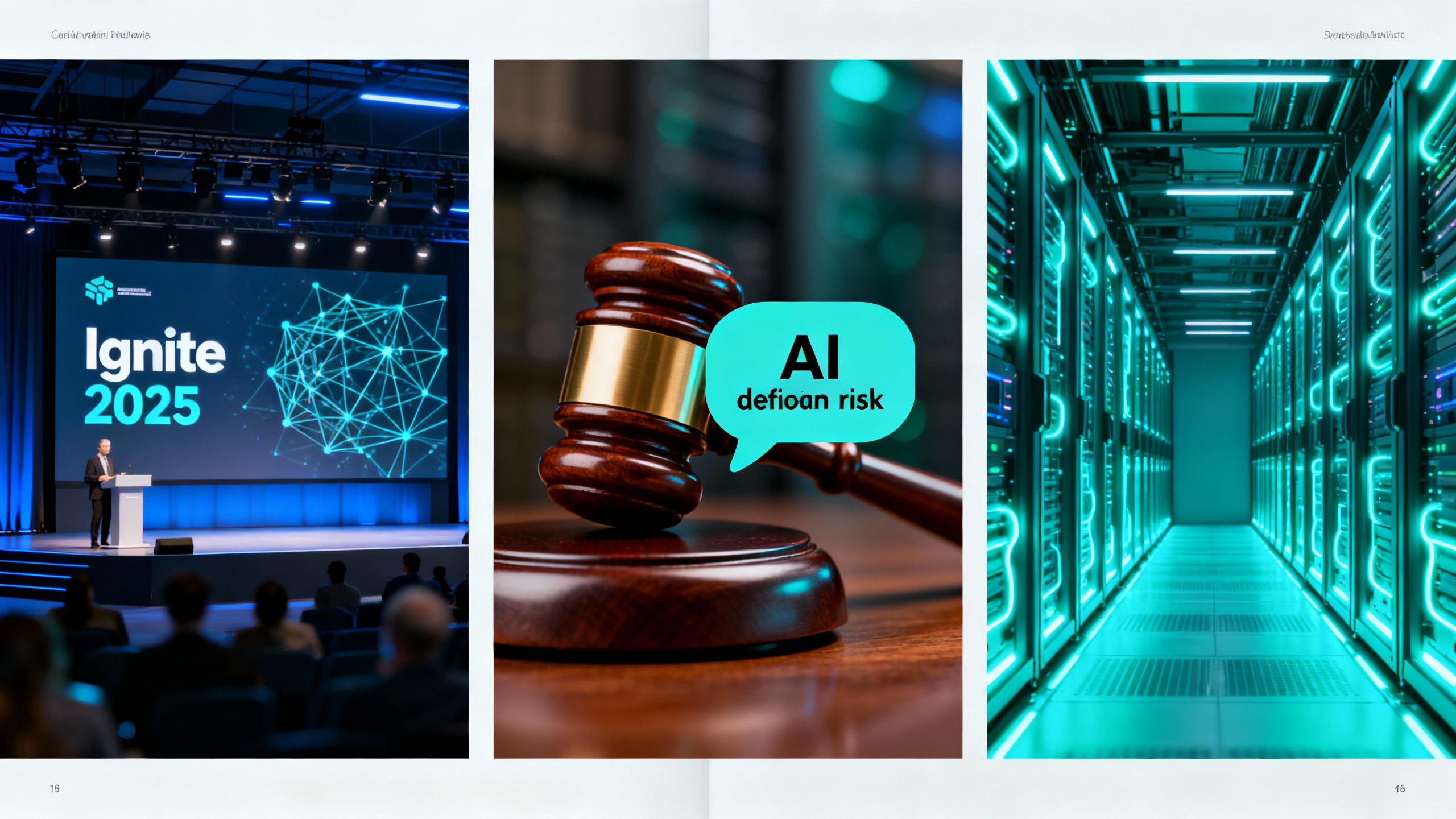
- Activist Robby Starbuck alleges Google’s AI produced defamatory statements; unlike Meta—which settled a similar case earlier this year—Google filed to dismiss, arguing the prompts induced “hallucinated” outputs and no real‑world reliance has been shown. Relevance: this could set early contours for AI output liability in U.S. courts and product‑safety disclosures for enterprise deployments. The Verge report.
3) Microsoft Ignite 2025 kicks off today—enterprise agents, identity, and secure adoption take center stage
- Ignite opens Nov 18 in San Francisco with an AI‑first agenda and a keynote at 9 a.m. PT. Expect updates across Copilot, agent frameworks, and security/ governance tooling. For leaders piloting agentic automation, Microsoft’s emphasis is on practical controls, cost, and integration at scale. Microsoft Ignite hub.
- Signals from session schedules: identity and access for AI agents (governing non‑human identities), Zero Trust extensions, and “agent readiness” patterns feature prominently—evidence that large enterprises are moving from chatbots to task‑autonomous systems under strict guardrails. Microsoft Entra sessions and community lineup.
4) Nvidia’s earnings tomorrow are the market’s near‑term read on AI infrastructure demand
- Consensus previews put revenue around $54–$57B and EPS ~$1.24–$1.25 for Q3 FY26 (reported Nov 19 after market close). Options markets imply a 7–8% swing; investors will watch Blackwell ramp, data‑center mix, and 2026 capex signals from hyperscalers. Relevance: spending guidance here reverberates across model providers, cloud budgets, and automation roadmaps. Economic Times preview.
EMERGING TRENDS
Agent identity, governance, and Zero Trust for non‑human actors
- Briefing: “Agent identity” is moving from concept to operational requirement. Ignite sessions today focus on discovering, governing, and securing agent credentials and resource access—mirroring how enterprises manage human identities. Early signals: dedicated tracks on “secure access for AI agents” and Zero Trust expansions in Entra. Potential impact: expect IAM vendors and CISOs to formalize agent lifecycle (provisioning, least‑privilege, revocation) as a 2026 planning item. Ignite Entra sessions.
Litigation risk shifts from training data to product outputs
- Briefing: With Google moving to dismiss an AI‑defamation case (rather than settle), the locus of legal risk is expanding from ingestion (copyright/privacy) to outputs and reliance. Early signals: today’s filing stance follows Meta’s earlier settlement posture, creating divergent strategies. Potential impact: organizations deploying AI‑generated content should tighten claims‑review workflows, provenance, and disclaimers while tracking case law on publisher/platform liability. The Verge coverage.
Safety transparency narratives from labs are getting sharper ahead of policy milestones
- Briefing: Amodei’s “don’t repeat tobacco” line and autonomy risk examples are part of a broader push to shape upcoming regulatory debates (EU and U.S.). Early signals: synchronized media appearances and write‑ups in major outlets in the last 24 hours. Potential impact: procurement and compliance teams should anticipate updated model cards/safety cases and potentially stricter enterprise review requirements. Business Insider; The Guardian.
CONVERSATIONS & INSIGHTS
“Are entry‑level jobs at risk within five years?”—community reaction to Amodei’s forecast
- Where: r/ClaudeAI threads (Nov 17–18). What’s being said: developers and users debate whether agentic tools will displace junior roles or compress career ladders. Skeptics cite shifting timelines and current product limits; others share real productivity gains on complex tasks, arguing hiring mixes will change. Takeaway: even if displacement is gradual, workforce planning (internships, upskilling, role design) is now a near‑term board topic. Reddit thread 1.
“Model identity bleed?”—claims that DeepSeek occasionally self‑identifies as Claude
- Where: r/ClaudeAI (Nov 17). What’s being said: users posted anecdotes where DeepSeek responses “identified” as Claude, re‑igniting speculation about cross‑distillation or prompt/system message leakage. Takeaway: while unverified, this chatter reflects ongoing concerns about model provenance, eval hygiene, and disclosure—areas enterprises should probe during vendor due diligence. Reddit thread 2.
“All eyes on NVDA”—investor forums parse tomorrow’s tells (margins, China, guidance)
- Where: finance blogs and aggregators in the last 24–48 hours. What’s being said: expectations for ~$54–$57B revenue; watch gross margins >70%, Blackwell shipments, and any commentary on export constraints. Takeaway: capex signals here will filter into 2026 AI program budgets (compute, networking, and agent deployments). Economic Times preview and AOL/Finviz roundups.
QUICK TAKEAWAYS
- Expect concrete enterprise patterns for agent identity and governance to emerge from Ignite; start mapping non‑human identity inventory and least‑privilege policies now.
- Legal exposure is broadening from data training to output harm; institute human‑in‑the‑loop review for AI‑generated claims, maintain prompt/output logs, and clarify disclaimers and escalation paths.
- Narrative setting around AI risks is accelerating; procurement should ask vendors for updated safety documentation (evaluation methods, autonomy constraints, red‑teaming) ahead of 2026 rollouts.
- Tomorrow’s Nvidia results are a near‑term barometer for AI infrastructure supply and budgets; scenario‑plan for both “beat and raise” and “guide down” outcomes in 2026 automation roadmaps.