

Today in AI – 11-25-2025
Key Stories (past 24–48 hours)
-
AWS commits $50B to build AI and supercomputing for U.S. government
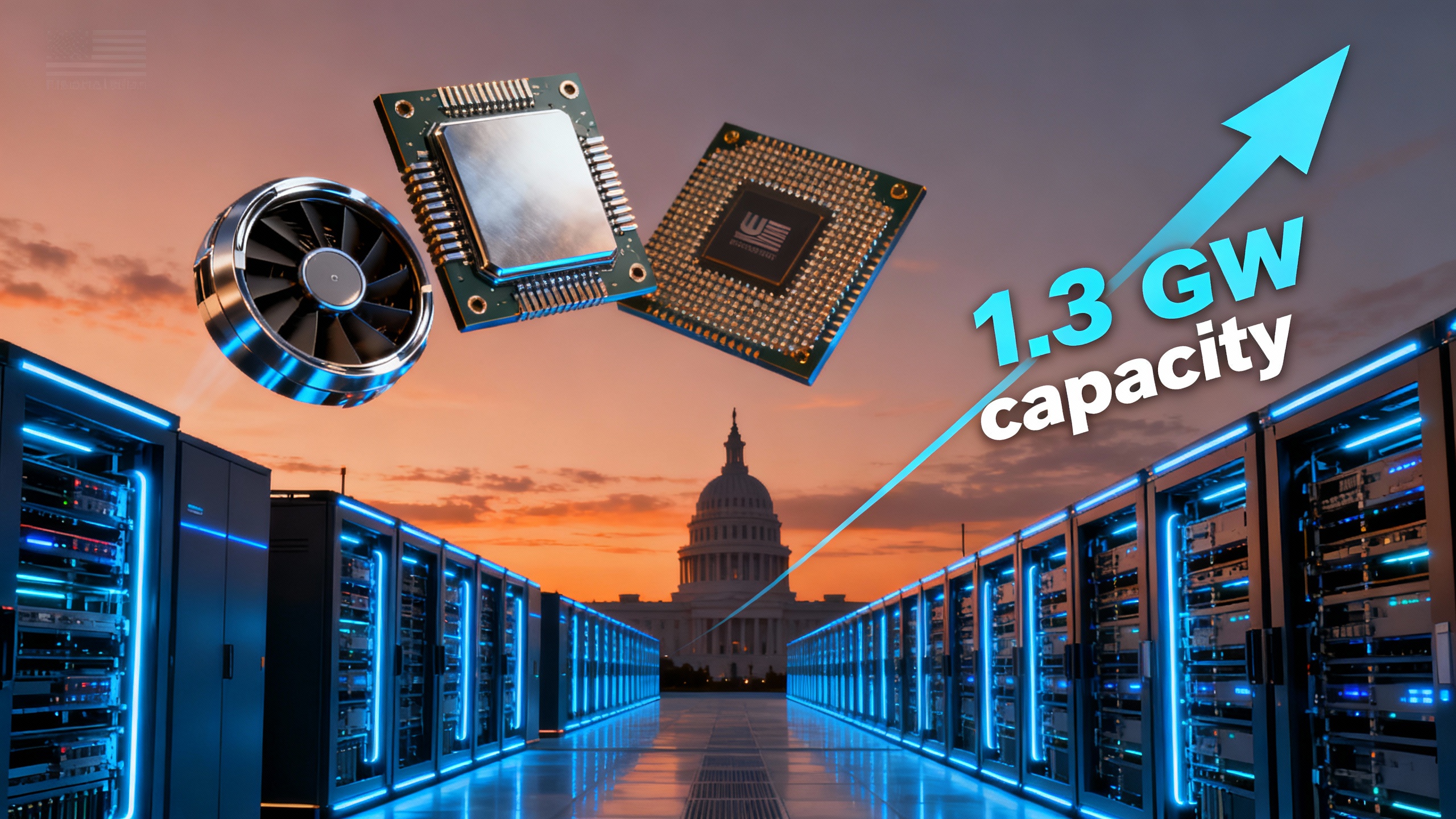
Amazon said it will invest up to $50 billion to expand AI and HPC infrastructure for federal agencies across AWS Top Secret, Secret and GovCloud regions, adding roughly 1.3 GW of new capacity starting in 2026. For practitioners, the signal is clear: more classified and regulated workloads will move to cloud-based AI stacks, with expanded access to services like Bedrock, SageMaker, Trainium/Inferentia and NVIDIA platforms.
Why it matters: a massive public-sector compute buildout tilts procurement, security standards, and partner ecosystems toward AWS-native AI services for years.
Stand‑alone analysis: AWS commits $50B to build AI and supercomputing for US government.
Sources: Reuters, AWS program page, About Amazon blog. -
Meta weighs Google TPUs in potential multibillion‑dollar deal, jolting AI chip trade
Meta is in talks to deploy Google’s custom Tensor Processing Units (TPUs) in its data centers from 2027, and could rent TPU capacity on Google Cloud as early as 2026, per multiple reports. Alphabet shares rose while NVIDIA dipped on the headlines. For AI leaders, this is a concrete sign that hyperscalers are actively pursuing a multi‑architecture strategy (GPU + ASIC) to diversify cost, energy profile and supply risk.
Stand‑alone analysis: Meta weighs Google TPUs in potential multibillion-dollar deal.
Sources: Reuters, MarketWatch, Barron’s. -
Anthropic launches Claude Opus 4.5 — cheaper, faster, stronger for coding and agents
Anthropic released Claude Opus 4.5 with frontier coding and long‑horizon agent performance, plus notable price cuts to $5 / $25 per million tokens (input / output). New features include an “effort” parameter for cost‑capable reasoning and improved robustness against prompt‑injection. Expect accelerated agentic adoption in software modernization, Excel/financial workflows, and multi‑step automation.
Stand‑alone analysis: Anthropic launches Claude Opus 4.5, cheaper and stronger for coding and agents.
Source: Anthropic announcement. -
OpenAI adds “Shopping research” to ChatGPT for free and paid users
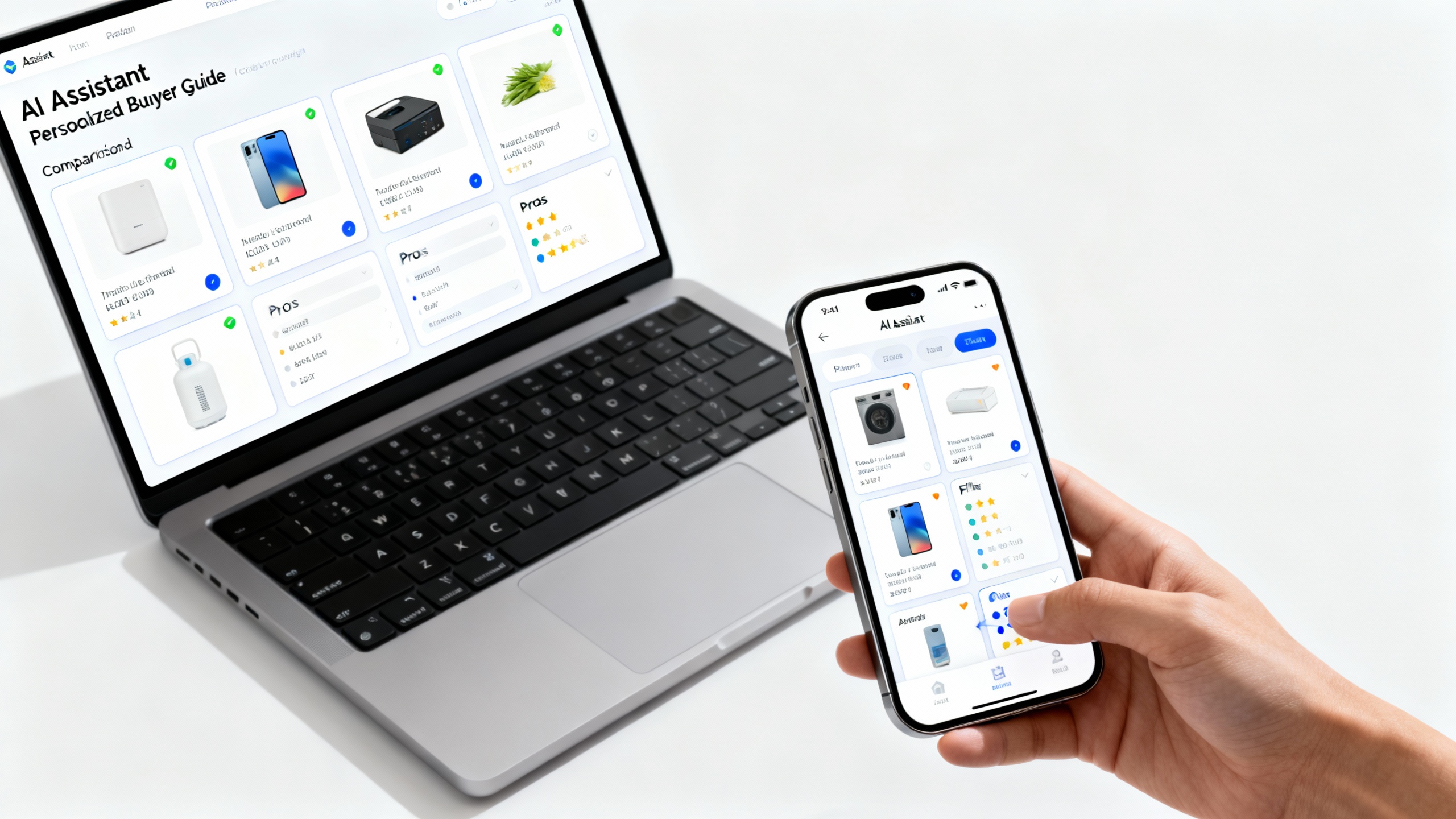
OpenAI rolled out an interactive shopping‑research experience that compiles personalized buyer’s guides and links out to merchants. It’s pitched as a research assistant that reads trusted sources, asks clarifying questions, and can later tie into Instant Checkout. For retailers and affiliates, expect agentic discovery to reshape top‑of‑funnel behavior and SEO surfaces.
Sources: OpenAI product post, MacRumors, The Verge coverage. -
White House launches “Genesis Mission” executive order to accelerate AI‑driven science
The administration signed an EO on Nov 24 to build an integrated national AI platform led by the Department of Energy — mobilizing federal datasets, supercomputers, national labs and private partners to speed discovery in areas like materials, energy and biosciences. For R&D leaders, watch for new procurement, data‑sharing frameworks and HPC access models.
Sources: White House EO, Reuters, AP.
What changed in the last 48 hours
| Item | What happened | Why it matters |
|---|---|---|
| AWS public‑sector AI/HPC | Up to $50B investment; ~1.3 GW new capacity | Anchors federal AI workloads on AWS and expands partner ecosystem |
| Meta–Google TPU talks | Meta may buy/rent TPUs starting 2026–2027 | Validates multi‑architecture strategies beyond NVIDIA |
| Claude Opus 4.5 | Model upgrade + price cuts; better agents | More cost‑effective automation for coding/data tasks |
| ChatGPT Shopping research | Agentic product discovery for all users | Shifts consumer research into AI assistants |
| Genesis Mission EO | National AI platform for science | Opens new public‑private R&D opportunities |
Emerging Trends
-
Compute goes multi‑architecture (GPU + TPU/ASIC) faster than expected
Early signals: Meta’s exploration of Google TPUs and market’s immediate reaction show buyers prioritizing cost‑per‑token, power efficiency and supply diversification. If even a slice of hyperscaler spend migrates to TPUs/ASICs, model‑ops teams will need portability layers (Kubernetes, OpenXLA, ROCm/CUDA bridges) and dual‑stack inferencing. Expect procurement to demand energy‑per‑token reporting and cross‑vendor SLAs.
Evidence: Reuters/MarketWatch/Barron’s coverage of Meta–Google TPU talks (Nov 25).
Potential impact: Reshapes price/perf curves, encourages vendor‑agnostic MLOps and reduces single‑vendor risk. -
Public‑sector AI acceleration and secure cloud zones
Early signals: AWS’s $50B expansion across classified regions and the Genesis Mission EO indicate a coordinated push to scale secure compute and mobilize federal data for AI.
Potential impact: New funding channels and contracting vehicles (especially for integrators and ISVs with FedRAMP, ITAR and export‑control experience); increased demand for synthetic data, evaluation tooling and auditability in sensitive domains.
Evidence: AWS and White House releases (Nov 24). -
Agentic UX breaks into mainstream workflows
Early signals: Anthropic’s Opus 4.5 emphasizes long‑horizon agents, tool‑use and robustness; OpenAI brings agentic shopping to the mass market.
Potential impact: Teams will pilot task‑level automation (code migration, spreadsheet modeling, browsing and research) with explicit cost controls. Procurement will benchmark “tokens‑per‑task” and “minutes‑to‑complete,” not just raw model scores.
Evidence: Anthropic release (Nov 24) and OpenAI product post (Nov 24). -
Falling unit costs unlock new AI use cases
Early signals: Opus‑class capabilities at materially lower token prices suggest more enterprise workloads will move from “assistive chat” to fully‑managed agents with SLAs.
Potential impact: Re‑evaluate build‑vs‑buy; revisit fixed‑price automation contracts; negotiate tiered pricing aligned to effort parameters and guardrail levels.
Conversations & Insights (past 24–48 hours)
-
“Is NVIDIA’s moat narrowing?”
Where: Financial press and retail investor forums (e.g., MarketWatch, Barron’s; Reddit r/StockMarket).
Voices: Market analysts highlighting Alphabet’s rally and NVIDIA’s dip on the Meta–Google TPU reports; community traders debating whether TPUs meaningfully dent GPU share or simply improve buyer leverage.
Takeaway: Even rumors of hyperscaler diversification can move markets; technical leaders should assume multi‑vendor roadmaps are now table stakes.
Sources: MarketWatch, Barron’s, Reddit thread. -
“Agentic shopping vs. traditional affiliate discovery”
Where: Tech press and community forums (MacRumors; Reddit r/OpenAI, r/aiecosystem).
Voices: Users praising time savings while raising questions about source quality, bias and future monetization; OpenAI stresses citation and limitations, with checkout integrations to come.
Takeaway: Retail search and affiliate SEO will be disrupted by assistant‑led discovery; merchandising teams should prepare structured product data and agent‑readable spec sheets to stay visible.
Sources: OpenAI product post; MacRumors; Reddit discussion. -
“Public–private AI for science: promise vs. governance”
Where: National policy coverage (Reuters/AP) and agency circles.
Voices: DOE leadership and OSTP framing the Genesis Mission as an Apollo‑scale data/compute mobilization; researchers asking how IP, data access and export controls will be handled across academia and industry.
Takeaway: Genesis could unlock new R&D velocity, but award mechanisms, data‑tiering and evaluation standards will determine real‑world impact.
Sources: White House EO; Reuters; AP.
Quick Takeaways
- Multi‑architecture AI is arriving: begin portability pilots across GPUs and TPUs/ASICs and plan for energy‑per‑token reporting in 2026 procurement cycles.
- Federal AI spend is accelerating: if you sell into public sector, align your FedRAMP/IL authorizations, export‑control posture and model‑evaluation evidence now.
- Agents are moving from demos to delivery: target “tokens‑per‑task” and “minutes‑to‑complete” KPIs; use effort controls and guardrails to keep costs predictable.
- Refresh your retail discovery strategy: ensure product data is structured, machine‑readable and citation‑friendly to perform in assistant‑led shopping.
- Expect faster pricing pressure: model price cuts plus stronger reliability will expand the automation surface area across code, spreadsheets and research.
Sources
- AWS investment: Reuters, AWS America AI, About Amazon
- Meta–Google TPUs: Reuters, MarketWatch, Barron’s
- Anthropic Opus 4.5: Anthropic blog
- ChatGPT Shopping research: OpenAI, MacRumors, The Verge
- Genesis Mission EO: White House, Reuters, AP