

What happened
The U.S. Commerce Department has granted Taiwan Semiconductor Manufacturing Co. (TSMC) an annual export license to bring U.S.-origin chipmaking tools into its fab in Nanjing, China. TSMC said the approval “ensures uninterrupted fab operations and product deliveries,” and replaces exemptions that expired on December 31, 2025. South Korea’s Samsung Electronics and SK hynix secured similar one‑year approvals for their China plants. Reuters, Reuters
Why it matters for automation—and the AI supply chain
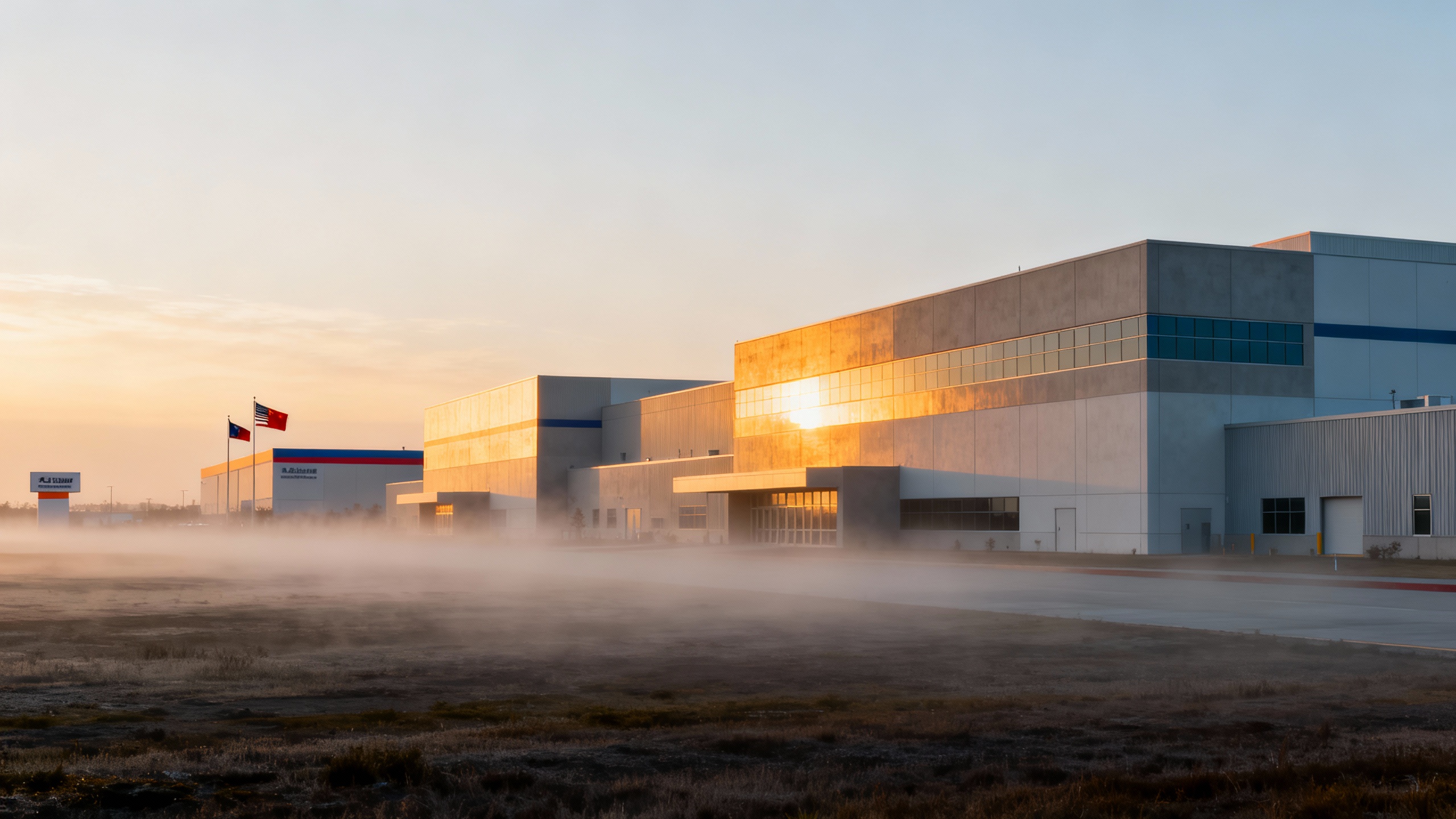
TSMC’s Nanjing site makes 16‑nanometer and other mature‑node chips rather than the company’s cutting‑edge processors. That sounds “legacy,” but these parts quietly power huge swaths of automation: motor drivers and power management in robots, industrial controllers on factory floors, automotive microcontrollers, sensors and connectivity for smart devices.
- For operators, the license reduces the risk of maintenance delays that can sideline production lines far from the leading edge.
- For AI builders, it helps stabilize the long tail of supporting silicon (power, I/O, memory interfaces) that wraps around AI accelerators.
How we got here: a fast policy pivot
- 2022–2024: The U.S. tightened controls on exports to China covering advanced chips and a widening set of semiconductor‑manufacturing equipment (SME), in coordination with allies. The Netherlands also limited ASML’s most advanced tools, and some DUV systems later faced added restrictions. CNBC, ASML, BIS overview.
- 2025: Washington closed a “validated end‑user” (VEU) pathway that let some foreign‑owned China fabs import U.S. tools without case‑by‑case licensing. The change took effect on December 31, 2025. BIS, Federal Register summary.
- Late 2025–Jan 1, 2026: Instead of blanket waivers, the U.S. moved to annual licenses that maintain day‑to‑day operations but keep tight policy control. Samsung and SK hynix were approved first, followed by TSMC. Reuters, Reuters.
What the license likely covers (and what it doesn’t)
- Likely allowed: shipping and servicing U.S.-origin tools needed to run—and repair—the Nanjing fab at its current process capabilities. That keeps mature‑node output flowing to automotive, industrial and consumer customers. Reuters.
- Unlikely allowed: adding new lines, migrating to more advanced nodes, or otherwise increasing capacity beyond today’s envelope. BIS has publicly signaled it does not intend to approve capacity expansion or tech upgrades at foreign‑owned China fabs. BIS.
Who else got approvals?
One‑year U.S. licenses for China fabs (2026)
| Company | China sites (examples) | Focus | What the 2026 license enables |
|---|---|---|---|
| TSMC | Nanjing | 16nm and other mature nodes | Operations/maintenance shipments; not expansion. Reuters |
| Samsung Electronics | Xi’an (NAND) | Memory | Annual approval for tool shipments; continuity of ops. Reuters |
| SK hynix | Wuxi (DRAM), Dalian (NAND) | Memory | Annual approval for tool shipments; continuity of ops. Reuters |
The productivity angle: fewer surprises in the “boring” chips that run everything
Much of the world’s automation depends on dependable supply of mature‑node silicon. By favoring operational continuity over expansion, these one‑year licenses aim to:
- Reduce unplanned downtime risk for factories and carmakers tied to China‑based supply.
- Preserve maintenance and service revenue for U.S. toolmakers (Applied Materials, Lam Research, KLA) while keeping policy leverage. Note that broader curbs still bite—Applied Materials has flagged a potential $600M revenue hit in fiscal 2026 tied to tightened rules. Reuters via Investing.com.
- Channel scarce state capacity (and corporate planning) toward next‑gen nodes outside mainland China, while avoiding supply shocks in the legacy stack that supports AI systems.
Strategic read‑through
- Calibrated control: Annual approvals let Washington meter access and react to behavior without wholesale supply‑chain disruption.
- China’s workaround incentives: Expect sustained investment in domestic SME alternatives and multi‑patterning techniques on older tools. Allied controls on DUV and service access remain key swing factors. CNBC, CNAS commentary.
- Limited TSMC exposure: Nanjing contributed roughly 2.4% of TSMC revenue in 2024—modest, but operational hiccups there can ripple into many end products. Reuters.
What to watch next
- Renewal rhythm: Whether 2026 approvals become a predictable annual exercise—or a pressure point in broader U.S.–China tech policy.
- Scope of “no upgrades”: How BIS interprets “maintenance” versus “upgrade” when tools or parts improve performance by default.
- Tool service access: Continuing allied moves (e.g., the Netherlands on ASML service restrictions) that could affect uptime even when tools are already installed. ASML.
Sources
- Reuters. “U.S. grants TSMC annual licence to import U.S. chipmaking tools into China.” January 1, 2026. Link
- Reuters. “US approves Samsung, SK Hynix chipmaking tool shipments to China for 2026, sources say.” December 30, 2025. Link
- U.S. Bureau of Industry and Security (BIS). “Department of Commerce Closes Export Controls Loophole for Foreign‑Owned Semiconductor Fabs in China.” August 29, 2025. Link
- BIS. “Commerce Strengthens Export Controls to Restrict China’s Capability to Produce Advanced Semiconductors for Military Applications.” December 2, 2024. Link
- CNBC. “ASML blocked from exporting some critical chipmaking tools to China.” January 2, 2024. Link
- ASML. “ASML expects impact of updated export restrictions to fall within outlook for 2025.” December 2, 2024. Link
- Reuters via Investing.com. “Applied Materials flags $600 million revenue hit in 2026 on broader chip export curbs.” October 2, 2025. Link