

The news in brief
Sen. Elizabeth Warren and Rep. Gregory Meeks are invoking a little‑used transparency clause in U.S. export‑control law to force answers about any Commerce Department licenses that would let Nvidia ship H200 AI accelerators to Chinese customers. In a December 22 letter to Bureau of Industry and Security (BIS) Under Secretary Jeffrey Kessler, the two ranking Democrats demand access to all H200 license applications, 48‑hour notice of any approvals, and a pre‑approval briefing on the military implications and allied reactions—citing their statutory right under the Export Control Reform Act (ECRA). Reuters first reported the request, and the Banking Committee posted the full letter. Press release + PDF.
How we got here
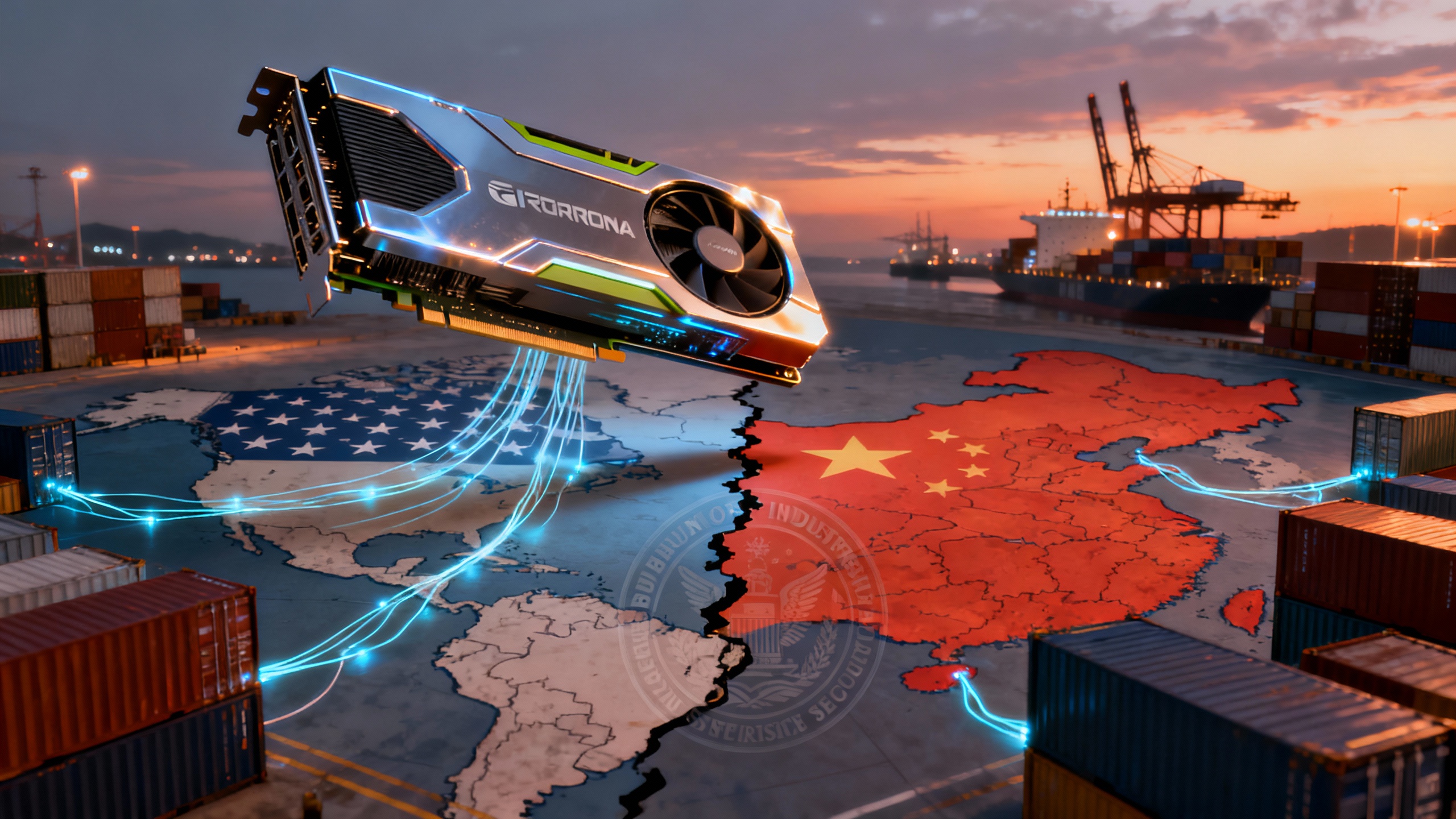
- On December 8, 2025, President Trump announced the U.S. will allow Nvidia to export H200 chips to “approved” Chinese buyers—and that Washington would take a 25% fee on those sales. This marked a break from Biden‑era prohibitions on advanced AI chip exports. Multiple outlets carried the announcement and follow‑ups, including Reuters and Axios.
- The White House separately said in November it was “not interested” in allowing Nvidia’s latest Blackwell chips to be sold to China, keeping the top tier off‑limits for now. Reuters via Yahoo.
- Commerce has begun an inter‑agency review of H200 license applications (State, Energy, Defense weigh in; BIS leads). That process typically runs on a 30‑day clock. Reuters exclusive.
- Nvidia has told Chinese clients it aims to start limited H200 shipments from existing inventory before Lunar New Year—roughly mid‑February 2026—pending U.S. and Chinese government approvals. Initial volumes reported: 5,000–10,000 modules (about 40,000–80,000 chips). Reuters.
What Warren and Meeks are asking for—and why
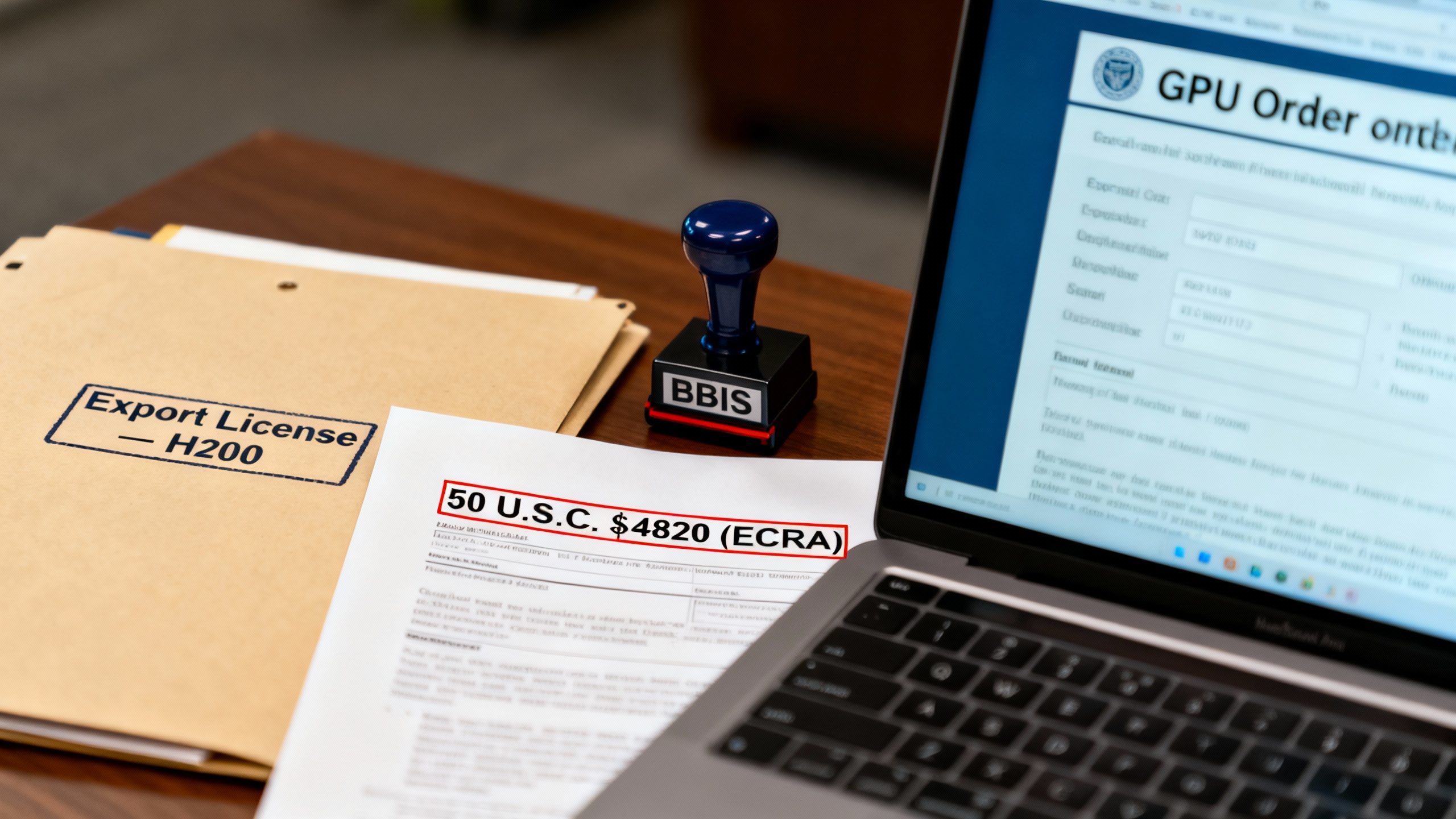
The Warren–Meeks letter leans on ECRA §4820(h)(2)(B)(i), which requires BIS to provide export‑licensing information to Congress upon request of a chair or ranking member. The lawmakers argue that approving H200 shipments would run counter to ECRA’s stated policy to restrict exports that would “make a significant contribution to the military potential” of an adversary. They also point to a recent Justice Department case, in which prosecutors called Nvidia’s H‑series GPUs “the building blocks of AI superiority” and “integral to modern military applications.” Committee release + letter | ECRA text at LII | DOJ press release.
What Warren & Meeks want from Commerce
| Request | What it covers | Timing/Trigger |
|---|---|---|
| All H200‑related license files | Applications, supporting docs, conditions, and evidence under the Export Administration Regulations (including ECCN 3A090 items) | Provide by January 12, 2026 |
| Ongoing transparency | New relevant license applications | On the date BIS refers them to inter‑agency review |
| Rapid notice of any approvals | Full details of approved licenses | Within 48 hours of approval |
| Pre‑approval briefings | Military potential of approved chips; reactions of allies/partners | Before any H200 license is approved |
| Any government‑to‑government agreements | Text of any deals enabling advanced chip shipments | Provide with the package |
Why the H200 matters
Although Nvidia’s H200 is a “previous‑generation” Hopper‑class GPU, it remains a workhorse for large model inference and some training. It pairs the Hopper compute engine with 141 GB of HBM3e memory and 4.8 TB/s bandwidth—big leaps over H100 that boost LLM throughput and let bigger models fit on a single device. Nvidia technical blog | Product page | Tom’s Hardware explainer.
That combination is precisely what worries hawks: higher‑memory accelerators shorten training and inference cycles for advanced models that can be adapted to military, cyber, and intelligence uses. DOJ’s December case seizing more than $50 million in restricted GPUs underscored the stakes and the lengths networks will go to obtain them. DOJ.
The policy whiplash—and what’s different this time
- The Biden administration’s October 2023 and subsequent rules created ECCN 3A090 and tightened advanced‑computing export controls to China and other D:5 destinations. Rule summary | BIS overview.
- The Trump administration’s December 8 move carves out H200 (with a 25% U.S. fee), while keeping Blackwell off‑limits “at this time.” Reuters | Axios.
- BIS has already kicked the H200 licenses into inter‑agency review. The final call still rests with the President after agencies weigh in. Reuters.
- On the buyer side, Beijing hasn’t greenlit H200 imports yet; officials reportedly weighed requiring buyers to bundle a quota of domestic accelerators with any H200 order to prop up local suppliers. Reuters.
Signals for builders and buyers of AI infrastructure
- Near‑term supply: Nvidia says any licensed H200 sales to “authorized customers” in China will not affect its ability to supply U.S. customers, and early China shipments would come from existing stock. Expect tight—but not necessarily tighter—H200 availability as Nvidia prioritizes Blackwell and later Rubin. Reuters.
- Compliance load: Even if licenses are approved, end‑user, end‑use, and diversion controls will be exacting. Cloud‑access workarounds are already drawing scrutiny in Washington. The 2023–2025 BIS updates explicitly target supercomputing and cloud routes. BIS/Skadden summary.
- Competitive dynamics: Chinese hyperscalers are eager for H200s because they’re vastly more capable than the “for‑China” H20 variants; that’s exactly why critics fear erosion of the U.S. edge if exports surge. Reuters | CNBC on H20’s license saga.
TipIf you manage AI capacity or procurement
- Lock in delivery milestones and substitution clauses; inter‑agency reviews can stretch timelines.
- Track ECCN classifications (3A090 and related “.z” entries). Small spec changes can tip a product over the threshold.
- Budget for compliance: audit trails, remote‑access limits, and tamper‑evident tracking are increasingly common conditions.
The politics won’t stop at one letter
Warren has already called for Nvidia CEO Jensen Huang to testify publicly about China sales. Committee statement. Meeks, meanwhile, unveiled a bill on December 18 to prohibit sales of H200‑class chips to “countries of concern,” while clarifying secure pathways for U.S. firms to move compute to allied data centers. Meeks press release.
With Congress now exercising its ECRA oversight muscle, expect more disclosure fights around any H200 approvals, plus fresh guardrails on cloud‑based access to advanced compute. For AI teams, the outcome will shape where, how, and with whom you can build and run large‑scale models in 2026.
What to watch next
- Commerce’s response to the Warren–Meeks demand by January 12, 2026—and whether it commits to the 48‑hour approval notifications.
- Any inter‑agency dissent memos leaked or disclosed as part of briefings to Congress.
- Beijing’s import decision and whether a “buy‑domestic bundle” requirement emerges for H200 purchases. Reuters.
- Actual shipment timing and volumes; Nvidia’s target is mid‑February 2026 using existing inventory. Reuters.
- Whether Congress moves broader legislation to codify or narrow chip‑export policy—and how that intersects with any future carve‑outs for allies (e.g., recent approvals for advanced chips to the UAE and Saudi Arabia under strict conditions). Commerce statement.
Sources
- Reuters: Lawmakers seek disclosure on any H200 approvals; Nvidia’s mid‑Feb China shipments; and inter‑agency review of H200 licenses (Dec 18–22, 2025).
- U.S. Senate Banking Committee: Press release + PDF letter (Dec 22, 2025)
- ECRA statute: 50 U.S.C. §4820 (LII)
- DOJ: Operation Gatekeeper press release (Dec 8–9, 2025)
- Nvidia technical details: Developer blog | Product page | Tom’s Hardware
- Context: White House position on Blackwell to China (Nov 2025) | Axios summary of the 25% H200 plan | CNBC on H20 licensing timeline