

What changed — and why it’s big
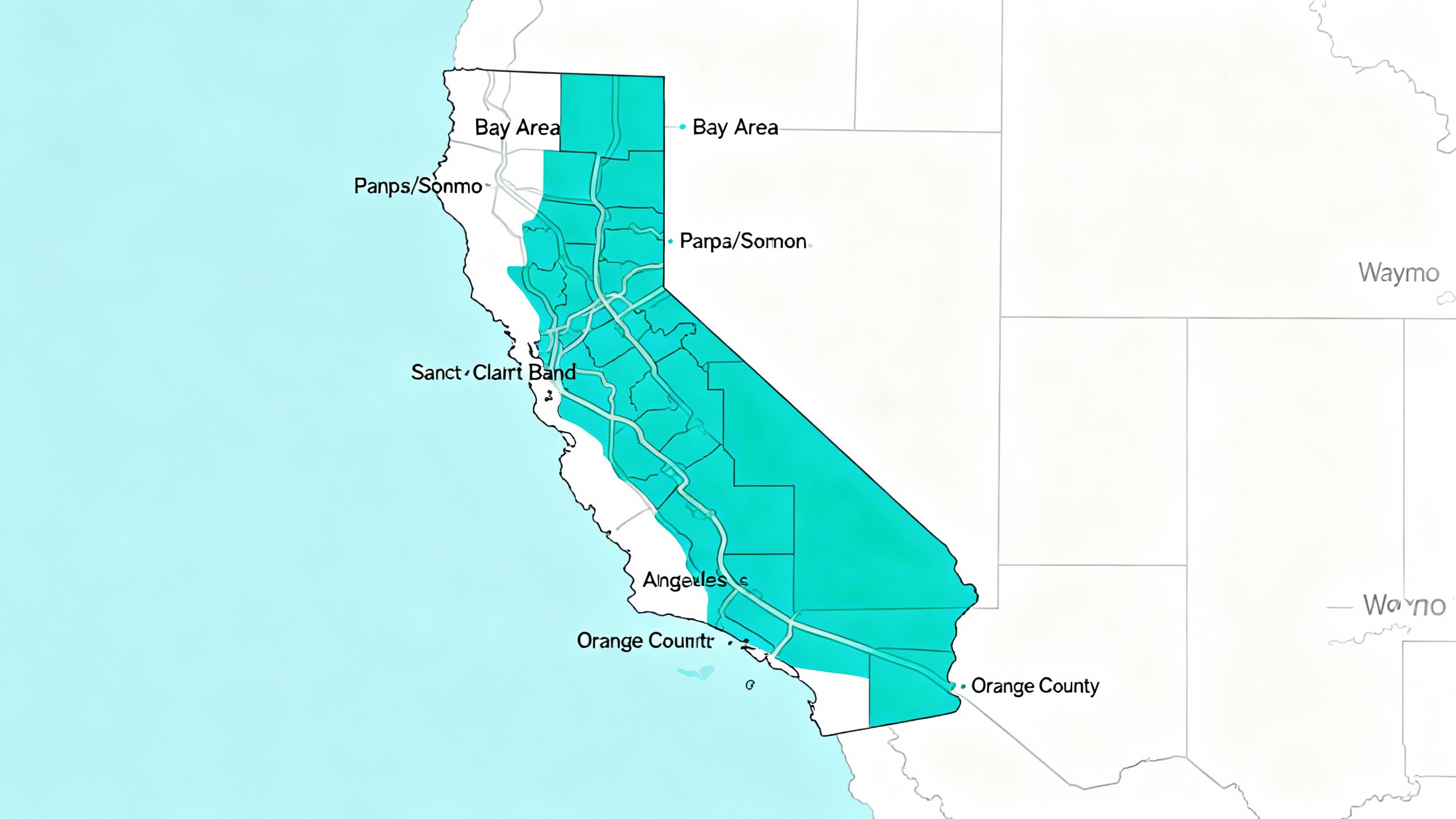
California regulators just broadened Waymo’s robotaxi footprint in a major way. On November 21–22, 2025, the state DMV updated Waymo’s “approved areas of operation” to cover much more of Northern and Southern California — from most of the Bay Area (including Napa/Sonoma and Sacramento) to a continuous corridor stretching from Santa Clarita through Los Angeles and Orange County all the way to San Diego. The DMV’s page also lists “all speeds” and “all rain, fog, and other conditions” in Waymo’s operational design domain (ODD), and identifies the company’s approved vehicles as the Jaguar I‑PACE (2021/2024) and the Zeekr RT (2022/2025). Put simply: the sandbox where Waymo can drive without a safety driver just got much larger. DMV: Waymo Approved Areas of Operation; SF Chronicle; TechCrunch.
Where you’ll actually be able to ride
While Waymo can now test and deploy driverless vehicles across a much wider map, paid robotaxi rides still roll out city by city. Here’s the near-term picture based on current approvals and company statements:
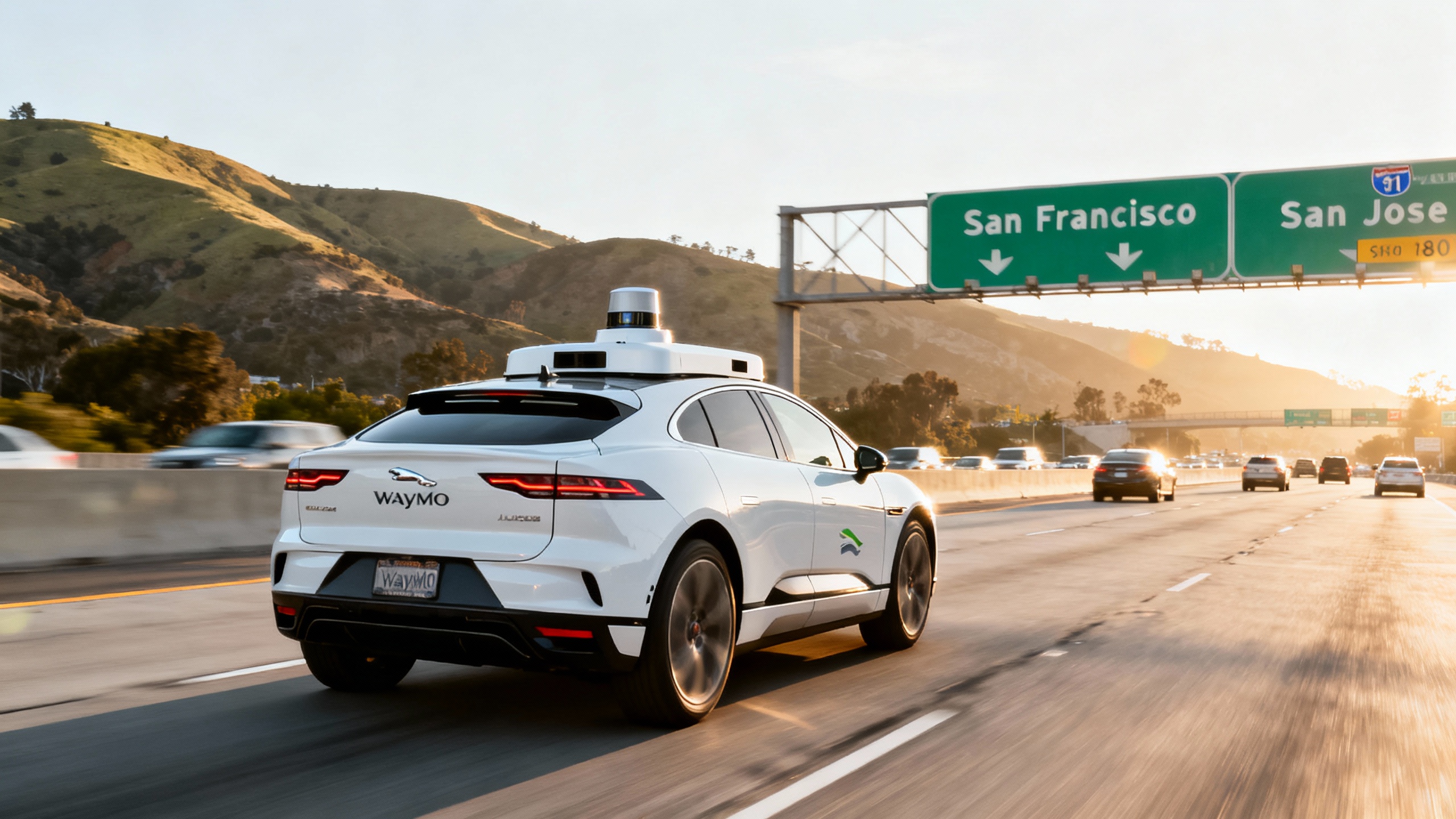
- Bay Area: Commercial service is live in San Francisco and parts of Silicon Valley, with the company recently adding freeway capability and service to San José Mineta International Airport (SJC). Waymo blog; SJC announcement; Reuters.
- Los Angeles: Open to anyone since November 12, 2024, with an ~80‑square‑mile service area and ongoing expansions. The Verge.
- New coverage zones: DMV approval now includes most of the East Bay and North Bay (Wine Country), plus Sacramento and a Santa Clarita→San Diego corridor. Waymo says San Diego riders are “up next” in mid‑2026, pending remaining approvals. DMV; SF Chronicle; Engadget.
California AV rulebook at a glance
| Regulator | What it approves | Why it matters to you |
|---|---|---|
| DMV | Driverless testing & deployment areas, ODD, vehicle platforms | Determines where and how a robotaxi can physically operate without a human driver |
| CPUC | Carrying paying passengers (Waymo One) | Determines where you can actually buy a ride |
| Airports (local) | On‑airport pickup/drop‑off permits | Enables curbside or designated pickup at terminals (e.g., SJC) |
Freeways, airports, and real‑world reach
Waymo’s expansion isn’t just wider — it’s also deeper. On November 12, 2025, the company began welcoming public riders onto freeways in the Bay Area, Los Angeles, and Phoenix, and added SJC airport service — important unlocks for travel time and usefulness. The company says freeway access will appear when it provides a meaningful time saving, and it’s rolling out to more riders over time. Waymo blog; Reuters; Waymo Help: SJC.
Safety context: progress and scrutiny
Waymo remains the only U.S. operator offering uncrewed, paid robotaxi rides at scale, but it continues to face close oversight — as it should. In 2024 and 2025 it issued voluntary software recalls (including ~1,200 vehicles last May for barrier‑detection behaviors) and NHTSA later closed a 14‑month probe into collisions and unexpected behaviors without further action. Local leaders, particularly in Los Angeles and San Mateo County, have also pressed for more local input and clearer disengagement protocols. Reuters; Reuters (probe closed); LA Times; TechCrunch recall explainer.
What this means for riders and cities
- Better utility: Freeways and airport pickups make robotaxis more than a novelty — they’re now viable for longer cross‑town trips and travel days.
- Coverage density: With a larger DMV‑approved canvas and CPUC expansions (e.g., South Bay/San José), Waymo can stitch together contiguous service in population centers. CPUC status.
- Vehicles tuned for scaling: The DMV’s list now includes the Zeekr RT alongside Jaguar I‑PACE, signaling a future mix of platforms aimed at cost and capacity. DMV.
TipHow to try Waymo now
- San Francisco Bay Area and Los Angeles: Download Waymo One, set your destination, and check if your pickup and drop‑off fall inside the current commercial zone.
- Airports: SJC pickups/drop‑offs are live; SFO is in phased testing (employee pilots before public rides).
- Freeways: If the freeway is faster, the app may route you that way; availability is expanding.
For new regions (e.g., San Diego mid‑2026), watch for CPUC approvals and local airport permits. Waymo rides; CNBC on SFO testing.
The bottom line
The DMV’s decision unlocks one of the largest geographic tests of driverless ride‑hailing in U.S. history. It doesn’t mean every Californian can hail a Waymo tomorrow — CPUC approvals still govern paid service — but it clears the way for faster expansion, wider coverage, and more practical use cases. If Waymo sustains its safety record while scaling (and continues transparent collaboration with regulators and cities), 2026 could be the year robotaxis start to feel routine far beyond downtown cores.
Sources
- California DMV: Waymo Approved Areas of Operation (maps, ODD, vehicles) — updated Nov. 2025. DMV page
- San Francisco Chronicle: “Waymo to expand service into Wine Country…” (Nov. 21, 2025). Article
- TechCrunch: “Waymo gets regulatory approval to expand across Bay Area and Southern California” (Nov. 22, 2025). Article
- Waymo blog: “Taking riders further, safely with freeways” (Nov. 12, 2025). Post
- Reuters: Waymo launches freeway service, adds SJC (Nov. 12, 2025). Report
- SJC Airport news release (Nov. 12, 2025). Announcement
- CPUC Advice Letter status (Waymo AL‑3; disposition May 19, 2025). CPUC page
- Reuters: CPUC nod to expand into San José/South Bay (May 20, 2025). Report
- The Verge: LA opens to all riders (Nov. 12, 2024). Report
- LA Times: CPUC clears LA launch; local protests and oversight debate (Mar. 1, 2024). Article
- Reuters: NHTSA closes 14‑month Waymo probe (July 25, 2025) and recall coverage (May 14, 2025). Probe closed; Recall