


Key Stories (published Dec 1–2, 2025)
-
OpenAI declares internal “code red” to refocus on ChatGPT reliability and speed (Dec 2)
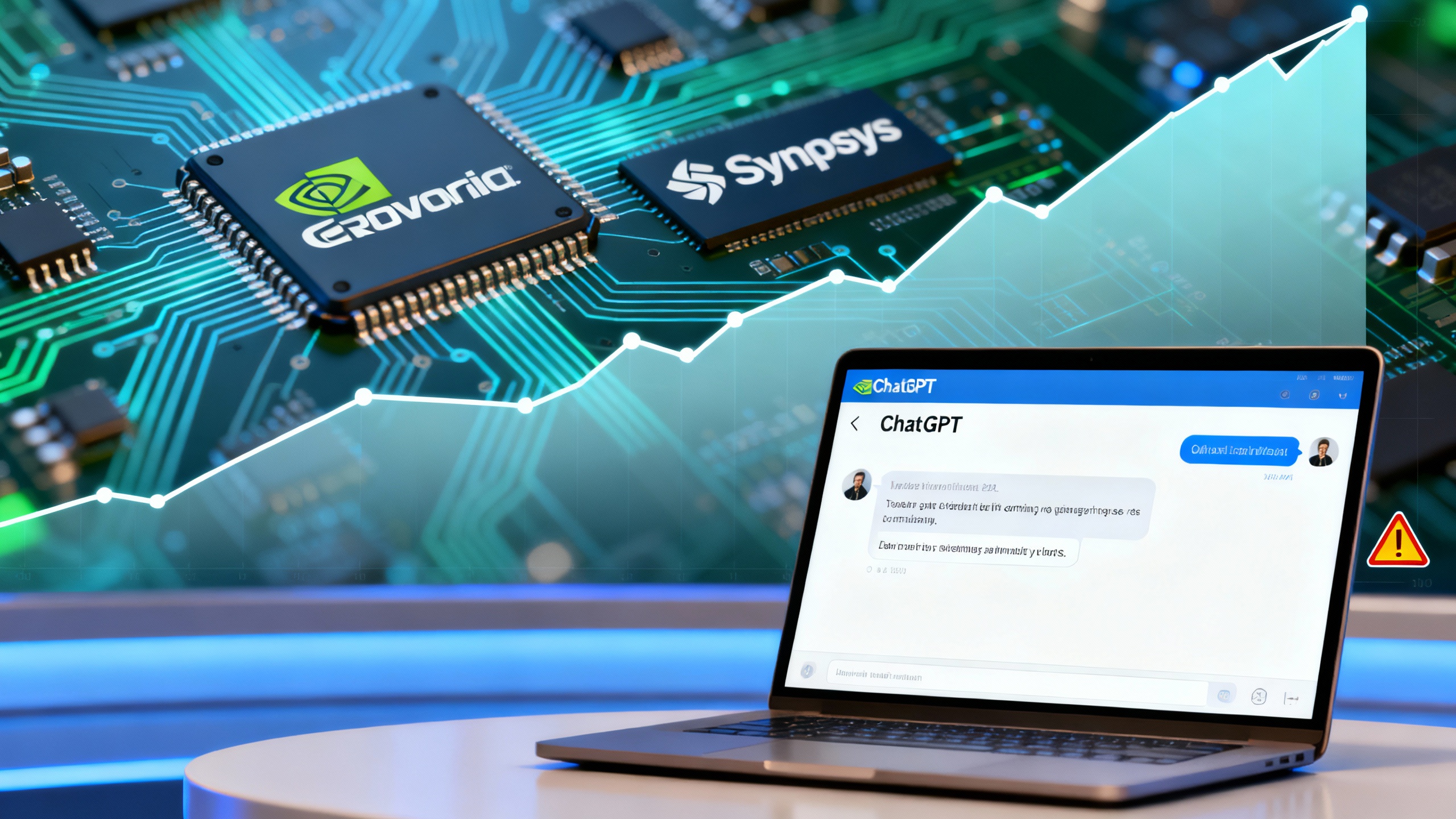
OpenAI CEO Sam Altman told employees the company is pausing several initiatives (including early ad experiments and consumer “agent” projects) to concentrate on improving ChatGPT’s performance, personalization and stability. The urgency follows growing competitive pressure from Google’s Gemini and Anthropic’s latest Claude releases. For product and platform teams, this signals a near‑term shift from new feature proliferation to core UX quality and latency.
Our deeper analysis: OpenAI Declares ‘Code Red’ to Refocus on ChatGPT.
Sources: Reuters, The Verge -
Nvidia invests $2B in Synopsys to accelerate AI‑driven design and simulation (Dec 1)
Nvidia bought a $2B stake in EDA leader Synopsys as the firms expand a multi‑year partnership to bring GPU‑accelerated AI to chip and complex system design (from semiconductors to mechanical and molecular simulation). Expect faster design cycles and new workflows that blur boundaries between HPC, simulation and AI—important for semiconductor, automotive, aerospace and industrial automation.
Our deeper analysis: Nvidia Invests $2B in Synopsys to Turbocharge AI‑Driven Design.
Sources: Reuters, Forbes -
Researchers show Anthropic’s new Claude “Skills” can be weaponized to deploy ransomware (Dec 2)
Cato Networks demonstrated how a widely shared open‑source Skill could be modified to download a remote payload that executed MedusaLocker ransomware when run via Claude Code. Anthropic acknowledged the report and emphasized customers should only run trusted Skills. The episode highlights a fast‑emerging security surface: model‑invoked plug‑ins, scripts and tools that execute code in enterprise environments.
Our deeper analysis: Researchers Exploit Anthropic ‘Skills’ to Deliver Ransomware.
Sources: Axios exclusive, Cato Networks research note, Anthropic: Introducing Agent Skills -
OECD flags AI‑driven market exuberance as a key downside risk to the U.S. outlook (Dec 2)
In its Economic Outlook, the OECD nudged up 2025 growth forecasts but warned that an AI‑fueled equity correction is a prominent risk if returns underwhelm. The report underscores the need to tie AI investments to measurable productivity and margin gains—especially for public companies exposed to AI‑themed valuations.
Sources: Axios, Reuters, Forbes (UBS forecast context)
- AWS re:Invent opens with an enterprise “agentic AI” push; Bedrock adds TwelveLabs Marengo 3.0; AWS Transform targets legacy code (Dec 1–2)
Ahead of today’s keynotes in Las Vegas, AWS previewed an agent‑heavy slate: Amazon Connect’s agentic self‑service and assistance features; AWS Transform’s modernization agents (promising up to 5× faster app modernization); and TwelveLabs’ Marengo 3.0 video understanding model on Amazon Bedrock. For operations, expect more vendor‑managed “agent blueprints,” stronger observability for AI actions, and tighter multicloud networking.
Sources: About Amazon live updates, AWS re:Invent schedule, Yahoo/Tech coverage
Emerging Trends
-
Plug‑in/toolchain risk eclipses prompt “jailbreaks”
Early signals: the Claude “Skills” ransomware proof‑of‑concept shows adversaries can hide remote code in seemingly benign Skills that AI agents load and execute. Expect a shift toward signed Skills, allowlists, EDR integration for agent sandboxes, and vendor‑run marketplaces with stricter review.
Evidence: Axios, Anthropic Skills docs. -
AI + EDA + Simulation becomes a strategic stack
Nvidia’s Synopsys move elevates GPU‑accelerated AI for chip and system design, compressing simulation cycles from weeks to hours. Expect competitive responses from Cadence/AMD and a wider push of AI across computer‑aided engineering, industrial twins, and verification.
Evidence: Reuters. -
Agentic AI goes “production‑grade” in the enterprise
AWS’s announcements emphasize agentic observability (explanations of what the AI did and why), transactional blueprints (Visa on agentic payments), and modernization agents (AWS Transform). The pattern: out‑of‑the‑box agents with governance knobs, shipping in managed platforms.
Evidence: About Amazon. -
Macro re‑rating pressure: from AI narrative to AI P&L
The OECD’s caution on an AI‑driven correction will intensify CFO scrutiny of AI ROI and energy bills. Microsoft’s Satya Nadella reiterated the sector needs “social permission” for its power use—raising the bar for tangible economic outcomes.
Evidence: Axios, Politico. -
Product quality over feature sprawl at frontier labs
OpenAI’s “code red” prioritizes speed, reliability and personalization over new consumer agents and ads—an implicit admission that retention and trust hinge on predictable performance. Watch for similar reprioritizations across the stack.
Evidence: Reuters, The Verge.
Conversations & Insights (last 48 hours)
-
“Code Red” and the new AI product playbook
Where: Tech press and dev communities are debating OpenAI’s pivot.
Voices: Reporting by Reuters, analysis threads on Reddit (e.g., r/ChatGPTcomplaints).
Takeaway: Reliability and latency are becoming competitive features in their own right; expect fewer splashy consumer “agent” experiments and more investment in core UX, evals, and personalization. -
The “agent attack surface” arrives
Where: Security Twitter/X and practitioner blogs following the Axios scoop.
Voices: Axios exclusive citing Cato Networks researcher Inga Cherny; Anthropic’s own Skills docs stress running only trusted code.
Takeaway: Governance for agents must extend beyond prompts to include plug‑ins, code execution rights, egress policies, and marketplace hygiene. -
AI’s power bill and “social permission”
Where: Policy and business press, ahead of re:Invent keynotes.
Voices: Microsoft CEO Satya Nadella’s comments on earning “social permission” for AI’s energy usage (Politico).
Takeaway: Infrastructure constraints (power, siting) and public sentiment are now board‑level AI risks; initiatives will need clearer economic outcomes and sustainability metrics to scale without backlash.
Quick Takeaways
- Reassess security for AI plug‑ins/Skills this week: enforce signed packages, restrict network egress, and update procurement policies to treat Skills as third‑party code.
- Expect accelerated adoption of AI‑assisted simulation/EDA; align HPC budgets and workflows to exploit GPU‑accelerated design loops.
- Prioritize UX and latency in AI products—benchmarks matter, but daily reliability keeps users and revenue.
- Tie AI investments to measurable ROI and power efficiency; macro watchers (OECD) are explicitly eyeing an AI‑driven correction if results disappoint.
- Track AWS’s agentic AI features (Bedrock, Connect, Transform) for near‑term automation wins in contact centers, code modernization, and video intelligence.
Sources
- OpenAI “code red”: Reuters, The Verge
- Nvidia–Synopsys: Reuters, Forbes
- Anthropic Skills ransomware vector: Axios, Cato Networks, Anthropic Skills
- OECD macro context: Axios, Reuters
- AWS re:Invent: About Amazon live blog, AWS keynotes, Yahoo/Tech guide
- Energy and AI permissioning: Politico