

Today in AI – 12-07-2025
Key Stories (past 48 hours)
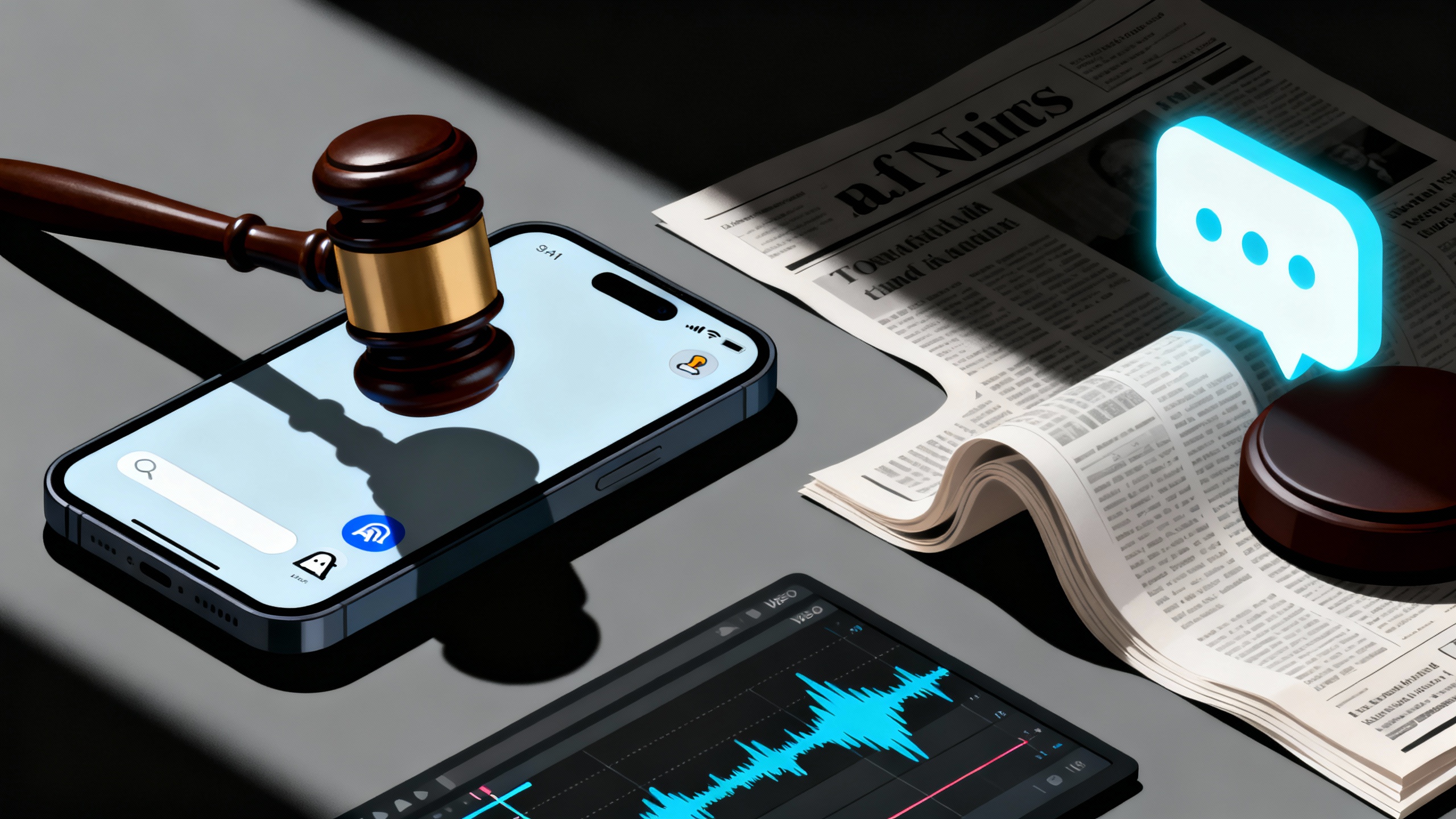
Judge Mehta caps Google’s default search/AI placement deals at one year
A U.S. federal court entered Final Judgment on December 5, requiring that Google’s contracts for default placement of Search, Chrome, Assistant and its GenAI apps in the U.S. terminate within one year, with similar one‑year expiry/termination rights for OEM and browser defaults (including Apple). The ruling also formalizes data‑sharing and other behavioral remedies and explicitly brings generative‑AI products into scope. For distribution and AI‑assistant teams, this pries open annual rebids for “default” slots across phones and browsers starting in 2026. [Court memorandum opinion PDF]. Read our full analysis: Judge Mehta Caps Google’s Default Search and AI Deals at One Year.
Meta inks AI licensing deals with CNN, Fox News, USA Today and others
Meta confirmed multiple commercial agreements to let Meta AI surface “real‑time” news and links from outlets including CNN, Fox News, USA Today/People Inc., The Daily Caller, Washington Examiner and Le Monde. It’s a notable pivot back toward news after earlier pullbacks—and signals fast normalization of paid licensing for AI assistants. [Reuters] also covered the move; [The Verge] reports similar details. Read our take: Meta Signs AI Licensing Deals With CNN, Fox News, USA Today to Feed Meta AI.
New York Times sues Perplexity over alleged “illegal” copying to power its AI
On December 5, the New York Times filed suit alleging Perplexity copies, distributes, and displays Times content—including paywalled material—without permission, and attributes “hallucinated” content to the Times. Perplexity disputes the claims. The case escalates publishers’ legal push to force licensing or limit scraping by AI products. Read our coverage: New York Times Sues Perplexity for ‘Illegal’ Copying to Power AI.
EU fines X €120M for deceptive blue checkmarks and DSA violations
The European Commission issued the first DSA penalty against X, citing “deceptive design” around its paid blue checkmarks, insufficient ad transparency, and researcher data access issues. While not an AI‑model decision, it underscores EU willingness to scrutinize platforms’ algorithmic UX and dark patterns—relevant for AI‑driven content ranking and assistant placement. [The Verge].
Kling 2.6 brings native audio to AI video generation
Kuaishou’s Kling AI released “Video 2.6,” adding simultaneous audio‑visual generation—i.e., dialogue, SFX and ambience rendered inline with the video—shifting typical workflows from “silent video + post audio” to single‑pass outputs. Early integrations are appearing on creative platforms, hinting at audio‑native video becoming baseline for GenAI tools. [Company release].
Emerging Trends
- Trend: Annual rebids for “default AI” distribution The Google Final Judgment moves defaults from multi‑year to yearly rebids and includes GenAI apps by name. Signals: one‑year caps on OEM/browser placement and Apple/Safari defaults; expanded data‑access remedies. Potential impact: more frequent, price‑driven competition across device makers, browser developers, and carriers; new openings for rival assistants (Gemini, ChatGPT, Perplexity, Claude) to win default slots with value‑add features (e.g., privacy modes, enterprise tie‑ins).
-
Trend: Licensing beats scraping for news in AI assistants Within 48 hours, Meta’s deals and the Times–Perplexity suit reinforced the economic pivot from unlicensed aggregation to paid access. Signals: Meta’s named multi‑publisher agreements; new litigation pressure on non‑licensed usage. Expect heightened “source‑quality” differentiation inside assistants and more newsroom‑AI tie‑ups (metered access, content freshness, brand attribution).
-
Trend: Audio‑native GenAI video Kling’s simultaneous audio‑visual generation suggests 2026 creative tools will treat audio as first‑class in video synthesis. Signals: vendor claims of synchronized VO/SFX/ambience from a single prompt; early partner integrations. Impact: fewer handoffs to foley/VO tools; new prompts (tone, mic type, room acoustics) enter creative workflows; licensing questions for style/voice emulations will intensify.
-
Trend: Platform UX enforcement as AI governance proxy The EU’s DSA fine against X centers on deceptive UX and transparency—areas overlapping with AI‑mediated ranking and identity signals. Expect regulators to test levers (design patterns, labeling, researcher access) that indirectly shape how AI systems curate and amplify content.
Conversations & Insights
-
Debate: “Could AI run a company?” Where: Wall Street Journal feature (Dec 7). Key voices weigh whether AI systems can manage divisions—or entire firms—versus current limits in long‑horizon decision‑making and accountability. Takeaway: Boardrooms will trial “AI copilot” governance analytics (scenario planning, policy checks) before ceding real authority.
-
Discussion: “Ads in ChatGPT” or agentic commerce? Where: X and tech media on Dec 7. After screenshots implying ads circulated, OpenAI’s head of ChatGPT denied any ad tests; reporting points to Instant Checkout/Agentic Commerce features (via Stripe) being mistaken for ads. Takeaway: The monetization path for assistants is moving toward transactions and protocols—not display ads—raising new UX, disclosure and ranking questions for “AI shopping.”
-
Flashpoint: Publisher licensing vs. fair use Where: Litigation coverage and industry commentary after the Times’ new suit against Perplexity. Takeaway: With licensing deals accelerating elsewhere, non‑licensed usage faces mounting legal and reputational risk; expect more targeted, vertical‑specific licensing (finance, health, local) to follow.
Quick Takeaways
- Default distribution for AI assistants is about to get competitive—and expensive—on an annual cycle. Partnership, privacy modes, and differentiated on‑device features will matter as much as raw model quality.
- News in AI assistants is moving from “open web” to “licensed feeds,” improving provenance but adding cost and potential bias toward partnered outlets. Build content diversification checks into your agent UX.
- Creative teams should pilot audio‑native video workflows now (script to mixed output in one pass) and plan for rights/consent guardrails on voices and styles.
- Treat “AI monetization” experiments in assistants as commerce flows, not ads: instrument attribution, disclosures, and complaint handling like a storefront.
Sources
- Court: U.S. v. Google – Memorandum Opinion & Final Judgment (Dec 5, 2025) (PDF).
- Meta publisher deals: Reuters; The Verge.
- NYT v. Perplexity filing coverage: Reuters.
- EU DSA fine against X: The Verge.
- Kling 2.6 audio‑visual generation: PR Newswire.
- “AI could run a company?” debate: Wall Street Journal.
- Agentic Commerce background: OpenAI blog; Stripe newsroom; BI discussion of “ads.”