

Today in AI – 12-14-2025
Key Stories (past 48 hours)
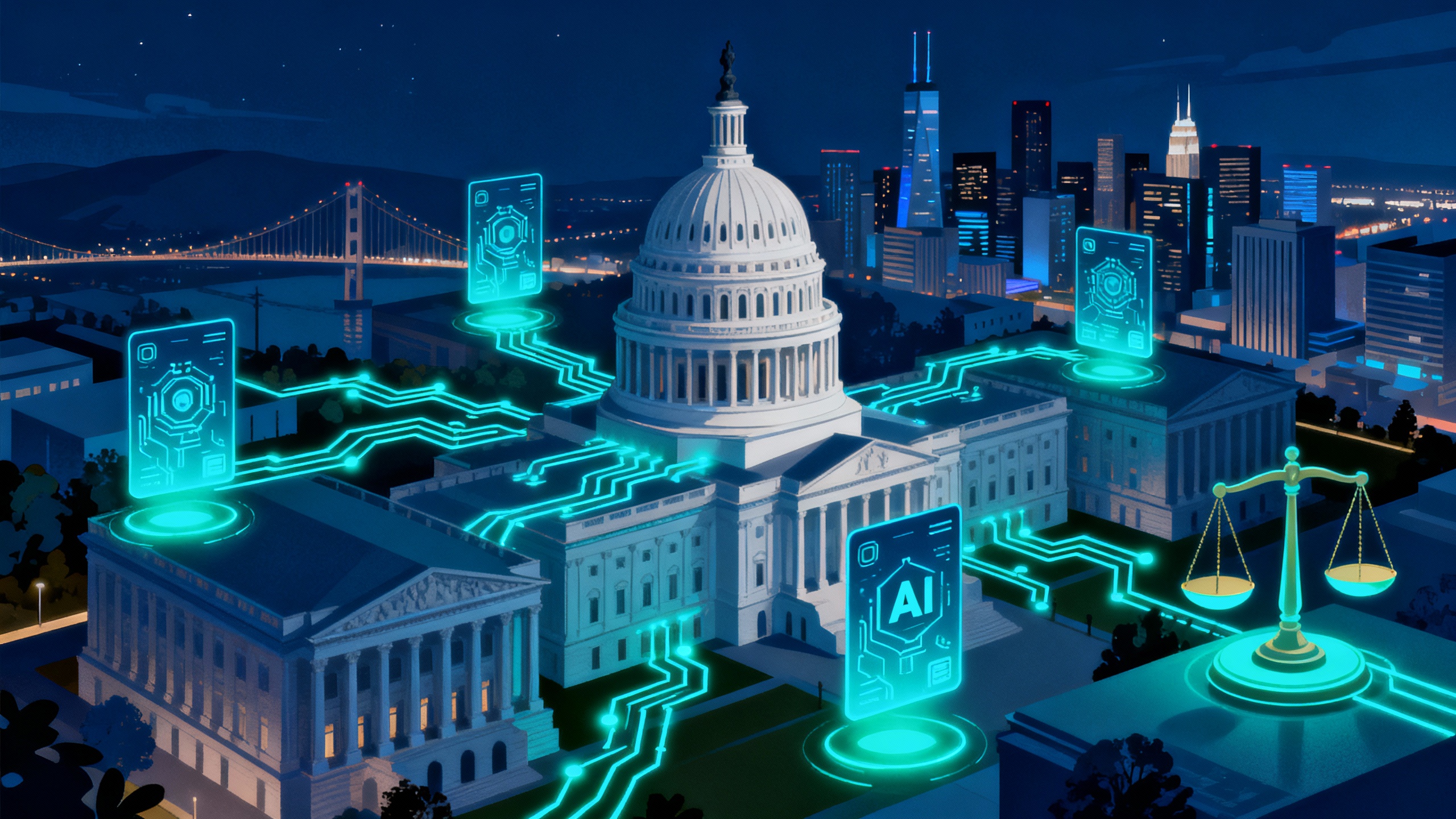
Trump moves to preempt state AI laws, igniting legal and political backlash
The White House issued an executive order on December 11 aiming to centralize U.S. AI policy and direct federal challenges to state-level AI laws perceived as impediments to national competitiveness. Reaction escalated over the weekend: California Governor Gavin Newsom publicly pushed back on December 13, and further reporting today details the internal split inside the GOP over the move and the growing influence of tech advisers. Expect legal fights over federal preemption and potential funding leverage. Washington Post analysis, Dec 14; The Guardian, Dec 13; Executive Order text, Dec 11; FT overview of preemption & funding link, Dec 12.
Read our take: Trump moves to preempt state AI laws, igniting legal and political backlash
OpenAI ships GPT-5.2 to counter Google’s Gemini 3
OpenAI launched GPT‑5.2 on December 11 with three variants (Instant, Thinking, Pro) focused on long‑context reasoning, tool use, coding, and enterprise workflows. The release follows a reported internal “code red” prioritization to improve ChatGPT and counter Google’s Gemini 3 momentum. Rollout to paid ChatGPT users and API access is underway; OpenAI also published a system‑card update. Reuters, Dec 12; OpenAI system card update, Dec 11; TechCrunch recap, Dec 11.
Read our take: OpenAI ships GPT-5.2 to counter Google’s Gemini 3
Disney invests $1B in OpenAI; licenses 200+ characters for Sora-generated short videos
Disney announced a $1 billion equity investment in OpenAI and a three‑year licensing deal enabling Sora users to generate short, prompt‑based videos with Disney, Marvel, Pixar and Star Wars characters (not including talent likenesses or voices). Select user‑generated clips may appear on Disney+. The move signals a pragmatic IP strategy amid ongoing Hollywood debates over GenAI’s impact on jobs and copyrights. Reuters, Dec 12; AP via Washington Post, Dec 11; Fortune interview with Bob Iger, Dec 11.
Read our take: Disney invests $1B in OpenAI to bring Marvel, Pixar and Star Wars into Sora
xAI and El Salvador plan nationwide AI tutoring rollout in public schools
El Salvador will deploy xAI’s Grok across more than 5,000 public schools over two years, bringing AI‑assisted tutoring to over one million students. The initiative marks one of the most ambitious government‑scale education pilots for GenAI to date and arrives as Grok’s content safety track record draws scrutiny. AP, Dec 12; xAI announcement, Dec 11; The Guardian context, Dec 11.
Oracle denies report of OpenAI data‑center delays as AI build‑out costs rattle investors
After a Bloomberg report suggested delays in several OpenAI‑linked data centers to 2028, Oracle said December 13 that “all milestones are on track.” Still, earnings‑week volatility underscores mounting concerns about the economics, power availability, and lead times for massive AI infrastructure projects. Reuters, Dec 13; Investopedia wrap, Dec 13; Yahoo Finance analysis, Dec 12.
Emerging Trends
-
Licensing beats litigation (for now) in GenAI media
Disney’s equity + licensing deal with OpenAI is a template for studios to monetize IP inside AI tools—tightly scoped guardrails, no model training on IP, potential UGC distribution on a studio platform. Early signals: stock uptick, union pushback, and interest from other publishers experimenting with real‑time news in chatbots (e.g., Meta’s recent deals). If replicated, expect a more “cleared content” layer across image/video generators in 2026. Evidence: Reuters, Dec 12; Fortune, Dec 11. -
Federal preemption push reshapes U.S. AI compliance
In 48 hours, the policy conversation has shifted from state‑by‑state rules to a fight over federal authority. The EO invites lawsuits and could freeze new state AI statutes in key hubs (CA, CO). Short‑term, enterprises face ambiguity; long‑term, a national baseline (even if minimal) would simplify multi‑state deployments and vendor contracts. Evidence: Executive Order, Dec 11; Washington Post, Dec 14. -
“Thinking models” target end‑to‑end work
OpenAI’s GPT‑5.2 “Thinking” variant emphasizes deliberate reasoning, long‑context planning and tool use. This continues a clear arc across the stack (Gemini 3 Deep Think, Claude’s agentic tooling) toward automating multi‑step business tasks rather than single‑turn chat. Expect faster ops pilots in finance, support, and software engineering. Evidence: Reuters, Dec 12; OpenAI system card update, Dec 11. -
AI infrastructure strain shows up in markets
The week’s trading and headlines around Oracle’s timelines, debt, and capex reaffirm the core constraint: power, land, equipment and skilled labor are gating the AI build‑out. Enterprises should plan for longer lead times and potential cost pass‑throughs in 2026 contracts. Evidence: Reuters, Dec 13; Investopedia, Dec 13. -
Government‑scale AI deployments move from pilots to policy questions
El Salvador’s nationwide tutoring rollout with xAI is a bellwether for national digital‑education programs. It will surface issues around content safety, localization, teacher adoption, and vendor accountability at scale—data points regulators and school systems elsewhere will watch closely. Evidence: AP, Dec 12; xAI announcement, Dec 11.
Conversations & Insights
-
Preemption vs. states’ rights: where should AI be governed?
Where it’s happening: national media, policy circles, and social platforms.
Key voices: tech‑policy reporters and officials outlining how the EO was shaped by Silicon Valley advisers; California leadership signaling resistance.
Takeaway: Even if preemption holds, litigation could delay clarity well into 2026—enterprises should track state enforcement stances while preparing for a lighter federal baseline. Sources: Washington Post, Dec 14; The Guardian, Dec 13. -
Hollywood’s split screen on AI: “opportunity” vs. “theft”
Where it’s happening: trades, investor press and union channels.
Key voices: Bob Iger frames the Disney–OpenAI pact as participating in inevitable tech change; the Writers Guild of America (WGA) calls it a sanctioning of “theft” and seeks talks; investors debate upside vs. risk.
Takeaway: The deal’s tight guardrails (no talent voices/likenesses, no IP training) may become a de facto standard, but labor acceptance will hinge on revenue‑sharing and job‑impact evidence. Sources: Fortune, Dec 11; TheWrap summary of WGA response, Dec 12; Reuters, Dec 12. -
Are AI build‑outs getting ahead of returns?
Where it’s happening: earnings calls, finance media, and analyst notes.
Key voices: coverage highlighting Oracle’s reliance on massive OpenAI commitments, rising capex and debt; analysts trimming targets while retaining long‑term bullish theses.
Takeaway: Boardrooms should stress‑test 2026–27 AI budgets for power/lead‑time risk and consider portability strategies across clouds and accelerators. Sources: Investopedia, Dec 13; Yahoo Finance, Dec 12; Reuters, Dec 13. -
National AI in classrooms: promise vs. safeguards
Where it’s happening: global press, ed‑tech forums.
Key voices: government announcements and coverage noting gains in teacher productivity, alongside concerns about bias, content safety and critical‑thinking impacts.
Takeaway: Large‑scale deployments will pressure vendors to meet stricter safety audits, localization and educator‑workflow integration; expect procurement frameworks to codify these in 2026. Sources: AP, Dec 12; xAI announcement, Dec 11.
Quick Takeaways
- If you operate in multiple U.S. states, prepare for policy whiplash: track the EO’s legal challenges while maintaining compliance plans for active state rules; document AI risk controls you can adapt to either regime.
- For media/brands, the Disney–OpenAI template shows how to license IP without training exposure—expect RFPs that specify guardrails, watermarking, and distribution policies.
- Plan for infra volatility: bake longer lead times and power constraints into 2026 AI roadmaps; negotiate portability across providers to mitigate single‑vendor risk.
- Pilot “thinking/agentic” models where workflows are well‑documented (support, finance ops, code review) and instrument outcomes—hours saved, error rates, and escalation patterns.
- Education and public‑sector buyers will demand clearer safety and audit trails; vendors should be ready with age‑appropriate filters, explainability, and human‑in‑the‑loop designs.
Sources
- Executive Order: Ensuring a National Policy Framework for AI (Dec 11, 2025) — https://www.whitehouse.gov/presidential-actions/2025/12/eliminating-state-law-obstruction-of-national-artificial-intelligence-policy/
- Washington Post (Dec 14, 2025): How Trump’s tech advisers overcame a MAGA rebellion over AI — https://www.washingtonpost.com/politics/2025/12/14/trump-ai-executive-order-divisions/
- The Guardian (Dec 13, 2025): Gavin Newsom pushes back on Trump AI executive order — https://www.theguardian.com/technology/2025/dec/13/california-ai-executive-order-trump-gavin-newsom
- Reuters (Dec 12, 2025): OpenAI launches GPT‑5.2 — https://www.reuters.com/technology/openai-launches-gpt-52-ai-model-with-improved-capabilities-2025-12-11/
- OpenAI (Dec 11, 2025): Update to GPT‑5 System Card: GPT‑5.2 — https://openai.com/index/gpt-5-system-card-update-gpt-5-2/
- TechCrunch (Dec 11, 2025): OpenAI fires back at Google with GPT‑5.2 — https://techcrunch.com/2025/12/11/openai-fires-back-at-google-with-gpt-5-2-after-code-red-memo/
- Reuters (Dec 12, 2025): Disney invests $1B in OpenAI, licenses characters for Sora — https://www.reuters.com/business/media-telecom/disney-makes-1-billion-investment-openai-brings-characters-sora-2025-12-11/
- AP via Washington Post (Dec 11, 2025): Disney–OpenAI deal basics — https://www.washingtonpost.com/business/2025/12/11/disney-openai-sora-ai-artificial-intelligence/fe0062fc-d6a1-11f0-a93c-a869cf73ebd6_story.html
- Fortune (Dec 11, 2025): Bob Iger on Disney’s OpenAI investment — https://fortune.com/2025/12/11/disney-openai-deal-investment-bob-iger-opportunity-not-threat/
- TheWrap (Dec 12, 2025): WGA response to Disney–OpenAI — https://www.thewrap.com/wga-disney-openai-deal-response/
- AP (Dec 12, 2025): El Salvador–xAI education program — https://apnews.com/article/a1c6e41b84cf5cfa8a9b20bd15dc12f3
- xAI (Dec 11, 2025): El Salvador partnership — https://x.ai/news/el-salvador-partnership
- Reuters (Dec 13, 2025): Oracle denies OpenAI data‑center delays — https://www.reuters.com/technology/oracle-pushes-back-several-data-centers-openai-2028-2027-bloomberg-news-reports-2025-12-12/
- Investopedia (Dec 13, 2025): Oracle weekly stock wrap — https://www.investopedia.com/a-bad-week-for-oracle-stock-got-even-worse-on-friday-here-s-why-orcl-11868453
- Yahoo Finance (Dec 12, 2025): Oracle’s OpenAI exposure & market reaction — https://finance.yahoo.com/news/oracle-made-a-300-billion-bet-on-openai-its-paying-the-price-205441863.html