

Key Stories (past 48 hours)
-
White House moves to preempt state AI laws; states vow to fight Read our full analysis: White House Moves to Preempt State AI Laws; States Vow to Fight The Administration’s December 11 executive order seeks to establish a national AI policy and directs DOJ to launch an “AI Litigation Task Force” to challenge state AI rules seen as conflicting with federal priorities. In the past 24 hours, state officials—including Illinois leaders—said they will defend their AI laws, while coverage notes pushback within the GOP over federal preemption. For AI leaders with multi-state deployments, the immediate risk is regulatory uncertainty: watch for early test cases and any grant funding conditions tied to state AI policy.
-
Google and Meta push PyTorch onto TPUs to dent Nvidia’s software moat Read our full analysis: Google and Meta Push PyTorch onto TPUs to Dent Nvidia’s Software Moat Reuters reports Google is advancing “TorchTPU,” an effort to make TPUs fully compatible with PyTorch—long optimized for Nvidia via CUDA—potentially open-sourcing parts of the stack. Meta, steward of PyTorch, is collaborating. If successful, this lowers switching costs for PyTorch-native teams and gives Google Cloud leverage in AI infrastructure bids. Procurement and platform teams should reassess portability plans and evaluate pilot workloads on TPUs.
-
OpenAI weighs $750B valuation in talks to raise tens of billions Read our full analysis: OpenAI Weighs $750B Valuation in Talks to Raise Tens of Billions OpenAI has held preliminary discussions to raise up to ~$100B at around a $750B valuation, according to Reuters (citing The Information). While unconfirmed, the size signals still-rising capital needs for frontier models, compute, and distribution—setting expectations for 2026–2027 IPO and M&A pipelines. Finance leaders should stress-test multi‑year AI capex scenarios and diversify compute sources amid potential supply constraints.
-
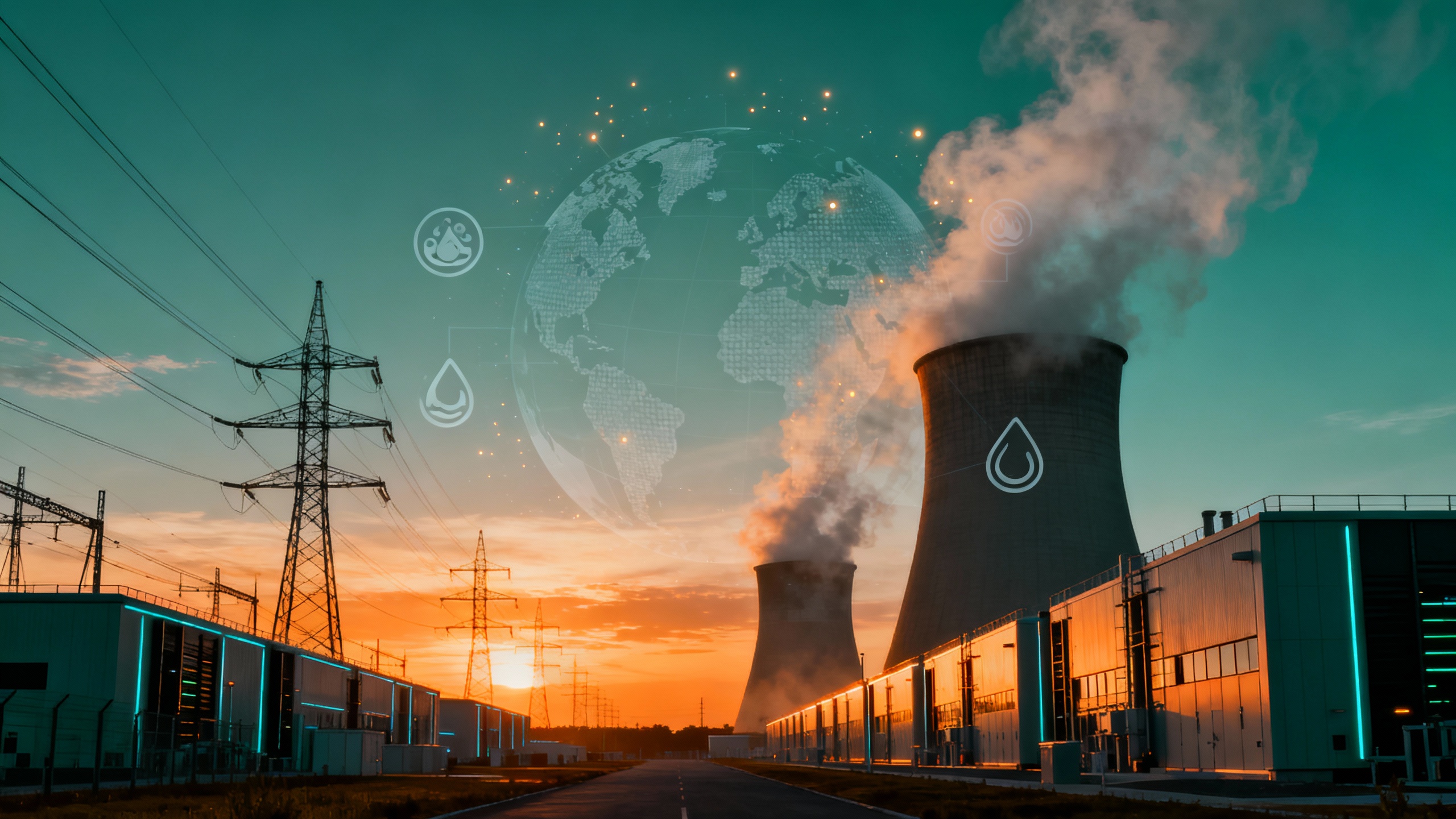
New study quantifies AI’s 2025 footprint: emissions on par with New York City; water use rivals global bottled water A peer‑reviewed analysis estimates AI operations in 2025 emitted 33–80 MtCO₂ and consumed 313–765 billion liters of water, highlighting massive power and cooling demands and calling for greater corporate transparency. Expect tighter sustainability scrutiny in site selection, PPAs, and reporting.
-
NIST releases draft Cyber AI Profile (NISTIR 8596) to secure AI systems NIST’s preliminary draft offers a CSF 2.0–aligned profile to help organizations: Secure AI systems, Defend with AI, and Thwart AI‑enabled attacks. Public comments are open until January 30, 2026; a workshop is slated for January 14. CISOs should map current AI governance to the profile and plan feedback.
-
Yann LeCun targets €3B valuation for new “world models” startup Meta’s outgoing chief AI scientist is reportedly raising ~€500M for Advanced Machine Intelligence Labs (AMI Labs), focused on AI systems that reason about and act in the physical world. The move intensifies competition around robotics‑grade, multimodal models and could reshape talent flows in 2026.
Emerging Trends
-
Compute power de‑risking away from single‑vendor stacks Early signals: Google–Meta collaboration to make PyTorch first‑class on TPUs; growing enterprise trials on non‑CUDA accelerators; executives publicly forecasting unprecedented capex needs. Impact: more multi‑hardware roadmaps, portability investments, and bargaining power shifts in 2026 cloud RFPs.
-
Sustainability becomes a gating factor for AI expansion The new Patterns study and ensuing coverage thrust AI’s water and electricity demand into the spotlight. Expect stricter local permitting, utility‑grade energy planning, and location‑based emissions accounting in vendor diligence. Data teams should prep to disclose AI‑attributable footprints, not just aggregate data‑center metrics.
-
Regulatory centralization vs. state resistance in the U.S. Federal preemption efforts now face organized opposition from states, including threats to defend existing AI safeguards. Until courts clarify, enterprises must navigate dual layers: federal guidance (e.g., NIST IR 8596) and heterogeneous state laws. Impact: increased compliance complexity and project‑by‑project legal review.
Conversations & Insights
-
“Can anyone but Big Tech afford the frontier?” Where: podcast coverage and tech/business media. What’s being said: Microsoft AI CEO Mustafa Suleyman argued staying competitive at the frontier will require “hundreds of billions of dollars” over 5–10 years, spanning chips, data centers, and talent. Takeaway: Budgeting for AI is migrating from experiments to utility‑scale infrastructure. Expect more multi‑year capacity contracts, capital partnerships, and tighter model‑ROI scrutiny from boards.
-
“AI’s environmental toll is not abstract anymore” Where: r/science, tech press. What’s being said: A widely shared paper estimates AI’s 2025 emissions rival NYC’s and its water use matches global bottled water consumption—sparking debates on disclosure standards (location‑ vs. market‑based emissions) and siting. Takeaway: Sustainability is moving from CSR to a procurement and compliance constraint for AI programs; teams should prepare to attribute and audit model‑specific resource use.
-
“Preemption vs. states’ rights” Where: national/state political media. What’s being said: Reactions to the White House order show a partisan split—even within the GOP—on whether the federal government should override state AI rules. Takeaway: For regulated uses (hiring, education, healthcare), assume state rules still apply until litigation resolves. Track injunctions and grant conditions that could indirectly pressure state policy.
Quick Takeaways
- Revisit your 2026 infrastructure roadmap for portability: pilot critical PyTorch workloads on TPUs to quantify switching costs and performance trade‑offs.
- Treat sustainability as a first‑order requirement: tag AI‑attributable power and water use, and prepare for audits referencing the new study’s metrics and methods.
- Map controls to NIST IR 8596 now, and submit comments by Jan 30, 2026; align Secure/Defend/Thwart activities with CSF 2.0.
- Expect near‑term regulatory flux in the U.S.: coordinate with counsel on state vs. federal requirements and document risk‑based justifications for deployments.
- Capital intensity is rising: lock in multi‑year compute and talent pipelines; instrument rigorous ROI tracking for agentic and automation rollouts.
Sources
- Reuters — Google works to erode Nvidia’s software advantage with Meta’s help.
- Business Standard (Reuters pickup) — Google works to erode Nvidia’s software advantage with Meta’s help.
- Reuters — OpenAI discussed raising tens of billions at about $750B valuation.
- The Guardian — AI boom has caused same CO₂ emissions in 2025 as New York City, report claims.
- The Verge — AI’s water and electricity use soars in 2025.
- NIST — Draft NIST Guidelines Rethink Cybersecurity for the AI Era (NISTIR 8596).
- NIST CSRC — IR 8596 preliminary draft page and details.
- The White House — Executive Order: Ensuring a National Policy Framework for Artificial Intelligence.
- TIME — How Trump’s bid to crush state AI laws splits his own party.
- Jacksonville Journal-Courier — Illinois leaders ‘won’t back down’ following Trump’s order limiting AI regulation.
- Financial Times — Meta’s Yann LeCun targets €3bn valuation for AI start-up.
- Reuters — Meta’s Yann LeCun targets $3.5B valuation for new AI startup.
- Business Insider — Microsoft’s Mustafa Suleyman: keeping up with frontier AI will cost hundreds of billions.