

Today in AI – 12-10-2025
A concise, sourced briefing on what moved AI and automation in the last 24–48 hours (December 9–10, 2025).
Key Stories (past 1–2 days)
-
Linux Foundation launches Agentic AI Foundation with OpenAI, Anthropic and Block
Read our stand‑alone brief.
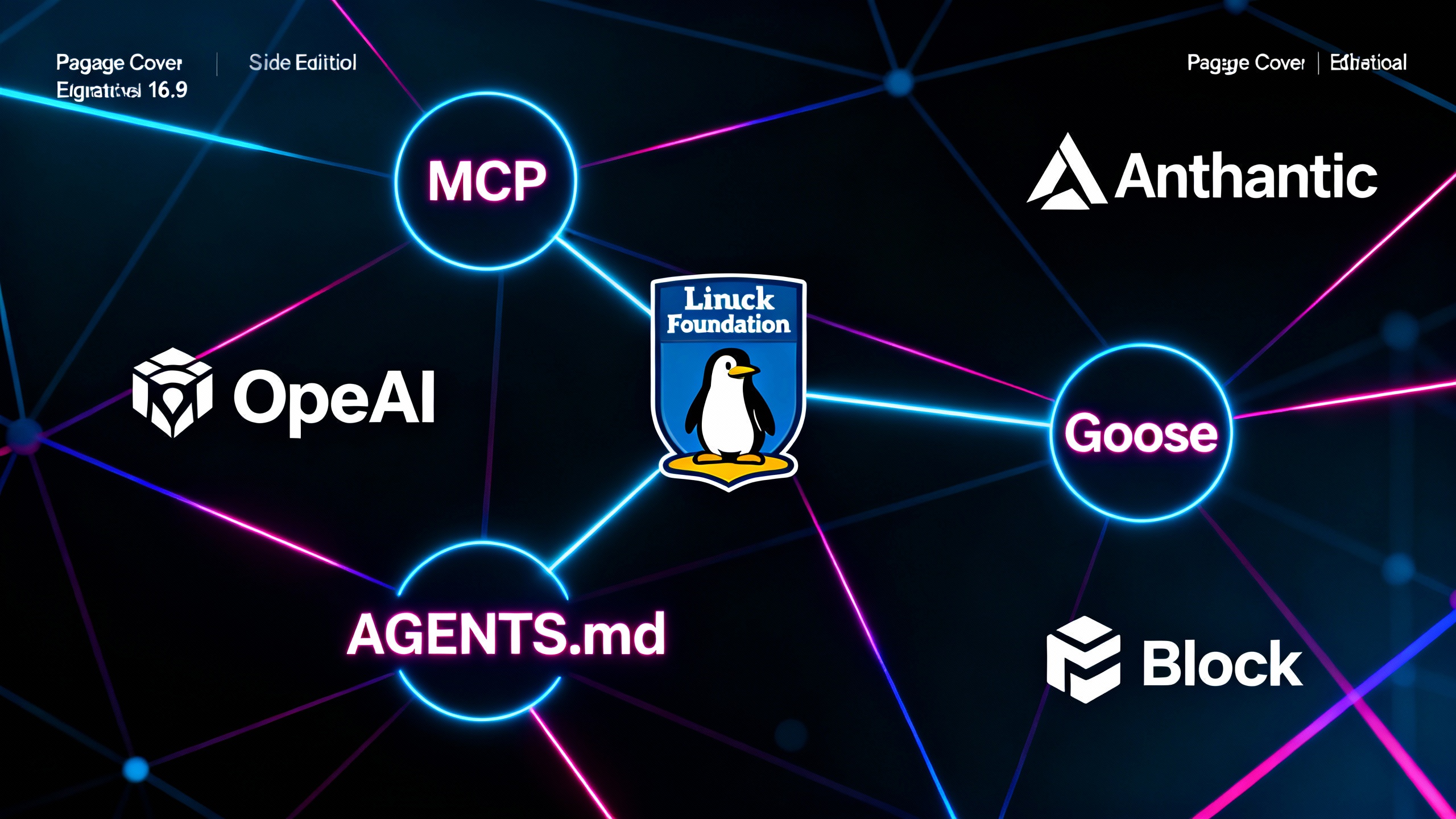
The Linux Foundation unveiled the Agentic AI Foundation (AAIF) to steward open, interoperable standards for AI agents. Launch contributions include Anthropic’s Model Context Protocol (MCP), OpenAI’s AGENTS.md convention, and Block’s Goose agent framework—joined by support from AWS, Google, Microsoft, Bloomberg and Cloudflare. Reported adoption signals: AGENTS.md has been adopted by 60,000+ open-source projects; MCP has 10,000+ public servers and is implemented in major products (ChatGPT, Cursor, Microsoft Copilot, Gemini, VS Code). Why it matters: enterprise buyers gain a clearer path to agent interoperability and reduced vendor lock‑in across tools and clouds.
Sources: OpenAI, Anthropic, TechCrunch, Wired, AAIF press note. -
Hyperscalers place big bets on India: Microsoft $17.5B (2026–2029), Amazon $35B (by 2030)
Read our stand‑alone brief.
Microsoft announced a $17.5B commitment for AI and cloud in India—including a new Hyderabad region coming online mid‑2026, sovereign cloud options, and in‑country processing for Microsoft 365 Copilot by end‑2025. Hours later, Amazon said it will invest $35B in India by 2030 across AI‑driven digitization, logistics and exports. Strategic context: India is rapidly becoming a primary theater for global AI infrastructure and skills buildup.
Sources: Microsoft, AP, Reuters – Amazon $35B, Amazon.Recent hyperscaler AI/Cloud commitments in India
Company Amount Timeframe Notes Microsoft $17.5B 2026–2029 New Hyderabad region; sovereign cloud options; in‑country Copilot processing by end‑2025. Amazon $35B by 2030 AI‑driven digitization, logistics, exports; goal to support 3.8M jobs by 2030.

- Adobe plugs Photoshop and Acrobat directly into ChatGPT
Read our stand‑alone brief.
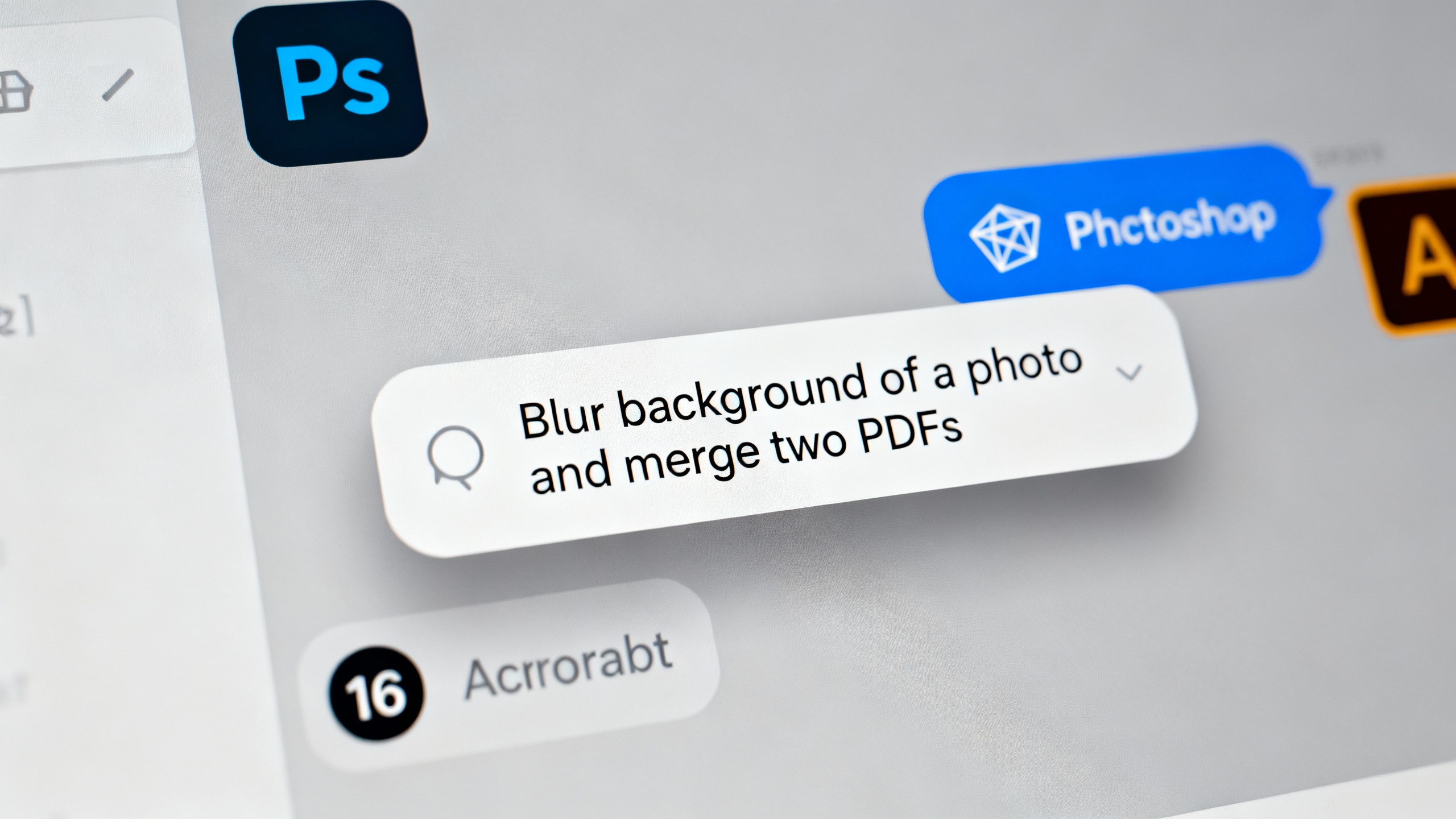
Adobe integrated subsets of Photoshop, Adobe Express and Acrobat into ChatGPT—free to use within the chat interface on desktop, web and iOS (Android partial rollout). Users can blur backgrounds, apply effects, create designs, and merge/edit PDFs via prompts; projects can be moved into full Adobe apps for deeper edits. Strategic context: this accelerates the shift to “chat‑first” creative and document workflows and broadens Adobe’s funnel to non‑experts.
Sources: Reuters, The Verge, TechCrunch, 9to5Mac.
-
Nvidia prepares “location verification” to curb AI‑chip smuggling
Reuters reports Nvidia has built a software option that uses GPU telemetry and attestation features to help data‑center operators verify where chips are running—debuting with Blackwell‑class GPUs and under evaluation for prior generations. This responds to U.S. calls to prevent diversion of restricted AI chips to China and could become a compliance standard across GPU fleets.
Source: Reuters. -
Accenture and Anthropic sign multi‑year deal; 30,000 staff to be trained on Claude
Accenture and Anthropic formed the Accenture Anthropic Business Group, making Claude Code broadly available to Accenture developers and offering a CIO‑focused program to scale AI‑assisted software development—another sign of consulting‑led enterprise AI rollouts.
Sources: Accenture, Anthropic, TechCrunch.
Emerging Trends
-
Agent interoperability is moving from aspiration to implementation
The AAIF formalizes a neutral home for standards like MCP and AGENTS.md. Early signals: 60,000+ repos/projects adopting AGENTS.md and 10,000+ public MCP servers with adoption across ChatGPT, Microsoft Copilot, and Gemini. Expect RFPs and security reviews to begin referencing AAIF artifacts as “must‑have” for multi‑tool agent deployments.
Evidence: OpenAI, Anthropic, AAIF. -
AI build‑out shifts east: India’s sovereign‑ready stack and skills flywheel
Microsoft’s $17.5B plan plus Amazon’s $35B commitment reinforce India as a primary AI capacity hub, with explicit sovereign cloud features and in‑country data processing. For multinationals, this raises the bar on data‑residency options and regional latency expectations in South Asia.
Evidence: Microsoft, Amazon, AP. -
Chat‑first UX crosses the chasm into creative and document work
Adobe’s ChatGPT integrations put pro‑grade functions behind natural‑language interfaces—lowering skill thresholds and compressing workflows. Watch for vendor strategies that start “in‑chat” and then upsell into full apps when complexity rises.
Evidence: Reuters, The Verge. -
Compliance‑coded hardware becomes part of AI governance
Nvidia’s planned location‑verification and attestation tooling points to a future where export controls, supply‑chain integrity, and asset management are enforced in silicon and system software—impacting procurement checklists and multi‑tenant cloud SLAs.
Evidence: Reuters. -
Boards see AI as disruption risk—budgets grow, but infra is the constraint
Bloomberg Intelligence’s new C‑suite survey finds AI is a top agenda item; executives expect AI to lift sales by ~7% over three years, yet cite infrastructure scarcity as a leading bottleneck—undercutting “overbuild” bubble fears.
Evidence: Bloomberg Intelligence (press).
Conversations & Insights
-
Will AAIF’s open standards curb agent lock‑in—or codify a new center of gravity?
Where: Developer press and industry blogs.
Voices: Linux Foundation leaders, OpenAI/Anthropic engineers; coverage and analysis by Wired and TechCrunch.
Takeaway: Neutral governance and widely adopted conventions (MCP, AGENTS.md) are emerging as the de facto API for agent tool access. Enterprises can plan for multi‑vendor agents without bespoke glue code—while still vetting security boundaries and data‑handling. -
Chat‑first creativity: accessibility vs. control
Where: Tech media and creator communities reacting to Adobe’s ChatGPT integrations.
Voices: Product journalists at Reuters, The Verge.
Takeaway: Lower barriers for non‑experts could expand Adobe’s addressable market, while pros will evaluate fidelity, versioning, and governance (e.g., where assets live and how privacy is handled when working “in chat”). -
Export controls meet data‑center ops
Where: Policy and semiconductor beats.
Voices: Reuters reports Nvidia’s plan; U.S. policymakers have pushed for stronger location verification; Chinese regulators have queried backdoor concerns.
Takeaway: Expect compliance features to become standard in GPU fleet managers. Operators will balance regulatory assurance with vendor‑neutral observability and privacy. -
Enterprise AI rollouts go consulting‑first
Where: Enterprise tech press and corporate blogs.
Voices: Accenture, Anthropic.
Takeaway: Dedicated practices (e.g., Accenture‑Anthropic) and training at scale indicate that workforce enablement, governance and ROI tracking are now as important as raw model capability.
Quick Takeaways
- Begin aligning internal agent projects to AAIF artifacts: add an AGENTS.md to key repos; evaluate MCP‑compatible connectors for critical systems.
- If APAC is strategic, revisit your India roadmap: sovereign options and in‑country processing are becoming table stakes for regulated workloads.
- Pilot “chat‑first” creative/doc flows: test Adobe’s ChatGPT integrations for intake, drafts, and hand‑off, with clear content‑governance policies.
- Update GPU fleet management checklists: prepare for device attestation/location checks in compliance programs and vendor contracts.
- Treat AI enablement as a change‑management program: certifications (e.g., OpenAI’s new courses) plus role‑specific playbooks can accelerate adoption.
Sources
- Agent standards and AAIF: OpenAI, Anthropic, AAIF press, TechCrunch, Wired.
- India investments: Microsoft, AP, Reuters – Amazon $35B, Amazon.
- Adobe x ChatGPT: Reuters, The Verge, TechCrunch, 9to5Mac.
- Nvidia export‑control tooling: Reuters.
- Enterprise AI rollout: Accenture, Anthropic.
- Strategy & budget sentiment: Bloomberg Intelligence (press).