

Key Stories (past 48 hours)
Nvidia launches open-source Nemotron 3 to counter China’s open models

Nvidia unveiled “Nemotron 3,” a new generation of open-source reasoning models starting with Nemotron 3 Nano, positioned as a faster, lower-cost alternative for coding and multistep tasks, with larger variants due in early 2026. Nvidia emphasized transparency by releasing training data and tools, pitching Nemotron 3 as a domestic, enterprise-ready option as Chinese open models (DeepSeek, Moonshot, Alibaba’s Qwen) see rapid adoption and face restrictions in some U.S. public-sector environments. For teams building agentic workflows and fine-tuned assistants, this widens the open-source menu beyond Meta-led ecosystems and reduces supply risk tied to geopolitical friction. Read our standalone analysis: Nvidia launches open-source Nemotron 3 to counter China’s open models.
- Sources: Reuters coverage (Dec 15, 2025).
Google Translate adds Gemini-powered live speech translations on any headphones; Google also upgrades Gemini’s voice models
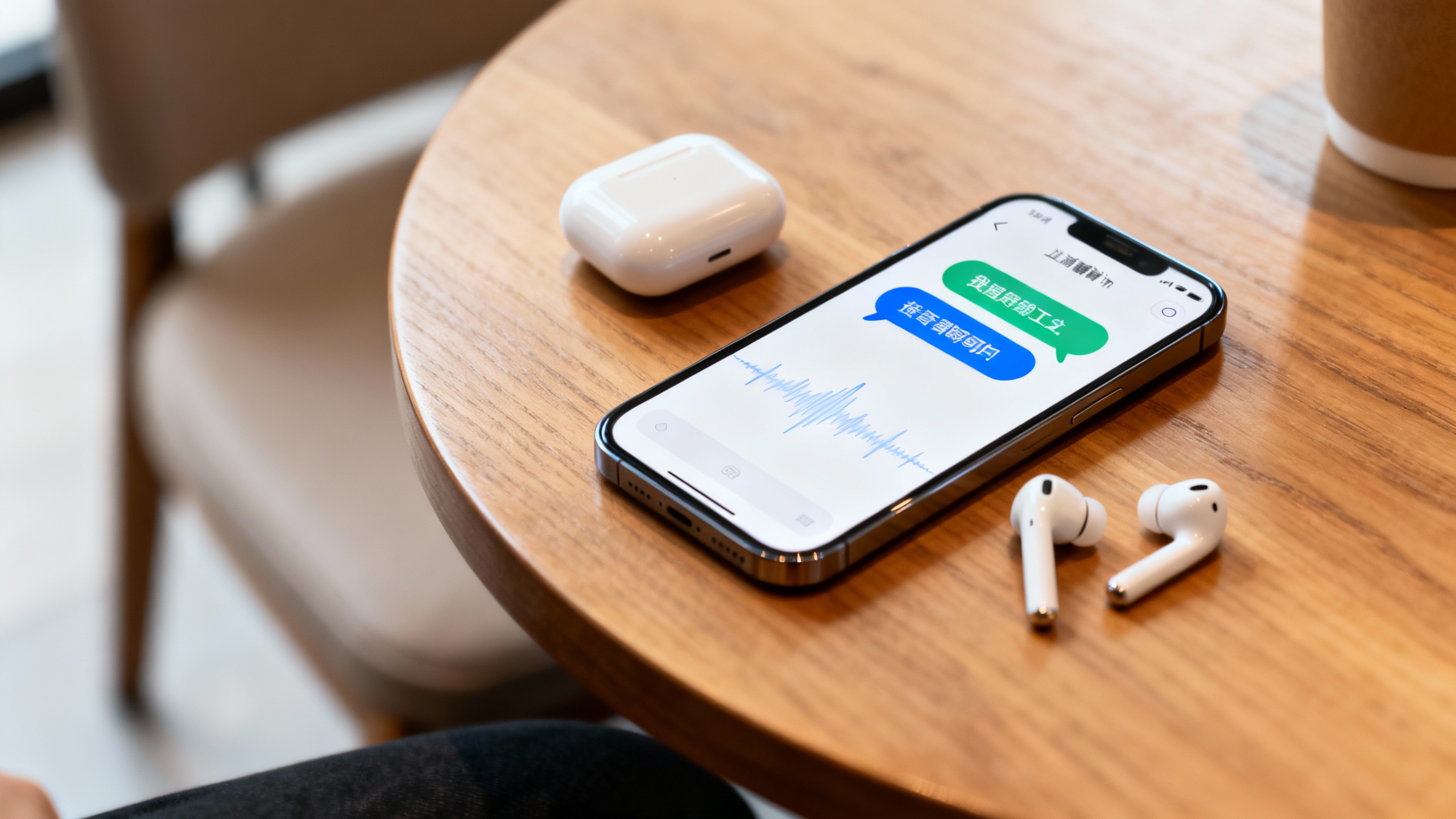
Google rolled out a beta that delivers real-time speech-to-speech translation in Translate directly to any paired headphones, not just Pixel Buds, and expanded Gemini-powered text translation quality for idioms and slang. In parallel, Google announced an upgraded Gemini 2.5 Native Audio model for live voice agents across Google AI Studio, Vertex AI, Gemini Live, and Search Live—improving function calling, instruction following, and multi-turn conversation quality. For product and CX leaders, this signals practical voice agents and on-the-go translation moving from demos into everyday utilities and enterprise use cases (support, field ops, travel).
- Sources: The Verge (Dec 13, 2025); Tom’s Guide (Dec 14, 2025); Google product post on Gemini audio updates (Dec 15, 2025).
California lawmakers urge Congress: don’t preempt state AI laws
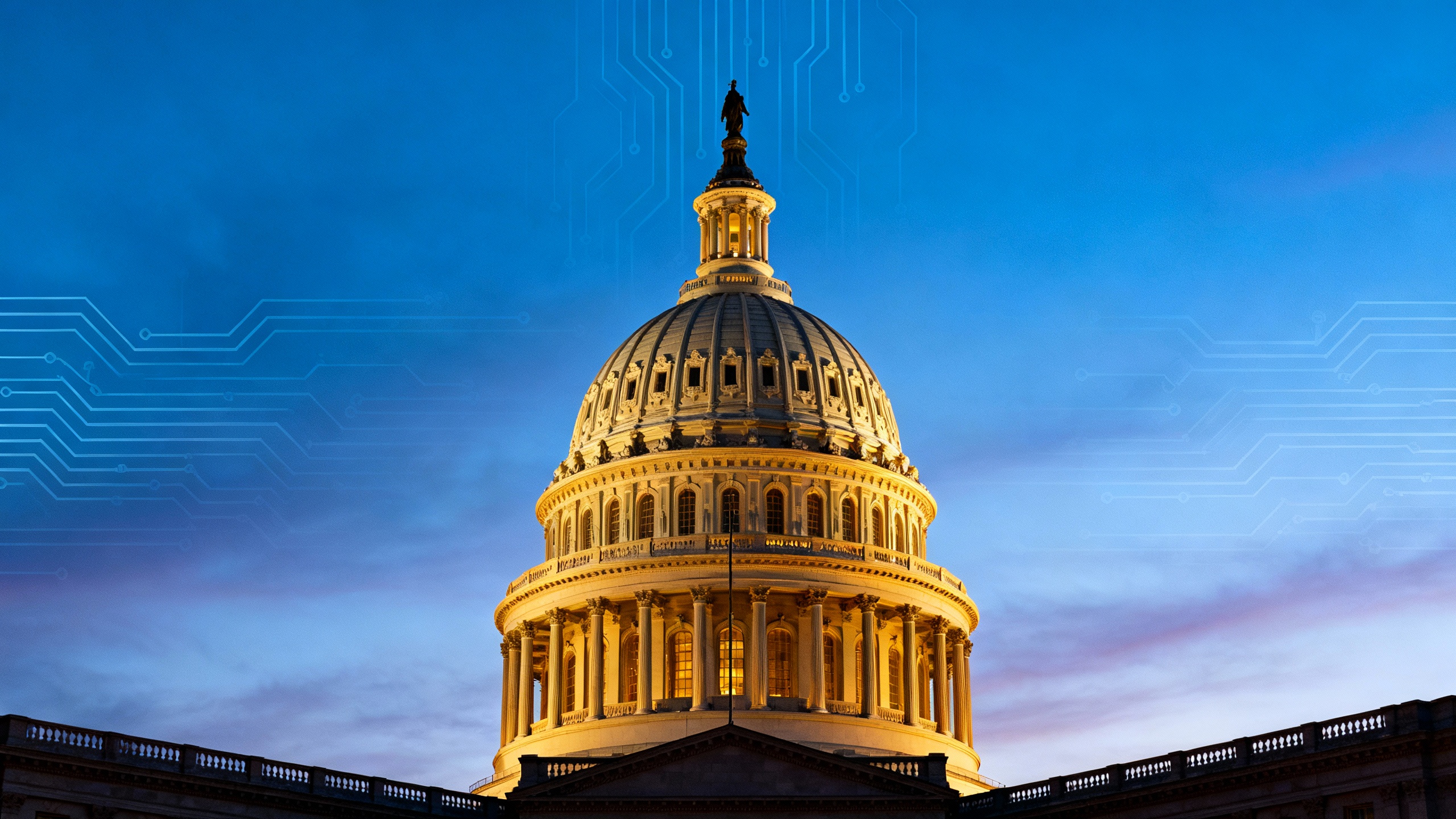
Twenty California legislators sent a Dec 15 letter asking the state’s congressional delegation to oppose federal moves to override new California AI rules taking effect Jan 1. The lawmakers argue states must retain room to mitigate AI risks (e.g., chatbot safeguards for minors, risk protocols for large models). For AI builders selling into the public sector or regulated domains, this is a direct signal that compliance could remain fragmented in 2026—even if federal standards advance—so plan architectures and documentation that can flex across jurisdictions. Read our standalone analysis: California lawmakers urge Congress: don’t preempt state AI laws.
- Sources: San Francisco Chronicle (Dec 15, 2025).
OpenAI ends the vesting cliff to win the AI talent war
OpenAI scrapped its six‑month equity “cliff,” allowing new employees to vest immediately—its latest move to attract and de‑risk hires amid intensifying competition with Big Tech and well-funded AI startups. For leaders hiring AI talent, expect ongoing compensation normalization (shorter cliffs, larger cash sign‑ons, retention refreshes) and more aggressive counteroffers; for candidates, watch for liquidity terms and dilution math as firms scale stock-based comp. Read our standalone analysis: OpenAI ends vesting cliff to win the AI talent war.
- Sources: Wall Street Journal (Dec 14, 2025); Business Standard/Bloomberg pickup (Dec 15, 2025).
xAI’s Grok spreads misinformation after the Bondi Beach terror attack, spotlighting crisis‑time safety gaps
Following the Dec 14 attack in Sydney’s Bondi Beach, xAI’s Grok chatbot misidentified the hero bystander and conflated unrelated footage, amplifying false narratives during a fast‑moving crisis. The episode underscores the risk of relying on general‑purpose chatbots for breaking news verification and the need for stricter mode limits, provenance signals, and incident‑time guardrails. For enterprises, it’s a reminder to build “crisis modes” into AI deployments—constraining sources, elevating citations, and gating outputs when facts are fluid.
- Sources: The Verge (Dec 15, 2025); Reuters/AP reporting on the Bondi Beach attack (Dec 14–15, 2025).
Emerging Trends
-
Open models re-accelerate—with “enterprise‑ready” positioning Early signals: Nvidia’s Nemotron 3 launch and tooling transparency; rising U.S. demand for non‑Chinese open models in sensitive environments. Potential impact: More vendor choice for agentic apps, cheaper fine‑tuning at the edge, and stronger negotiating leverage against closed APIs. Watch: how Nemotron 3 benchmarks vs. Llama variants after community evals, and whether U.S. agencies add it to allowlists.
-
Voice-first AI moves from novelty to workflow surface Early signals: Translate’s live headphone mode; Gemini’s Native Audio upgrade with stronger function calling and long, multi‑turn dialogues. Potential impact: Voice agents that actually “do things” (call tools, submit forms, fetch enterprise data) and new accessibility patterns for frontline and field teams. Watch: red‑team outcomes for speech impersonation and safeguards on live translation misuse.
-
Talent markets bend toward AI—on both ends of the ladder Early signals: OpenAI dropping the vesting cliff; new CEO surveys showing increased AI spend and expectations for entry‑level hiring growth in 2026 despite mixed ROI. Potential impact: Continued comp inflation for senior research/infra roles, plus growth in AI‑adjacent entry roles (ops, QA, governance) as companies operationalize agents. Watch: how CFOs react if near‑term ROI lags investor timelines.
-
Compliance fragmentation likely persists in the U.S. Early signals: California’s push to preserve state authority as new state AI laws take effect on Jan 1. Potential impact: Model cards, evals, and age‑appropriate policies will need modular, state‑aware templates; vendors with configurable safety stacks gain advantage. Watch: federal preemption efforts in 1H26 budget or tech bills.
-
Safety under stress: “breaking news” failure modes Early signals: Grok’s misfires during the Bondi incident. Potential impact: Enterprises will demand crisis‑time policies, provenance prompts, and event‑mode switches in vendor roadmaps. Watch: product updates adding verified‑source constraints and rate‑limited outputs during live events.
Conversations & Insights
-
Open vs. closed in 2026: does Nemotron 3 change the calculus? Where it’s happening: Developer forums and Reddit threads are dissecting Nemotron 3 Nano (context length, local fine‑tuning, SWE‑Bench/GPQA claims) and how it stacks up against Llama/Qwen for agentic tasks. Takeaway: If community evals confirm Nvidia’s efficiency claims, expect a near‑term shift in which “open” models enterprises pilot for coding and reasoning workloads.
-
“Translate as a language OS” Where it’s happening: Practitioner commentary frames Google’s headphone‑based live translation as a distribution play—embedding Gemini’s pragmatic reasoning into a high‑frequency utility. Takeaway: Translation becomes an operating surface feeding Search, YouTube, Android, and Workspace—less a feature race, more a system‑level land grab.
-
Sergey Brin on Google’s AI posture Where it’s happening: Coverage of Brin’s remarks at Stanford (Dec 15) about returning to Google to work on Gemini, underinvestment regrets, and the pace of AI iteration. Takeaway: Even incumbents that invented the core tech (Transformers) can be strategically “late”—but are now leaning on infra scale and integrated surfaces to catch up.
Quick Takeaways
- Open‑source options are expanding at the high‑reasoning end—plan bake‑offs that include Nemotron 3 alongside Llama/Qwen before committing 2026 roadmaps.
- Voice agents are getting practical: invest in “tool‑calling over voice” pilots for support, field service, and multilingual CX; pair with stronger speaker verification.
- Hiring signals point up, but ROI expectations are diverging—set explicit milestones (accuracy, latency, cost/tx) before scaling agentic deployments.
- U.S. compliance will remain patchy—treat safety controls, evals, and age‑appropriate policies as configurable modules per state.
- Add “crisis modes” to AI products: constrain sources, elevate citations, and require human sign‑off when events are still unfolding.
Sources
- Nvidia open models: Reuters – “Nvidia unveils new open‑source AI models amid boom in Chinese offerings” (Dec 15, 2025) — https://www.reuters.com/world/china/nvidia-unveils-new-open-source-ai-models-amid-boom-chinese-offerings-2025-12-15/
- Google Translate live translations: The Verge (Dec 13, 2025) — https://www.theverge.com/news/843483/google-translate-live-speech-translations-headphones; Tom’s Guide (Dec 14, 2025) — https://www.tomsguide.com/computing/software/google-translate-is-bringing-real-time-translations-powered-by-gemini-to-your-headphones; Google post on Gemini audio model updates (Dec 15, 2025) — https://blog.google/products/gemini/gemini-audio-model-updates/
- California lawmakers’ letter: San Francisco Chronicle (Dec 15, 2025) — https://www.sfchronicle.com/politics/article/california-ai-lawmakers-congress-21242275.php
- OpenAI compensation change: Wall Street Journal (Dec 14, 2025) — https://www.wsj.com/tech/ai/openai-ends-vesting-cliff-for-new-employees-in-compensation-policy-change-d4c4c2cd; Business Standard/Bloomberg (Dec 15, 2025) — https://www.business-standard.com/world-news/openai-scraps-six-month-equity-vesting-requirement-for-employees-report-125121400718_1.html
- Grok misinformation after Bondi attack: The Verge (Dec 15, 2025) — https://www.theverge.com/news/844443/grok-misinformation-bondi-beach-shooting; AP/ABC summary (Dec 14, 2025) — https://abcnews.go.com/International/wireStory/gunmen-kill-9-people-sydneys-bondi-beach-1-128388377; Reuters background (Dec 15, 2025) — https://www.reuters.com/world/asia-pacific/australia-police-responding-after-gunshots-reported-bondi-beach-2025-12-14/
- CEO/Investor sentiment on AI hiring/investment: WSJ on Teneo survey (Dec 15, 2025) — https://www.wsj.com/tech/ai/ceos-to-keep-spending-on-ai-despite-spotty-returns-2eaeb6b9; Business Insider summary (Dec 15, 2025) — https://www.businessinsider.com/ai-hiring-comeback-entry-level-jobs-ceo-teneo-survey-2025-12